According to Au7o's research across NHTSA recalls, manufacturer TSBs, and owner forum reports, the 1984-2004, 2006-2026 Chevrolet Corvette has 56 documented known issues, with 26 rated critical. The most serious are C5 Electronic Steering Column Lock Failure ($100-$900 repair), Electric Power Steering Gear Failure Causes Sudden Loss of Steering Assist (Recalls 19V086 and 25V175) ($0-$2,200 repair), Electronic Brake Boost Module Sensor Contamination Causing Loss of Brake Assist - Recall 20V588000 ($0-$0 repair), LS7 Valve Guide and Valve Spring Failure - C6 Z06 ($2,500-$5,000 repair), Opti-Spark (Optispark) Distributor Failure on LT1/LT4 Engines ($800-$1,800 repair), Opti-Spark Optical Distributor Failure (LT1) ($800-$2,000 repair), Z06 LT4 Overheats and Drops Into Reduced Power Mode During Sustained Track Driving ($0-$4,500 repair), . at .
General Motors, LLC (GM) is recalling certain 2024-2025 Chevrolet Corvette vehicles. The driver and/or passenger seat belt retractors may lock in a stowed position and become inaccessible to occupants.
Campaign #24V41800006/06/2024
FUEL SYSTEM, GASOLINE
General Motors, LLC (GM) is recalling certain 2023–2026 Chevrolet Corvette vehicles equipped with a left-side radiator/fan combination. Excess fuel may spill into the vehicle fuel-filler pocket during refueling and leak onto an ignition source.
Campaign #25V53600021/08/2025
EXTERIOR LIGHTING:TURN SIGNAL
General Motors, LLC (GM) is recalling certain 2026 Chevrolet Corvette ZR1X Coupe, Corvette ZR1X Convertible, Corvette Coupe E-Ray, Corvette Convertible E-Ray, Corvette Convertible, Corvette Coupe, 2025 Corvette E-Ray Coupe, Corvette E-Ray Convertible, Corvette Convertible, and Corvette Coupe vehicles. A software error may prevent detection of a rear turn signal light failure. As such, these vehicles fail to comply with the requirements of Federal Motor Vehicle Safety Standard (FMVSS) number 108, "Lamps, Reflective Devices, and Associated Equipment."
🔧
A mechanic who knows YOUR exact car
Answers tuned to your year, make, model & trim — not generic advice. Save your garage so it always has the right context.
Get ahead of Chevrolet Corvette problems — free
Leave your email and we'll alert you the moment there's a new recall or known issue for your Chevrolet Corvette. Free, no account needed.
What are the most common Chevrolet Corvette problems?
According to Au7o's research across NHTSA recalls, manufacturer TSBs, and owner forum reports, the 1984-2004, 2006-2026 Chevrolet Corvette has 56 documented issues. The most frequently reported are: C5 Electronic Steering Column Lock Failure, Electric Power Steering Gear Failure Causes Sudden Loss of Steering Assist (Recalls 19V086 and 25V175), Electronic Brake Boost Module Sensor Contamination Causing Loss of Brake Assist - Recall 20V588000. Of these, 26 are rated critical and should be addressed promptly.
Is the Chevrolet Corvette reliable?
The 1984-2004, 2006-2026 Chevrolet Corvette has 56 known issues compiled from NHTSA recalls, manufacturer TSBs, and owner forum reports. 26 issues are rated critical: C5 Electronic Steering Column Lock Failure and Electric Power Steering Gear Failure Causes Sudden Loss of Steering Assist (Recalls 19V086 and 25V175) and Electronic Brake Boost Module Sensor Contamination Causing Loss of Brake Assist - Recall 20V588000 and LS7 Valve Guide and Valve Spring Failure - C6 Z06 and Opti-Spark (Optispark) Distributor Failure on LT1/LT4 Engines and Opti-Spark Optical Distributor Failure (LT1) and Z06 LT4 Overheats and Drops Into Reduced Power Mode During Sustained Track Driving and LT2 Broken Valve Spring Failure on Engines Built June-September 2020 and Active Fuel Management Lifter Collapse Causes Engine Tick and P0300 Misfire and ZR1 Fuel Spillage at the Filler Pocket Onto Ignition Sources - NHTSA Recall 25V536 and Crankshaft Thrust Bearing Wear Causes Stalling, Clutch Chatter and Launch Vibration and Left Fuel Tank Pump Module Flange Cracks and Leaks Fuel and LT7 Engine Placed on GM Part Restriction for Possible Engine Failure (PIP6089) and Coolant Entering Cylinders From Cylinder Head Casting Causes White Smoke and P050D and Cast Aluminum Wheels Crack and Bend at the Inner Bead Without Impact Damage and LT6 Bottom-End Failure and Rod Knock Within the Break-In Period (Z06) and TR-9080 Dual-Clutch (M1L) Failures, Filter Contamination and Stuck 'Service Transmission' Message and Fuel Spillage into Filler Pocket Reaching Ignition Source - Recall 25V536000 and Rear Half-Shaft Assemblies Missing Ball Bearings - Recall 22V091000 and Front Seat Belt Retractors Locking in the Stowed Position - Recall 24V418000 and Driver Seat Belt Retractor May Fail to Lock in a Crash - Recall 20V581000 and Electronic Column Lock (ECL) Failure - NHTSA Recall 04V060 and Water Pump Front Seal Leak (Damages Opti-Spark) and ZR-1 LT5 Fuel Injector (Multec) Failure and Steering Column Lock (VATS) Failure - Cannot Start and Harmonic Balancer Failure - C5 LS1/LS6. Prospective buyers should inspect for these issues and factor potential repair costs into their purchase decision. Regular maintenance following the manufacturer's schedule helps prevent many common problems.
Content on this page was compiled with AI assistance using NHTSA complaints, TSBs, owner reports, and public automotive data. While we strive for accuracy, this information may contain errors. Always verify repair procedures and specifications with your vehicle's service manual or a qualified mechanic.
Filter:
The C6 Z06 (2006-2013) uses the LS7 7.0L V8 with titanium intake valves and aggressive valve springs. The exhaust valve guides wear prematurely, allowing valves to cock sideways, break valve springs, and drop valves into cylinders. This is catastrophic engine failure. The issue is most common on 2006-2008 models but can affect all LS7s. GM extended the powertrain warranty but many cars are now beyond coverage. The titanium intake valves and sodium-filled exhaust valves are unique to the LS7.
Preventive valve spring and guide replacement is recommended for any LS7 that has not had this service. This requires head removal. Upgraded valve springs from Comp Cams or Manley and bronze valve guides from GM or aftermarket replace the failure-prone components. The LS7 is otherwise an outstanding engine when this issue is addressed.
The LT1 (and 1996 LT4) uses a front-of-engine 'Opti-Spark' optical distributor mounted low behind the water pump, driven off the camshaft. It is highly vulnerable to moisture, heat, and ozone. The 1992-1993 units were completely unvented and are notorious for internal condensation and corrosion of the optical sensor disc. The leading real-world cause of failure is a leaking water pump directly above it dripping coolant onto/into the unit, but ordinary humidity and age also kill them. It is one of the single most defining reliability weak points of the 1992-1996 C4.
Replace the Opti-Spark distributor (later vented-style unit is the upgrade for 92-93 cars; a vacuum-vented design arrived on 1995-1996 units). Because the water pump sits directly above it and is the most common contaminant source, the accepted practice is to replace the water pump at the same time ('while you're in there'), since the front cover/serpentine and much labor overlaps. Many owners also drill/tap the water pump weep hole and route a hose away from the distributor.
A defective supplier batch of valve springs went into GM V8 engines built between June 1 and September 15, 2020, including the 6.2L LT2 in the C8 Stingray. Springs broke at astonishingly low mileage — documented C8 failures at 57 miles and at 115 miles, one of which required a flatbed tow. A broken spring drops valve control on that cylinder, producing a misfire, an audible tapping or clattering engine noise, a check engine light, and in the worst case valve-to-piston contact that destroys the head or the engine. GM acknowledged the defect in service bulletin PIP5752A on September 22, 2020, covering seven V8 families (L87, LT1, LT2, LT4, L82, L84, L8T). Owners subsequently reported failures on engines built past the September 15 cutoff, and GM extended the affected build window, so the published date range should be treated as a floor rather than a boundary. This is a discrete supplier defect and is unrelated to the LT2's lifter-tick and DFM behavior.
Have the dealer run GM PIP5752A. The bulletin requires a cylinder leakage test on the affected cylinder first. If no leakage is found on an LT-series engine built in the affected window, the correct repair is to replace all valve springs on both banks — not just the broken one — which is 16 springs for the 6.2L LT2. If leakage is present, further teardown determines whether the head, valve, or short block is damaged. GM required all removed springs be returned to Detroit for analysis, so confirm your dealer follows the return process rather than performing a partial repair. This work is covered by the 5-year/60,000-mile powertrain warranty. If your car's engine build date sits near or just past September 15, 2020 and you have misfire symptoms, push the dealer to open a case with GM rather than accepting a build-date denial, since the window was extended once already.
The Active Fuel Management (cylinder deactivation) lifters in the 6.2L LT1 and LT4 mechanically collapse or stick in their bores, producing a persistent top-end tick and a misfire that sets P0300. GM's own bulletin identifies four failure paths: a mechanically collapsed or stuck AFM lifter, internal locking-pin damage caused by oil aeration, a collapsed lifter seized in the bore, and a bent pushrod. Once a lifter seizes it can spin in its bore and destroy the lifter guide, and a failed lifter frequently wipes the corresponding camshaft lobe - which turns a top-end repair into a cam-and-lifter job or, in the worst case, engine replacement. GM revised this bulletin repeatedly through 2020 (15-06-01-002 through 15-06-01-002K), which is a fair indicator of how persistent the problem is across the LT-series V8 family.
Ticking or tapping noise from the top of the engine
Check engine light with random or multiple cylinder misfire
Rough idle
Loss of power
Misfire counts concentrated on one cylinder
How to Fix
Diagnose the misfiring cylinder and pull the valve covers to check whether the valves on the suspect cylinder are moving. Per GM bulletin 15-06-01-002K, inspect the camshaft for lobe damage while the lifters are out. If the valves are not actuating, replace the valve lifter oil manifold and the entire affected bank of AFM lifters - not just the failed one. If the lifter has spun in its bore, replace the lifter guides as well; GM lists lifter assembly 12645725, with valve lifter oil manifold kit 12660737 for the LT1 and 12660736 for the LT4. A wiped camshaft lobe requires camshaft replacement. If a lifter cannot be extracted, GM's bulletin acknowledges engine replacement as the endpoint. Because oil aeration damages the lifter locking pins, keep the oil at the correct level (dry-sump cars in particular must be checked at operating temperature) and stay on a conservative oil change interval with the specified Mobil 1 grade. Many owners performing the repair delete AFM with a non-AFM cam, standard lifters and a tune to prevent recurrence.
A damaged crankshaft thrust bearing allows excessive crankshaft endplay on both the LT1 and LT4. The symptom set differs by transmission, which is why it is often misdiagnosed. On manual cars owners report engine stalling, clutch chatter, and hard shifting into first gear or reverse - all of which get blamed on the clutch or the TR6070 gearbox. On automatic cars it shows up as a vibration on launch and a clunk or noise from the engine. GM bulletin 19-NA-217 identifies the root cause as excessive crankshaft endplay from a damaged thrust bearing, and specifies the endplay window as 0.0015-0.0086 inch. Because the failure is at the crankshaft, replacing clutches, flywheels or torque converters does not fix it and owners can spend thousands chasing the wrong part.
Common Symptoms
Engine stalls when coming to a stop (manual transmission)
Clutch chatter or shudder on engagement
Hard or notchy shift into 1st gear or reverse
Vibration on launch (automatic transmission)
Clunk or knocking noise from the engine
Crankshaft endplay outside 0.0015-0.0086 inch
How to Fix
Before condemning the clutch or transmission, measure crankshaft endplay with a dial indicator against the specification of 0.0015-0.0086 inch. If it is out of range, remove the oil pan and inspect the thrust bearing. GM explicitly states in 19-NA-217 that it is not necessary to replace the engine assembly - the repair is targeted inspection and replacement of the damaged internals, typically the crankshaft, connecting rods and main bearings. On dry-sump cars (Z51, Grand Sport, Z06) the oil tank and oil cooler should also be replaced because bearing debris circulates into them and will destroy the new bearings if left in place. Verify endplay again after reassembly.
GM has placed the 5.5L twin-turbo LT7 in the 2025-2026 Corvette ZR1 - and the naturally aspirated 5.5L LT6 in the 2023-2026 Z06 - on a Technical Assistance Center part restriction, published as #PIP6089 and highlighted in GM TechLink. A part restriction means a dealer cannot simply order a replacement engine: when diagnosing a possible engine failure the technician must gather the information required by PIP6089, including the engine part number stamped on the center of the front cover, and open a case with TAC before an engine is released. GM frames this as continuous improvement, but the stated cause on the restriction is 'possible engine failure,' and the January 2026 update to PIP6089 adds instructions for handling catastrophic failure cases and intake manifold transfer, which indicates real field failures are being worked. Owners have reported LT7 engine failures during track use at low mileage.
Common Symptoms
Sudden loss of power or engine shutdown at speed
Knocking or mechanical noise from the engine
Smoke from the engine compartment and/or oil leak after failure
Dealer unable to order a replacement engine without a TAC case
How to Fix
If the ZR1 shows a sudden power loss, knocking, smoke or a hard shutdown, stop driving it and have it flat-bedded to a Chevrolet dealer. Make sure the dealer opens a TAC case under #PIP6089 rather than attempting an out-of-process engine order, and keep all track-use, oil-change and fuel records - GM Brand Quality reviews returned engines and requires that all internal components be returned with a warranty engine. Do not accept a replacement engine install that reuses the original intake manifold if the failure scattered debris: GM's own bulletin (#00-06-01-026) states the ultrasonically welded plastic manifold cannot be fully cleaned and must be replaced, or the debris will destroy the new long block.
On 2016-2019 LT1 and LT4 engines, coolant migrates into the combustion chambers from two casting defects: pinhole porosity at the cylinder liner-to-deck-face casting, and a compromised casting line inside the intake port of the cylinder head. Symptoms are white smoke and a sweet coolant smell from the exhaust for an extended period after a cold start, a rough-running condition once warm, and gradual unexplained coolant loss with no external leak. Diagnostic trouble codes P050D (cold start rough idle) and P0300 may set, with misfire counts concentrated on one cylinder and occurring only on startup. Because there is no puddle under the car and no obvious head gasket failure, owners typically chase spark plugs, coils and injectors first. A companion bulletin (PIP5330B) covers the related case where coolant weeps at the outer head bolts.
Unexplained coolant loss with no visible external leak
Startup-only misfire concentrated on one cylinder
How to Fix
Follow the standard diagnostics for P0300 and P050D first - do not disassemble on symptom alone. Then add fluorescent coolant dye to the cooling system, run the engine to full operating temperature, pressurize the cooling system, let the car sit overnight, and borescope the suspect cylinder using a black light to distinguish coolant dye from fuel wash. If the head casting line is compromised, the cylinder head must be replaced; per GM, do not replace a head for normal surface pock marks on the deck. Replace a fuel injector only if there is a separate injector concern. If the leak is instead traced to the outer head bolts during a cooling system pressure test (PIP5330B), that head also requires replacement. Left alone, coolant intrusion will wash the cylinder walls, dilute the oil and eventually damage bearings.
A cluster of 2023 Corvette Z06 cars suffered catastrophic LT6 engine failures at extraordinarily low mileage — documented cases at 52 miles and at 621 miles, both during or immediately after the factory break-in period and both on cars driven gently (one showed a 18.7 mph lifetime average speed). Symptoms were sudden rattling or knocking from the mid-mounted 5.5L V8, in one case accompanied by thick white smoke and an OnStar alert flagging the engine and transmission system. Owners and dealers pointed to a spun rod bearing and bent rod; the white-smoke case also raised a cracked head or block. Notably, during LT6 development GM's own engine team identified hot spots in the main bearings attributed to oil cavitation near redline once oil thinned at high temperature, which is consistent with a bearing-lubrication failure mode. GM replaced the failed engines under warranty but blocked dealers from tearing them down, sending the cores back to Detroit for internal analysis instead. There is no recall and no public root-cause statement, so this remains an owner-borne risk rather than a fixed defect.
Common Symptoms
Rattling or knocking from the engine bay at low mileage
Sudden loss of power or engine shutdown
Thick white smoke from the engine
Oil pressure warning or zero oil pressure reading
OnStar alert citing engine and transmission system fault
Engine restarts but continues making mechanical noise
How to Fix
Stop driving immediately at the first rattle, knock, oil pressure warning, or smoke — continuing to run a spun bearing turns a bearing job into a block replacement. Have the car flatbedded to a Chevrolet dealer, not driven. Insist on a documented oil analysis and oil-pressure log before the engine is shipped back to GM, since GM retains the cores. Cover yourself preventively: follow the break-in schedule exactly, take the free early oil and transmission service, use only the specified GM Dexos-R 5W-50 at the specified fill level, and log oil temperature on track days. Because a 2023 Z06 that changes hands within the first 6 months of the original purchase date loses both bumper-to-bumper and powertrain coverage under GM's Z06 anti-flipping policy, verify warranty status in writing before buying a used one — an out-of-warranty LT6 replacement is a $25,000-plus proposition.
The C5 Corvette LS1 and LS6 engines have a known harmonic balancer (crankshaft pulley) failure. The rubber bonding between the inner hub and outer ring separates, causing the outer ring to wobble or walk off the crankshaft. This can destroy the serpentine belt, damage the timing cover, and in severe cases score the crankshaft snout. The issue typically occurs between 80,000-150,000 miles. A wobbling harmonic balancer also throws off ignition timing and can cause engine damage.
Common Symptoms
Wobbling or vibrating crankshaft pulley (visible)
Serpentine belt walking off pulleys or shredding
Knocking or rattling noise from front of engine
Check engine light with misfire codes
Oil leak from front crank seal (balancer walks off)
AC/PS failure from broken belt
How to Fix
Replace the harmonic balancer. ATI Super Damper is the definitive upgrade - it uses elastomer O-rings instead of bonded rubber, making it essentially lifetime. The GM replacement balancer will eventually fail the same way. Installation requires a balancer puller and installer tool. While the balancer is off, replace the front crank seal.
GM released Bulletin #24-NA-165, 'Malfunction Indicator Lamp (MIL) Illuminated - DTC P08ED Set,' with fitment limited to the 2024 Corvette E-Ray. The narrow single-year, single-trim scope indicates an early-build issue on the first model year of the hybrid powertrain rather than a C8-wide condition, so the code should be diagnosed against the E-Ray-specific bulletin and not a generic Corvette procedure.
Common Symptoms
Check Engine light (MIL) illuminated
DTC P08ED stored
How to Fix
Confirm P08ED with a scan tool and have a Chevrolet dealer apply Bulletin #24-NA-165, which is published in GM Service Information for the 2024 Corvette E-Ray. 2024 cars are generally still inside the 3-year/36,000-mile bumper-to-bumper and the longer hybrid component coverage, so this should be a no-charge repair.
GM released Bulletin #25-NA-239, 'Malfunction Indicator Lamp (MIL) Illuminated - DTC P222B and/or P227B Set,' with fitment limited to 2025 Corvette models equipped with the 5.5L twin-turbo LT7 - that is, the ZR1 only. Both codes fall in the boost-control/turbocharger DTC block, and the paired 'A'/'B' code structure lines up with the LT7's two turbochargers and their separate boost control channels. Because the bulletin is engine-code specific, this fault cannot occur on the naturally aspirated LT6 Z06, the LT2 Stingray, or the E-Ray.
Common Symptoms
Check Engine light (MIL) illuminated
DTC P222B and/or P227B stored in the ECM
Possible reduced boost or reduced power under full throttle
How to Fix
Have a Chevrolet dealer read the ECM, confirm P222B and/or P227B, and apply Bulletin #25-NA-239 for the 2025 LT7. Do not let a shop replace a turbocharger or boost-control actuator before the bulletin's diagnostic path has been followed - GM published this specifically to keep technicians from mis-diagnosing these two codes on the LT7. 2025 ZR1s remain inside the powertrain warranty, so this should be a no-charge repair.
2023 Corvette Z06 models with the 5.5L LT6 flat-plane-crank V8 developed a loud, irregular ticking, tapping, or snapping noise from the top of the engine. The LT6 uses a solid mechanical valvetrain with no hydraulic lash adjusters, so a light, periodic mechanical tick is normal — but affected cars produce an excessive, non-periodic tick most audible at idle with the rear hatch open in Tour mode as the engine reaches operating temperature. GM traced the condition to misalignment of the camshaft caps, effectively an assembly-line camshaft cap bolt torque/seating error. GM issued Technical Service Bulletin 23-NA-115 in June 2023 with no VIN breakpoints, meaning any 2023-built LT6 can be affected. This is distinct from the LT2 lifter/DFM tick on the Stingray — the LT6 has neither hydraulic lifters nor cylinder deactivation, so no Stingray fix applies here.
Common Symptoms
Loud ticking, tapping, or snapping noise from top of engine
Noise most audible at idle with rear hatch open
Noise worsens or becomes irregular as engine warms to operating temperature
Tick is non-periodic rather than an even mechanical rhythm
Noise louder from one bank than the other
How to Fix
Have the dealer follow GM TSB 23-NA-115. Diagnosis requires a picoscope to determine whether the noise originates from the left (driver) or right (passenger) bank, because the repair scope differs enormously. Left-bank repair is performed with the engine in the car (roughly 6.6 hours on convertibles, 9.9 hours on coupes). Right-bank repair requires complete engine removal (roughly 16.6-17.3 hours). The repair itself is a camshaft cap realignment and re-torque, with the cam lobes positioned straight up and clear of the rockers before the caps are torqued to spec. Do this under the 3-year/36,000-mile bumper-to-bumper or 5-year/60,000-mile powertrain warranty — out of warranty this is a four-to-five-figure job. A faint, even mechanical tick that does not change with temperature is normal for this engine and should not be chased.
The C8 Corvette uses the LT2 6.2L V8 with Dynamic Fuel Management (DFM) which can deactivate any combination of cylinders. While the LT2 is generally reliable, some owners report lifter tick similar to the AFM issues on truck engines. The DFM system uses the same collapsible lifter technology. GM has released updated VLOM and lifter designs for the LT2. The tick is most noticeable on cold starts and usually disappears when warm. Severe cases may require lifter replacement.
Mild cold-start tick is considered normal on LT2 by many in the Corvette community. Persistent tick that does not go away when warm warrants inspection. GM has updated VLOM and lifter designs. A DFM disabler (Range Technology) can be used as a preventive measure. Full lifter replacement is rarely needed on C8.
Medium ConfidenceLast reported by owners Feb 2026Reviewed Feb 2026
The LS1's press-on harmonic balancer uses a rubber isolator ring between the hub and outer pulley. With age and heat the rubber separates, letting the outer ring wobble and slip. Early symptom is a faint chirp at idle before a visible wobble develops. If ignored the balancer can walk forward on the crank snout, throw the serpentine belt, damage accessories, and in severe cases contribute to crankshaft damage. Enthusiasts note the degradation is time-driven, not just mileage-driven.
Replace the harmonic balancer. Because installation requires pressing the balancer fully onto the crank snout with the correct tool (and the tight C5 nose often requires removing the steering rack/lowering the cradle), many owners upgrade to a bolt-together aftermarket unit (e.g., ATI Super Damper or PowerBond) rather than reinstalling the stock press-fit style. Inspect crank snout and keyway during the job.
1997-2002 C5 Corvettes with the LS1 (and 2001-2004 Z06 with LS6) can consume oil at rates of 1 quart per 2,000-3,500 miles or worse. Root causes are blow-by from poor cylinder bore tolerances paired with thin, flat-faced piston rings, exacerbated by a marginal factory PCV system that pools oil in the hoses and pulls it into the intake. The problem hits manual-transmission cars driven hard above 3,200 RPM hardest. GM issued service bulletins acknowledging 'higher than expected oil consumption' on 1999-2002 Corvettes. The LS6 valley cover with its integrated PCV baffle can also seal poorly, sending oil directly into the intake.
Common Symptoms
Oil consumption 1 quart per 2,000-3,500 miles
Oil pooled in PCV hoses on inspection
Carbon buildup on intake valves
Oil residue at throttle body
Worse with frequent operation above 3,200 RPM
How to Fix
Install an oil catch can in the PCV return line - many owners report consumption drops from 1 qt/3,500 miles to 1-2 ounces per oil change. Upgrade to LS6-style PCV plumbing on LS1 cars. For LS6, verify valley cover PCV baffle is properly sealed. Use GM-spec 5W-30 (do not run thicker - the LS rings are designed for it). If consumption exceeds 1 qt/1,000 miles, a ring/cylinder reseal is the only permanent fix.
The C6 Z06 (LS7) and ZR1 (LS9) use a dry sump oil system with an external oil tank and scavenge pump. The oil tank can develop internal baffle failure, and the scavenge pump lines can leak at fittings. The dry sump system is more complex than the wet sump in base C6 models. Oil level must be checked differently (engine must be running to get accurate level). Overfilling or underfilling can cause issues. Some owners report oil starvation during sustained high-G cornering despite the dry sump design.
Common Symptoms
Low oil pressure warning during hard cornering
Oil leak from dry sump lines or fittings
Oil level difficult to read accurately
Oil foaming (overfilled or air ingestion)
Scavenge pump noise
How to Fix
Inspect dry sump lines and fittings for leaks. Check oil level with engine running at operating temperature. Use the correct GM Mobil 1 5W-30 oil and do not overfill. For track use, an oil cooler upgrade and LG Motorsports or similar dry sump upgrade improve oil control under sustained G-loads.
GM released Bulletin #25-NA-284, 'Information on DTCs P2632 and/or P2634 Found During a GDS 2 Scan for Another Concern,' with fitment limited to 2025 model year Corvettes equipped with the 5.5L twin-turbo LT7 - the ZR1. The bulletin's framing matters: these codes turn up as stored history codes while a technician is scanning for an unrelated complaint, which is exactly the situation where an aftermarket shop tends to sell an unnecessary repair. This is a diagnostic-information bulletin for the LT7 fuel/pump control DTC block, not a repair authorization.
Common Symptoms
DTC P2632 and/or P2634 found stored during a GDS2 scan performed for an unrelated concern
Often no driveability symptom present
How to Fix
If a scan turns up P2632 and/or P2634 on a 2025 ZR1 while chasing an unrelated concern, have the shop read Bulletin #25-NA-284 before quoting any work - GM published it precisely so these codes are not treated as a standalone failure. Clear the codes, address the original complaint, and only pursue these DTCs further if they reset as current codes with an actual driveability symptom.
GM issued NHTSA recall 25V536 (GM number N252514930) covering 2025-2026 Corvette ZR1 with the twin-turbo 5.5L LT7 and 2023-2026 Corvette Z06 with the 5.5L LT6, about 23,656 vehicles in total. On these cars excess fuel can spill into the fuel-filler pocket during refueling and drain onto an ignition source - the left-side radiator/fan package unique to the LT6/LT7 cooling layout, whose fans can run even with the engine off, plus hot brake rotors - creating a fire risk. Fitment is defined by that left-side radiator/fan combination: the Corvette Stingray and the E-Ray do not have it and are not covered by this recall. GM also placed a stop-sale on unsold 2025-2026 Z06 and ZR1 units, and only 108 ZR1s were affected in the initial 2025 population.
Common Symptoms
Fuel spilling or pooling in the fuel-filler pocket while refueling
Strong fuel smell after filling up
Fuel dripping onto the ground behind the left front wheel after refueling
How to Fix
Check your VIN at nhtsa.gov/recalls or with a Chevrolet dealer for campaign 25V536 and have the free remedy performed - dealers install an insert/shield that redirects spilled fuel away from the ignition sources. Until the shield is installed, make sure the fuel nozzle is fully inserted into the filler pipe, never top off after the pump's first automatic shut-off click, and do not overfill the tank.
The C7 uses a saddle-style twin fuel tank. On 2014-2017 cars, cracks develop on the top surface of the left-hand fuel tank's primary fuel pump module flange, allowing liquid fuel and vapor to escape. Owners report a strong fuel smell - most obvious after parking a full car in a closed garage - and in worse cases fuel dripping onto the ground beneath the left rear of the car. The flange sits on top of the tank, so the leak is invisible without lifting the car, and the smell is often blamed on the evaporative system or the filler neck. Because the leak point is above the fuel level, the odor and drip typically appear when the tank is more than half full, and a check engine light may set when the level drops below half. This is a fire risk and GM established Special Coverage 17469 with unusually long terms - 10 years or 120,000 miles from the in-service date, regardless of ownership.
Strong fuel odor, especially with a full tank or after parking in a garage
Fuel droplets or wet spot under the left rear of the car
Check engine light when the tank drops below half
Fuel level or gauge irregularities
How to Fix
Verify the source before spending money: lift the car and inspect the top of the left-hand fuel tank at the primary fuel pump module flange for wet fuel or staining. Under GM Special Coverage 17469 (reference N172131680) the dealer replaces the complete primary fuel pump module at no charge for 10 years / 120,000 miles from the original in-service date, regardless of ownership, on repair orders dated April 18, 2018 or later. Owners who already paid out of pocket can request reimbursement. Check coverage by VIN through Chevrolet customer assistance or my.chevrolet.com. Outside coverage this is an expensive job because the fuel tank must be dropped, which on the C7 usually means dropping or displacing the rear transaxle assembly - budget accordingly, and do not defer it, as a fuel leak near a hot exhaust is a fire hazard.
GM recalled 2023-2026 Corvettes built with a left-side radiator/fan combination because excess fuel can spill into the fuel-filler pocket during refueling and drain onto an ignition source. On the mid-engine C8 the filler pocket sits directly above hot engine and exhaust hardware, so spilled fuel that escapes the pocket lands on components hot enough to ignite it. NHTSA received a complaint from a 2023 owner describing exactly this outcome: as the fuel nozzle was pulled from the vehicle a violent explosion occurred and the owner was immediately engulfed in a fireball. Owner notification letters for recall 25V536000 went out November 14, 2025. Because the recall is keyed to a specific radiator/fan configuration rather than a build date range, VIN lookup is the only reliable way to know whether a given car is included.
Common Symptoms
Fuel pooling in the fuel-filler pocket during refueling
Raw fuel smell after filling the tank
Fuel dripping down the rear quarter after refueling
Fire or flash ignition at the pump
How to Fix
Run your VIN at nhtsa.gov/recalls or through a Chevrolet dealer against campaign 25V536000. The remedy is free: the dealer installs a shield that diverts spilled fuel away from the ignition source. Until the shield is fitted, refuel deliberately — do not top off after the pump clicks, keep the nozzle fully seated, withdraw it slowly and let it drain, and avoid filling immediately after a hard drive when exhaust and engine temperatures are at their peak. If you see fuel pooling in the filler pocket or smell raw fuel after filling, do not start the car; let it evaporate first. Chevrolet customer service for this campaign is 1-800-222-1020.
The ZR-1's DOHC LT5 uses 16 fuel injectors (primary and secondary sets), and the original Rochester Multec units from this era are known to fail — coil windings short and drop resistance, and the early 1990-1992 injectors were designed before widespread ethanol-blended fuel, which degrades them further. Because the engine runs mostly on its primary injectors, failures show up as rough idle, stumbling, and misfires that integrate-port diagnosis often traces to multiple dead or leaking injectors. Replacement is costly since the plenum must come off and ZR-1 specialists commonly find several failed injectors at once.
Common Symptoms
Rough or lumpy idle
Stumble or hesitation on acceleration
Misfire on specific cylinders
Check engine light with O2 sensor reading high or low
Fuel smell or fuel-diluted oil from a leaking injector
Knocking noise from the dual-mass flywheel under uneven running
How to Fix
Remove the plenum and replace or have all 16 injectors professionally refurbished with modern ethanol-resistant equivalents; ZR-1 specialists recommend doing the full set plus seals while the plenum is off rather than chasing individual failures.
Essentially every 1984-1996 C4 eventually needs its in-tank electric fuel pump. A high-pitched whine from behind the seats is the classic early warning. In-tank connectors become brittle and corroded (adding resistance and overworking the new pump), and the fuel-level sending unit float/rheostat fails, giving inaccurate fuel readings. Ethanol-blend fuels sitting in these older systems accelerate the damage; the original strainer 'sock' also clogs with age.
Replace the fuel pump together with the fuel strainer/sock and inspect/replace the in-tank wiring connectors; replace the fuel-level sending unit if gauge readings are off. On C4s this requires dropping/removing the tank. Use fresh fuel and avoid long-term ethanol storage.
The 1984-only L83 Cross-Fire engine uses twin throttle-body injectors managed by an early ECM with a single O2 sensor and one idle-air control circuit for two IAC valves, so the two throttle bodies easily fall out of sync. Throttle shafts ride directly in the soft aluminum housings and wear, intake manifolds leak, and the system is highly sensitive to a failing coolant temperature sensor and oil pressure switch. Owners see surging or rough idle, hesitation, stalling once warmed up, and rich running that modern shops often struggle to diagnose.
Common Symptoms
Surging or hunting idle
Engine stalls or dies once at operating temperature
Hesitation or stumble on acceleration
Runs rich with poor fuel economy
Hard starting when warm
How to Fix
Restore the system to spec: replace the coolant temperature sensor (updated weather-pack type) and oil pressure switch, reseal the intake manifold, rebuild or rebush worn throttle bodies, clean or replace injectors, and synchronize the two throttle bodies. Specialist Cross-Fire shops can rebuild the throttle bodies when wear is advanced.
What you need to fix it
Only diagnosis- and fitment-reviewed repair parts are linked here.
Engine Coolant Temperature Sensor
Cross-refEF0008
Fitment confirmed against the ShowMeTheParts catalog for this vehicle's year and engine.
C4 fuel level sending units are a long-standing failure item: corrosion forms where the resistive winding is grounded through a spring, the wiper develops open spots, or the float hangs up against the tank's inner wall. The gauge then sticks on full or empty, jumps erratically, or throws off the trip computer's range display. Owners can unexpectedly run out of fuel, which also risks overheating the in-tank electric fuel pump.
Running out of gas with the gauge showing fuel remaining
How to Fix
Drop the tank or access the sender, then clean the resistive winding and ground contact or replace the sending unit outright — most shops replace the in-tank fuel pump and strainer at the same time since the labor overlaps. New sending units alone run $300 or more.
Early C5s use an electronic Column Lock mechanism as part of the anti-theft system (fitted to 1997-2004 manual cars and 1997-2000 automatics). The mechanism and its electronics fail with age; when the column fails to unlock at key-on the PCM disables fuel and the car will not drive (or displays 'Service Column Lock'/'Pull Key, Wait Ten Seconds' on the DIC). In some cases the column can lock unexpectedly. It is one of the best-known early-C5 gremlins and is the subject of GM service bulletins and a recall/special policy.
Modern accepted fix is to install an electronic column-lock bypass module or the GM relay fix (removes the failure-prone lock function) rather than sourcing the increasingly scarce factory lock assembly. Note on 1997-1998 cars the GM harness/relay is often more BCM-compatible than some aftermarket bypass modules. A BCM reset (pull the relevant fuse ~10 seconds) can temporarily clear the condition.
The 1992-1996 LT1 uses the Opti-Spark optical distributor mounted low on the front of the engine, directly behind the water pump. Undersized factory vent/drain holes trap condensation, and any coolant seepage from the water pump weep hole or oil from the front crank seal corrodes the optical sensor and internal contacts. When the high-resolution signal degrades, the engine misfires, backfires, and can stall without warning and refuse to restart, often stranding the owner. The 1995-1996 vented design lasts longer but still fails with age.
Stumbling or stalling in damp weather or after washing the engine
Extended cranking or no-start
Engine suddenly dies while driving and won't restart
Rough idle
How to Fix
Replace the distributor with a vented (1995-96 style) or upgraded aftermarket Opti-Spark, and replace the water pump at the same time since pump leaks are a primary killer of the new unit. Labor is significant (roughly 4-7 hours) because the water pump, balancer, and accessories must come off; some owners convert to aftermarket coil-pack ignition.
The C5 Corvette has a notorious electronic steering column lock (part of the Vehicle Anti-Theft System / VATS) that fails, preventing the car from starting. When the column lock module fails, the car displays "SERVICE COLUMN LOCK" and refuses to start even with the correct key. The column lock motor or position sensor fails, and GM designed it as a security feature that defaults to locked when it fails. This can strand you anywhere. It is the #1 most-discussed C5 reliability issue.
Common Symptoms
SERVICE COLUMN LOCK message on DIC
Car will not start - ignition will not turn
Intermittent no-start that resolves by waiting
Steering wheel locked and cannot be turned
Key fob works but ignition does not
How to Fix
The permanent fix is to bypass or disable the column lock. Delphi (OEM supplier) sells a bypass module that plugs into the column lock connector and eliminates the lock function while keeping the anti-theft system working. Many C5 owners bypass the column lock preemptively before it fails. GM dealers can also reprogram the BCM to disable the column lock. A failed column lock module can be replaced but the new one will eventually fail too.
GM released Bulletin #25-NA-056, 'No Start, Multiple Electrical System Concerns,' with fitment limited to the 2024 Corvette E-Ray. The E-Ray is the only Corvette that uses two lithium-ion batteries - a high-voltage pack for the front electric axle plus a 12-volt lithium-ion low-voltage battery with its own control module in place of the conventional lead-acid unit - and GM warns that the 12V lithium unit does not decay gradually like lead-acid but 'falls off sharply,' can be damaged above 14.5 volts, and permanently latches its contactors open if deeply discharged. That architecture is the plausible reason the no-start bulletin applies to the E-Ray alone.
Multiple unrelated electrical warnings or module faults at once
Sudden rather than gradual loss of 12V system capability
How to Fix
Take the car to a Chevrolet dealer and have Bulletin #25-NA-056 applied for the 2024 E-Ray. Critically, do not let any shop substitute a conventional lead-acid battery for the 12V lithium-ion unit - GM states that a number of vehicle conditions will occur with the missing control module - and never charge the 12V lithium battery above 14.5 volts or use a non-approved charger during service programming. Diagnosis should use GDS2 data from the battery management control module rather than an external load test, which is not supported on this battery.
A lighting control module software error introduced in October 2024 leaves 2025 and 2026 C8 Corvettes unable to detect and report a failed rear turn signal, which is an FMVSS noncompliance. The driver receives no telltale when a rear turn signal bulb or LED circuit stops working, so the car can be driven indefinitely signaling to nobody behind it. NHTSA identified the consequence as increased crash risk because the driver does not know the signal is out. What began as a quiet dealer stop-sale on roughly 3,300 cars expanded into NHTSA recall 26V213000 covering approximately 32,988 vehicles — effectively the entire 2025 and 2026 C8 population across Stingray, Z06, E-Ray and ZR1 variants. Owner notification is scheduled for May 18, 2026.
Common Symptoms
No warning message when a rear turn signal fails
Rear turn signal inoperative with no cluster indication
Hyper-flash or outage telltale does not appear
How to Fix
Check your VIN against campaign 26V213000 at nhtsa.gov/recalls or through a Chevrolet dealer. The remedy is a free lighting control module software update, delivered either over-the-air or at a dealer depending on the vehicle — 2025 cars generally require a dealer visit. Until the update is applied, physically verify your rear turn signals rather than relying on the cluster: have someone stand behind the car while you cycle both signals and the hazards, and repeat the check periodically. Do not interpret the absence of a warning message as confirmation the lamps work, because that is precisely the function this defect disables.
C8 owners across several model years report that the car's control modules do not enter sleep after shutdown, leaving the radio, infotainment screen and instrument cluster powered up with the vehicle off. The battery is drained overnight and the car will not restart. NHTSA complaints document both halves of this: a 2024 owner reported the radio, infotainment screen and instrument cluster had failed to turn off and the vehicle subsequently failed to restart, and a 2022 owner reported battery drain causing a no-start that required disconnecting the negative battery terminal to reset the modules and clear stored codes. On the C8 this is more than an inconvenience — the battery lives in the rear compartment and a fully dead battery can leave the doors, which are electrically released, difficult to open, and it can force manual release procedures. Cars that sit between drives, which describes most Corvettes, are disproportionately affected.
Infotainment screen, radio and cluster remain on after shutdown
Battery flat after the car sits overnight or a few days
Vehicle fails to restart
Multiple spurious stored fault codes
Electric door release inoperative with a dead battery
Condition temporarily cleared by disconnecting the negative terminal
How to Fix
If the screens stay lit after you walk away, that is the diagnostic — the car is not sleeping and the battery is being consumed. Have a dealer perform a proper parasitic draw test after allowing full module sleep time (typically 45 minutes or more, not a quick reading), and have them check for available module software updates, since sleep-state faults on this platform are commonly a calibration issue rather than a failed component. Do not simply keep replacing batteries. In the meantime, keep a quality battery maintainer on the car whenever it sits more than a few days — GM recommends this for the C8 regardless. Learn and practice the manual door release procedure before you need it, because a flat battery on this car locks you out of the normal electric door buttons. Disconnecting the negative terminal will reset the modules and clear the condition temporarily, but it will return until the underlying draw is found.
GM released Bulletin #24-NA-273, 'Malfunction Indicator Lamp (MIL) Illuminated - DTC U01BE Set,' specifically for the 2024-2025 Corvette E-Ray. U01BE is a serial-data network communication code, and on the E-Ray the hybrid control network carries modules that no other Corvette has (battery energy control module, drive motor control module, front electric drive unit). The bulletin's fitment is limited to the E-Ray, so a shop diagnosing this code on an E-Ray should not fall back on generic C8 network diagnostics.
Common Symptoms
Check Engine light (MIL) illuminated
Network communication DTC U01BE stored
Intermittent hybrid system or eAWD warnings
How to Fix
Have the dealer pull a full session log across all modules, not just the ECM, and apply Bulletin #24-NA-273 for the 2024-2025 E-Ray. Do not let a shop replace modules on a communication code before the bulletin's diagnostic sequence has been run - GM's published fix for these E-Ray-specific U-codes is typically a defined harness/connector or software remedy rather than parts replacement.
The mid-engine C8 Corvette has reported issues with the front trunk (frunk) latch mechanism. The electronic latch can fail to release or fail to secure properly. GM has issued recalls for frunk latch issues that could allow the frunk to open at speed. Additionally, some C8 owners report various electrical gremlins including infotainment freezes, wireless charging pad failures, and key fob range issues. These are software and build-quality issues typical of a first-generation mid-engine design.
Common Symptoms
Frunk will not open via button or key fob
Frunk opens unexpectedly or does not latch securely
FRUNK AJAR warning when closed properly
Infotainment screen freezing or rebooting
Wireless phone charging pad not working
Key fob range reduced or intermittent
How to Fix
Frunk latch: GM recall N212346680 addresses the latch mechanism. Dealer will inspect and replace the latch assembly under recall. Infotainment: ensure software is up to date via dealer or OTA updates. Wireless charger: clean the charging pad and ensure phone case is compatible. Key fob: replace battery (CR2032) and check for interference from aftermarket electronics.
Medium ConfidenceLast reported by owners Feb 2026Reviewed Feb 2026
The 1984-1989 C4's all-digital LCD dash is a notorious failure point now that the electronics are decades old. Heat and vibration crack solder joints on the backlight board connectors and internal power supply, electrolytic capacitors age out, sunlight fades the LCD polarizing film, and the photocell dimmer degrades. The result is a cluster that goes dark, flickers random segments, or becomes unreadable in daylight, leaving the driver without speed, fuel, or temperature information.
Common Symptoms
Cluster completely dark with ignition on
Backlighting very dim, too bright, or intermittent
Randomly flickering LCD segments
Display faded and only readable with polarized sunglasses or a flashlight
Cluster stuck dim due to a bad photocell
Cruise control won't set
How to Fix
Rebuild the cluster: re-solder or replace the backlight connectors and power supply components, replace the polarizing film and photocell, and install fresh bulbs. DIY component kits run under $100, while professional cluster rebuilding services handle the complete job.
The 1990-1996 C4 dash uses analog sweep gauges with a central digital LCD readout (the 1984-1989 cars were fully digital). With age the LCD can scramble into an unreadable mess, especially when the car hits bumps, which is characteristic of a ground/connection problem. Segments drop out, the display flickers, backlight bulbs fail, and the fuel-gauge/'FUEL RATE' readings become erratic. Heat, vibration, aged solder joints, and a degraded polarizer film are the root causes.
Send the cluster to a specialist rebuild service (re-solders connections, replaces backlight bulbs, and renews the polarized LCD film), or DIY the polarizer film replacement and re-solder cold joints. For fuel-gauge creep and wrong FUEL RATE readings, repair the ground wire at the center lock pillar on coupes. Cleaning/re-seating cluster ground connections often resolves bump-induced scrambling.
Stealth Mode (electric-only driving up to about 45 mph) and Shuttle Mode are the E-Ray's headline hybrid features, and owners frequently report the car refusing to enter them with an 'unavailable' message in the Driver Information Center. GM addressed this first with diagnostic tip #PIC6542 for the 2024 Corvette E-Ray, then superseded it with Bulletin #25-NA-374, 'Stealth and/or Shuttle Modes Unavailable,' covering 2024-2026 E-Ray (and ZR1X) models. In many cases the behavior is by design - the modes are gated by high-voltage battery state of charge, ambient temperature and accessory load - but GM's repeated republishing of the bulletin means a dealer should confirm whether the specific car meets the enabling conditions or has an actual fault before any parts are replaced.
Common Symptoms
'Stealth Mode Unavailable' or 'Shuttle Mode Unavailable' message in the Driver Information Center
Car will not launch or drive on electric power only
Electric-only range far shorter than the advertised ~4 miles
Mode drops out when climate control or defroster is switched on
How to Fix
Before assuming a defect, verify the enabling conditions: adequate high-voltage battery state of charge, warm enough ambient temperature, and climate control/defroster demand low. If the modes remain unavailable when conditions are met, have the dealer apply Bulletin #25-NA-374 (which replaces #PIC6542A) - it defines the normal-operation criteria and the diagnostic path. Refuse parts replacement until the bulletin's criteria have been checked, since a large share of these complaints are normal operation rather than a failure.
GM recalled 2024 C8 Corvettes because the driver and/or passenger seat belt retractor can lock while the belt is fully stowed, leaving the webbing unable to be pulled out and the restraint effectively unusable. Unlike a retractor that fails to lock in a crash, this failure is obvious to the occupant — the belt simply will not extend — but the safety consequence is that an occupant may drive without a functioning restraint. NHTSA identified the consequence as heightened injury risk in a collision. Owner notification for campaign 24V418000 was mailed September 19, 2024. Note that this is a separate and opposite defect from the 2020 recall in which the driver's retractor could fail to lock during a crash.
Common Symptoms
Seat belt will not pull out of the retractor
Belt webbing locks in the fully stowed position
Belt extends only a few inches then jams
Unable to buckle driver or passenger belt
How to Fix
Check your VIN against campaign 24V418000 at nhtsa.gov/recalls or with a Chevrolet dealer; the remedy is free replacement of the affected driver and/or passenger seat belt retractor. Do not attempt to free a locked retractor by yanking on the webbing — the locking mechanism is inertia-sensitive and a hard pull sets it harder. If the belt will not extend, do not drive the car with that seat occupied; an unrestrained occupant in a car this fast is the whole risk. Test both belts by drawing the webbing out fully and letting it retract before every long trip until the recall work is completed.
GM recalled 2020 C8 Corvettes because the driver's seat belt retractor may not lock as intended during a crash. The retractor's locking mechanism is what arrests the occupant against the belt in a collision; if it does not engage, the driver continues forward into the airbag and steering wheel with far more travel than the restraint system is designed to allow. NHTSA identified the consequence as increased injury risk if the driver's restraint fails to engage during a collision. This defect is silent — the belt operates normally in everyday use and gives no indication that it will not lock under crash loading, which is why VIN verification matters more here than symptom-watching. Dealer remedy for campaign 20V581000 began October 15, 2020.
Common Symptoms
Driver seat belt does not lock when pulled sharply
No warning symptom in normal driving
Belt pays out under load
How to Fix
Check your VIN against campaign 20V581000 at nhtsa.gov/recalls or with any Chevrolet dealer; the remedy is free replacement of the driver's side seat belt retractor. Because the fault is undetectable in normal use, do not assume the car is unaffected just because the belt feels fine. You can do a crude sanity check by yanking the belt sharply — it should lock instantly — but a belt that passes this test can still fail the recall criteria, so the VIN check is the only reliable answer. GM's contact number for this campaign is 1-866-522-9559. If you bought the car used, verify the recall was actually performed rather than trusting the seller's paperwork.
The electronic column lock system on 1997-2004 C5 Corvettes can fail to unlock when the vehicle is started, leaving the steering wheel locked. The car is designed to shut off fuel above 2 mph if the column stays locked, but if PCM voltage drops the fuel shutoff may not engage and the vehicle can be accelerated while unsteerable. A 'Service Column Lock' or 'Pull Key and Wait 10 Seconds' message often appears on the DIC. GM Recall 04006 (NHTSA 04V060000) covered ~126,624 vehicles; on automatics the lock plate is removed, on manuals the PCM is reflashed and lock plate inspected/replaced. Despite the recall, thousands of owners still report the warning afterward.
Common Symptoms
'Service Column Lock' message on DIC
'Pull Key and Wait 10 Seconds' warning
Steering wheel will not unlock after starting
Engine cranks but vehicle limited to 2 mph
Intermittent column lock activation while driving
How to Fix
Verify recall 04006 (NHTSA 04V060000) has been performed - dealers handle free of charge. On automatics the lock plate is physically removed; on manuals the PCM is reprogrammed and lock plate inspected. Aftermarket bypass kits (relay between BCM and lock motor) are available for cars still throwing the message post-recall. Keep battery voltage healthy - low voltage at the PCM is the trigger.
GM recalled 2021 C8 Corvettes because the communications gateway module incorrectly processes a loss of communication with the sensing diagnostic module (SDM), the airbag control unit. The result is that the airbag malfunction indicator lamp illuminates inconsistently — it may light when nothing is wrong, and more importantly it may fail to light when there genuinely is an airbag system fault. NHTSA identified the consequence as the airbag warning lamp failing to warn the driver of a problem with the airbag, increasing injury risk. The defect is in module message handling rather than in the restraint hardware itself, so the airbags are not necessarily impaired; what is impaired is the driver's ability to know whether they are. Campaign number is 21V421000.
Common Symptoms
Airbag warning lamp illuminates intermittently
Airbag warning lamp does not illuminate at key-on bulb check
Airbag lamp on with no stored restraint fault
How to Fix
Check your VIN against campaign 21V421000 at nhtsa.gov/recalls or with a Chevrolet dealer. The remedy is a free communications gateway module software update, available either at the dealer or as an over-the-air update — confirm in your GM account or with the dealer that the OTA actually installed, since OTA updates can silently fail or be deferred. Do not dismiss an airbag lamp that comes and goes as merely this recall until the update is applied and the code history is read: the same erratic behavior can mask a real SDM or squib circuit fault. After the update, if the airbag lamp still behaves inconsistently, have the SDM codes pulled properly.
C7 Z06 models with the supercharged 6.2L LT4 overheat and enter a reduced-engine-power mode when driven at sustained high speed on a road course in warm ambient temperatures. The factory cooling package is undersized for the LT4's heat rejection: the supercharger uses only two intercooler bricks, and the engine radiator, charge-air cooler circuit and oil cooler all saturate within a few minutes of hard lapping. Owners report having to pit and cool down mid-session, with the car noticeably slowing as the ECU pulls timing and then derates. GM formally acknowledged the condition with Special Coverage Adjustment N202302720, covering 2015-2016 Z06 with the MEK manual and 2015-2018 Z06 with the M5U 8-speed automatic. This is specific to the supercharged LT4 Z06 - the naturally aspirated LT1 Stingray and Grand Sport do not share this cooling deficit.
Reduced engine power warning after several hard laps
Coolant and intake air temperatures climbing without stabilizing on track
Noticeable power loss after consecutive wide-open-throttle pulls
Having to pit and idle to cool the car before continuing a session
Elevated engine oil temperature
How to Fix
Have the dealer perform Special Coverage Adjustment N202302720 (7 years / 72,000 miles from in-service date, regardless of ownership). The remedy is an upgraded radiator package plus, on automatic cars, updated shift-point calibration software. GM requires customer evidence of the overheat - a stored diagnostic trouble code, photos, or video of the gauge cluster and reduced-power message. Only about 5% of covered cars were expected to need parts, so document the condition before the visit. For owners who track the car regularly and are outside coverage, the durable fix is an upgraded heat-exchanger/intercooler package - a triple-brick supercharger intercooler, relocated outboard coolers to free up radiator airflow, and a front-mounted air-to-oil cooler. Note that a conservative factory ECU calibration also pulls significant timing as intake air temperature climbs, so cooling hardware, not tuning alone, is the correct fix.
The LT1/LT4 mechanical water pump develops a front seal failure with age, allowing coolant to pass into a chamber that has no outlet except the bottom weep hole. Because the water pump sits directly above the Opti-Spark distributor, the dripping coolant frequently contaminates and destroys the distributor, turning a routine water pump job into a much larger repair. Coolant seeping from the weep hole is the classic warning sign.
Coolant drip/stain from weep hole under front of engine
Low coolant level
Overheating
Sweet coolant smell
Subsequent Opti-Spark misfire/no-start
How to Fix
Replace the water pump when weeping is observed; do not defer, given the Opti-Spark below it. Standard practice is to replace the Opti-Spark at the same time if any contamination has occurred, or proactively since the labor overlaps. Owners commonly drill/tap the weep hole and route clear hose away from the distributor to protect it from any future seepage.
C4 cooling fans are relay-controlled and factory-programmed to switch on at very high coolant temperatures (around 230-238°F, set for emissions compliance), so any weakness in the fan relay or coolant temperature sensor quickly tips the car into overheating in traffic. Fan relays are a recognized common failure on these cars, and on 1992-1996 LT1 models the fan circuit is also routed through the HVAC refrigerant pressure switch, so a discharged A/C system can keep the fans from running. Chronic overheating risks head gasket damage and accelerates Opti-Spark failure on LT1 cars.
Test and replace the failed cooling fan relay and/or coolant temperature sensor — both are inexpensive parts. Many owners also install an earlier fan turn-on switch or adjust fan programming (roughly 200-210°F) and keep the A/C system charged on LT1 cars so the fan circuit operates normally.
GM recalled 2020 C8 Corvettes after finding that sensor contamination inside the electronic brake boost (eBoost) module can interrupt communication within the braking system. The C8 uses an electronically boosted brake system rather than a conventional vacuum booster, so when the module drops out the driver loses power assist and must apply substantially higher pedal effort to stop the car. NHTSA identified the consequence as increased crash risk. Owner complaints filed against the 2020 car back this up in blunt terms, with one owner reporting the brakes did fail and that it was difficult to stop the vehicle. Notification and remedy for campaign 20V588000 began December 9, 2020.
Common Symptoms
Brake warning lights illuminate on the cluster
Hard brake pedal requiring much greater effort
Reduced braking performance and longer stopping distances
Loss of brake assist without warning
How to Fix
Verify your VIN against campaign 20V588000 at nhtsa.gov/recalls or through a Chevrolet dealer; the remedy is free replacement of the electronic brake boost module. If the brake warning light or a 'Service Brake Assist' style message appears while driving, treat it as an immediate loss-of-assist warning: the brakes will still stop the car mechanically but need far more pedal force and far more distance. Increase following distance dramatically, avoid highway speeds, and get the car to a dealer without delay. Do not clear the fault and continue driving on the assumption it is a sensor glitch — the recall exists because the interruption is intermittent and repeats.
Early C4s (notably 1986-1991) use a Bosch ABS Brake Pressure Modulator Valve (the ABS pump/accumulator assembly); 1990-1991 cars use an updated Bosch system, sometimes with Acceleration Slip Regulation (ASR) traction control. These units fail with age and especially from sitting, and new replacements are effectively unobtainable while good used units are scarce and expensive. Failure typically illuminates the ABS warning lamp and disables anti-lock function (base hydraulic braking is retained).
Common Symptoms
ABS warning light on
Anti-lock function inoperative
ABS pump runs excessively or not at all
Brake pedal feel changes with ABS fault
How to Fix
Send the Brake Pressure Modulator Valve to a specialist rebuild/upgrade service that renews the internals to better-than-original spec; this is the accepted fix since new OEM units are gone. Verify wheel-speed sensors and grounds first, as those can mimic modulator faults. Note 1986-1989 and 1990-1991 modules are not interchangeable.
The hold-down springs that retain the brake pads in the C4's calipers are known to snap in normal use, a problem documented by Haynes and European buyer's guides for the generation. A broken spring lets the pad shift and rattle in the caliper, causing vibration and noise under braking and uneven pad wear. It is cheap to fix but easy to misdiagnose as warped rotors.
Common Symptoms
Rattle or clunk from a wheel over bumps
Vibration or noise during braking
Squealing or clicking from the caliper
Uneven brake pad wear
How to Fix
Replace the broken hardware with the updated stainless-steel hold-down springs (GM part no. 14091366, which fits front or rear calipers), typically done during a routine pad service.
The Tremec TR-9080 eight-speed dual-clutch transaxle (RPO M1L) fitted to every C8 has generated a sustained pattern of failures serious enough that GM formally notified NHTSA in November 2021 that it was investigating. The signature complaint is a 'Service Transmission' message that will not clear and that prevents the car from powering off — GM attributed this to debris on the park position sensor magnet feeding an incorrect position reading to the transmission control module. Beyond that, owners report DCT fluid leaks, DCT filters found heavily contaminated well before the 7,500-mile initial service, low-speed shudder during parking-lot maneuvers and 1-2 shifts on early 2020 cars, limp-mode entry, unexpected shifts into neutral while driving, and outright transmission replacement — one NHTSA complaint documents total transmission failure at 1,400 miles, another documents the rear transaxle case cracking and dumping fluid onto the exhaust. GM went so far as to bulletin dealers in November 2021 to collect and return every DCT filter removed at the 7,500-mile service for engineering analysis. The debris findings suggest internal wear material circulating in the unit, not merely a software calibration problem.
'Service Transmission' message that will not clear
Vehicle will not power off / cannot be shut down
Shudder during low-speed maneuvers, parking, or 1-2 upshifts
Transmission drops into neutral while driving
Transmission enters limp mode
Fluid leak from the rear transaxle
DCT filter found heavily contaminated at first service
Complete transmission failure at low mileage
How to Fix
Do not skip or defer the free early transmission service — GM specifies it before 7,500 miles precisely because the filter traps break-in debris, and skipping it is the single most avoidable path to a failed unit. For the shudder complaint on 2020-2021 cars, the fix is a TCM recalibration; GM released successive DCT software updates and most owners report the shudder resolved or dramatically improved after the flash, so ask for the latest calibration before any hardware work. For a 'Service Transmission' message that will not clear or a car that will not power down, the park position sensor magnet and its debris contamination is the item to inspect. Have the dealer document the filter's condition in writing at every service — that record is what supports a goodwill claim if the transaxle later fails outside the 5-year/60,000-mile powertrain warranty. Any fluid on the rear of the car or a burnt smell warrants immediate inspection: a cracked case leaking onto the hot exhaust is a fire risk, not a convenience issue.
C7 models with the 8L90 eight-speed automatic (RPO M5U) develop a torque converter clutch shudder that owners consistently describe as driving over rumble strips or rough pavement. It occurs under light throttle at a steady state between 25 and 80 mph while the transmission is not actively shifting, and it is present in both D and M7. GM's bulletin 16-NA-175 confirms the cause as TCC shudder, and the follow-on bulletin 18-NA-355 attributes it to the original factory-fill fluid degrading and picking up moisture in service. This affects both the naturally aspirated LT1 cars and the supercharged LT4 Z06 - anything with the 8L90. Owners routinely misdiagnose it as a wheel balance or tire problem because the frequency and speed range mimic a driveline imbalance. NHTSA logged 15 transmission shudder and hard shift complaints for 2015 alone.
Rumble-strip vibration at steady light throttle between 25 and 80 mph
Shudder that disappears when the throttle is lifted or the transmission downshifts
Vibration present in both Drive and manual mode
Sensation mistaken for tire imbalance or rough road
How to Fix
Confirm it is TCC shudder rather than a tire or driveline issue by driving a smooth road with the transmission sump between 122F and 158F (50-70C) - true TCC shudder appears in that window under light steady throttle with no active shift. The fix per GM 16-NA-175 / 18-NA-355 is a complete fluid exchange, not a converter replacement: flush the cooler lines and transmission cooler, drain and replace the fluid, clean the pan and magnet (replace the filter if warranted), refill and circulate. The only approved fluid is Mobil 1 Synthetic LV ATF Dexron HP, GM part 19355656 - critically, a different product with the identical name, GM part 19343529, is for EV applications only and must not be used in the 8L90. Improvement is immediate and the condition should fully resolve within about 200 miles and at least two cold-to-hot drive cycles. If the shudder survives a correct flush, the torque converter clutch lining is already damaged and the converter must be replaced. Catching it early is what determines whether this is a fluid service or a converter job.
On the E-Ray only, the 8-speed dual-clutch transmission carries an auxiliary fluid pump so the gearbox stays pressurized while the car is moving on electric power alone in Stealth or Shuttle mode. GM published Bulletin #25-NA-278 for 2024-2026 Corvette E-Ray models that display a Service Transmission message in the Driver Information Center along with an illuminated Check Engine MIL, with DTC P1955 (Transmission Fluid Pressure Relief Valve Performance) and/or P0867 (Transmission Fluid Pressure Performance) stored in the TCM. GM identifies the cause as auxiliary pump cavitation traced to the transmission pan fluid filter. This condition is specific to the hybrid E-Ray driveline and does not apply to the Stingray, Z06 or ZR1, which have no electric-only drive mode and no auxiliary pump duty cycle of this kind.
Common Symptoms
Service Transmission message in the Driver Information Center
Check Engine light (MIL) illuminated
DTC P1955 and/or P0867 stored in the transmission control module
Condition often noticed after driving in Stealth or Shuttle mode
How to Fix
Scan the TCM for P1955 and P0867 as current or history codes. Per Bulletin #25-NA-278, replace the transmission fluid pan filter and re-evaluate the vehicle - GM explicitly directs that no other repairs be attempted for these DTCs. The 15 transmission pan bolts are single-use fasteners and must be replaced and torqued in sequence with a GM-45059-A angle meter per the service information. Most affected cars are still inside the powertrain warranty, so have the work done at a Chevrolet dealer under the bulletin.
GM recalled 2021 C8 Corvettes because rear half-shaft assemblies may have left the supplier missing one or more ball bearings inside the joint. A half-shaft joint short of its complement of bearings cannot carry the torque this car makes; the joint fails and the affected rear wheel stops receiving drive. NHTSA classified the consequence as an unexpected loss of drive power that increases crash risk — on a 495-horsepower mid-engine car this can occur under load with no warning. This is an assembly defect present from new rather than a wear item, so the failure typically surfaces early in the vehicle's life. The campaign is NHTSA 22V091000.
Common Symptoms
Clicking or clunking from a rear corner under acceleration
Driveline vibration that changes with throttle input
Sudden loss of drive power
Grinding from the rear axle area
How to Fix
Check your VIN against campaign 22V091000 at nhtsa.gov/recalls or with any Chevrolet dealer. The remedy is free replacement of the left or right rear half-shaft assembly as required. Do not accept a repack or a joint inspection in place of the assembly replacement — the recall remedy is assembly replacement because the missing bearings cannot be reliably confirmed without teardown. If you notice a clicking or clunking from one rear corner under acceleration, or vibration that changes with throttle rather than with road speed alone, stop driving the car hard and have it inspected immediately; do not wait for the notification letter.
The E-Ray's front axle is driven by an electric drive unit (RPO HP1) that contains a drive motor disconnect clutch and its actuator; the clutch decouples the front motor at higher speeds and re-engages it for eAWD launch and traction. GM released Bulletin #25-NA-266 covering all 2024-2026 Corvette E-Ray models for an illuminated MIL with DTC P2DE6 set for Drive Motor Clutch Actuator Performance. Because this component exists only in the E-Ray's front electric drive unit, the fault cannot occur on Stingray, Z06 or ZR1. GM has also published Bulletin #24-NA-118 describing available component-level repairs for the HP1 front electric drive unit, indicating the unit is serviceable rather than replace-only.
Common Symptoms
Check Engine light (MIL) illuminated
DTC P2DE6 - Drive Motor Clutch Actuator Performance
Loss or intermittent loss of front-axle electric assist / eAWD
Reduced launch performance
How to Fix
Have a Chevrolet dealer confirm DTC P2DE6 in the drive motor control module and follow Bulletin #25-NA-266. Do not let a shop condemn the whole front electric drive unit before checking Bulletin #24-NA-118, which lists the repairs available on the HP1 front drive unit - a component-level repair is often possible instead of a full unit replacement. High-voltage service on this system requires GM-trained technicians and the proper de-energizing procedure; this is not a DIY repair.
The C7 Corvette with the 7-speed manual or 8-speed automatic can develop an annoying driveline vibration/shudder at low speeds, particularly during gentle acceleration from a stop. The 7-speed manual uses a dual-mass flywheel that can develop chatter. The 8-speed automatic (8L90) shares the torque converter shudder issue with GM trucks. The transaxle-mounted differential and half-shafts can also contribute to vibrations.
Vibration at 20-40 mph under light throttle (8-speed)
Clutch chatter in 1st gear (7-speed manual)
Vibration through floor at highway cruise
Clunk on tip-in/tip-out throttle
How to Fix
For 8-speed: same transmission fluid exchange with Mobil 1 LV ATF HP as other 8L90 vehicles. For 7-speed manual: dual-mass flywheel inspection/replacement, or conversion to single-mass flywheel with aftermarket clutch. Half-shaft inspection for worn CV joints. Some vibration at low speed is inherent to the C7 design.
The cast aluminum wheels fitted to the C7 Z06 (2015-2019) and Grand Sport (2017-2019) crack and deform under ordinary driving. Cracks initiate on the inner rim near the bead seat and propagate outward, producing a slow air leak that owners often first notice as a recurring low-tire warning. The wide rear wheels are the most frequently reported, and failures have been documented from as little as 3,000 miles, clustering around 15,000-25,000 miles. This is the single most-reported defect on the C7 in NHTSA data: 207 wheel complaints for the 2017 model year and 44 of 51 total complaints for 2018. Base Stingray cars on narrower wheels are far less affected, which is why the coverage program is written specifically around the Z06 and Grand Sport. GM never issued a safety recall, but after class-action litigation it established the Corvette Wheels Limited Special Reimbursement Program with an extended warranty of 4 years / 48,000 miles from the original warranty start date.
Common Symptoms
Recurring low tire pressure warning on one corner
Slow air leak that reappears after the tire is reseated
Hairline cracks on the inner rim near the bead seat
Multiple cracks on the same wheel
Vibration or wheel that will not balance
How to Fix
Inspect the inner barrel and bead area of all four wheels - the crack is almost never visible from the outside, so the tire has to come off or the wheel has to be inspected from behind. A soapy-water leak test at the inner bead will find a live crack. Cracked wheels should be replaced, not welded: a welded cast wheel carrying this loading pattern commonly re-cracks. If the car is still inside 4 years / 48,000 miles, present it to a GM dealer under the Corvette Wheels Limited Special Reimbursement Program - the claim requires documentation that the damage was not from impact or a road hazard, so have the dealer write the diagnosis that way. Owners who repeatedly lose wheels typically move to aftermarket forged wheels in the OEM sizes, which is the permanent fix; GM itself moved to forged wheels on later cars. Keep to placard tire pressures, as running low pressure accelerates the bead-area cracking.
GM opened a service inspection program covering 2020-2021 C8 Corvettes fitted with the Open Spoke and Trident wheel designs after finding that exposed porosity in the aluminum wheel castings exceeded internal GM limits. The porosity presents as hairline cracking and allows air to weep through the casting, so the first thing an owner notices is a recurring low tire pressure warning on a wheel that holds no visible puncture. Roughly 13,049 U.S. cars were called in for inspection, with GM estimating about 10 percent actually carried the defect. The problem did not stop with the inspection program: NHTSA complaints on later cars describe a right rear wheel cracked at 23,000 miles with the owner noting it is a widely reported condition, and a 2024 owner reporting all four factory wheels found bent or deformed and recommended for replacement with no collision, pothole strike, or curb impact. The C8 runs low-profile rubber on wide cast rims with very little sidewall to absorb impact, which makes the inner barrel — where the casting is least supported — the usual failure point.
Common Symptoms
Recurring low tire pressure warning on one wheel
Slow air leak with no puncture found in the tire
Hairline cracks visible on the inner rim barrel
Vibration or wheel shimmy at speed
Wheels found bent or deformed with no impact event
How to Fix
Treat a repeating low-pressure warning on one corner as a wheel problem, not a tire problem. Have the tire dismounted and the bare wheel water-tested or soap-tested, inspecting the inner barrel specifically, since porosity leaks and inner-barrel cracks are invisible with the tire mounted. For 2020-2021 cars with Open Spoke or Trident wheels, ask the dealer to run your VIN against GM's wheel inspection program — inspection and replacement are free under it, and dealers destroy rejected wheels by drilling the barrel, so make sure a replacement is authorized before the old wheel is scrapped. Outside the program, document every occurrence with the dealer to build a goodwill case. If you are replacing at your own cost and you drive the car hard, a forged wheel is the durable answer; cast wheels on this platform have a poor record. Check pressures weekly rather than relying on the TPMS threshold, and inspect the inner barrel any time the car takes a hard road impact.
The electric power steering gear assembly on the 2017 C7 can fail without warning, dropping power assist while the car is being driven. Owners report the steering suddenly becoming very heavy, sometimes recovering only after the ignition is cycled. NHTSA logged six power-steering complaints for the 2017 model year. GM recalled the car twice for the same component: campaign 19V086000 (GM recall N182182760), with remedy beginning June 13, 2019, and again under campaign 25V175000 (GM recall N252497020), with owner notification beginning April 15, 2025. Both campaigns cover the same family of GM vehicles built around the Alpha/Y-body EPS gear, including the 2017 Camaro and Cadillac CTS/ATS. The loss of assist is most dangerous at low speed and during parking or tight maneuvers, where steering effort rises sharply.
Sudden loss of power steering assist while driving
Steering becomes very heavy, especially at low speed and when parking
Assist restored only after cycling the ignition
Power steering warning message in the cluster
How to Fix
Run the VIN through the NHTSA recall lookup or a Chevrolet dealer against campaigns 19V086000 and 25V175000. The remedy for both is replacement of the power steering gear assembly at no cost. Important: a car repaired under the 2019 campaign is not necessarily clear of the 2025 campaign, so check for both rather than assuming an earlier repair closed the issue. Do not attempt to diagnose intermittent heavy steering as a tire, alignment or column issue before confirming recall status - the failure is in the rack-mounted EPS gear itself. If assist is lost while driving, both hands on the wheel and reduced speed are required, as steering effort increases dramatically at parking speeds.
The C8 convertible uses a fully electric retractable hardtop driven by six electric motors and a set of latches, with no hydraulics. Owners report the top jamming partway through its cycle, failing to latch (most often at the right front), throwing a 'Service Convertible Top' or 'Top Not Secure' message, and the interior release button failing to actuate the roof at all. NHTSA complaint data reflects this: 2022 C8 complaints show a cluster filed under the structure/convertible-top component, and a 2023 owner reported that the electric button to open the hard top convertible does not activate along with the driver's door release. Because the roof is a motor-and-latch system rather than a hydraulic one, a single failed motor, a mis-set latch, or a module that has lost its position learn will stall the whole sequence and leave the car undriveable at speed with the top unsecured. The system also refuses to operate below its temperature thresholds by design, which owners frequently mistake for a failure.
Common Symptoms
'Service Convertible Top' message on the cluster
'Top Not Secure' warning
Top stops partway through raising or lowering
Top will not latch, typically at the right front corner
Interior top release button does not activate
Water leaking from the roof side seals after washing
How to Fix
First rule out the design limits before chasing a fault: the top will not lower below roughly 32F and will not raise below roughly 14F, and the cluster displays a temperature warning when it refuses. If the message appears in normal conditions, do not repeatedly cycle the switch — repeated attempts against a jammed latch strip motor gears and turn a cheap fix into a full mechanism replacement. Have the dealer read the roof control module for position and latch faults and inspect the right front latch alignment specifically, since that is the common offender. Replacement roof motors and control modules must be programmed to the vehicle with a scan tool, so this is not a parts-swap job. If the top is stuck partially open, do not drive above parking-lot speed. Also inspect the side seals if you see water intrusion after a high-pressure car wash, which is a separate but frequently co-occurring complaint on the same roof.
C4 weatherstrip rubber hardens, shrinks, and cracks with age and UV exposure, and the removable targa roof panel relies entirely on these seals. Leaks are most common at the front corners where the windshield A-pillar, targa panel, and door glass meet, and at the lower corners of the rear hatch on coupes. The result is water dripping into the cabin, soaked carpet (which can damage electronics and breed mildew), wind noise, and drafts; a poorly adjusted top or cheap aftermarket rubber makes it worse.
Common Symptoms
Water dripping at the windshield corner or targa edge in rain or car wash
Wet carpet or damp smell in the cabin
Wind noise at speed around the roof panel or doors
Visibly cracked, hardened, or flattened door/roof seals
Drafts around the targa panel
How to Fix
Replace the aged weatherstrip with quality seals as a complete kit, adjust the targa top latch/fit per the factory procedure, and maintain the new rubber with weatherstrip lubricant. It is a manageable DIY weekend job; shops charge more for a full reseal.
General Motors, LLC (GM) is recalling certain 2021-2022 Chevrolet Corvette vehicles. The rear half-shaft assemblies may be missing one or more ball bearings, which can result in a loss of drive power.
Campaign #22V09100017/02/2022
Enter your VIN at NHTSA.gov to check recalls specific to your vehicle.
How much does it cost to fix common Chevrolet Corvette problems?
Repair costs for known Chevrolet Corvette issues range from $0 to $30,000, depending on the specific problem and whether you choose DIY or professional repair. The most critical issue, C5 Electronic Steering Column Lock Failure, typically costs $100-$900 to repair. Au7o provides step-by-step DIY maintenance guides that can help reduce repair costs.
What year Chevrolet Corvette is the most reliable?
Reliability varies across model years of the Chevrolet Corvette. Based on documented issues, problems are most commonly reported in earlier model years. Au7o recommends checking the specific known issues for your target year before purchasing, and having a pre-purchase inspection performed by a qualified mechanic. Our known issues database covers the 1984-2004, 2006-2026 Chevrolet Corvette with 56 documented issues compiled from NHTSA recalls, manufacturer TSBs, and owner forum reports.
What is the 1997-1999 Chevrolet Corvette C5 Electronic Steering Column Lock Failure?
Early C5s use an electronic Column Lock mechanism as part of the anti-theft system (fitted to 1997-2004 manual cars and 1997-2000 automatics). The mechanism and its electronics fail with age; when the column fails to unlock at key-on the PCM disables fuel and the car will not dri… Repairs typically run $100-$900. Severity: high.
What is the 2017 Chevrolet Corvette Electric Power Steering Gear Failure Causes Sudden Loss of Steering Assist (Recalls 19V086 and 25V175)?
The electric power steering gear assembly on the 2017 C7 can fail without warning, dropping power assist while the car is being driven. Owners report the steering suddenly becoming very heavy, sometimes recovering only after the ignition is cycled. NHTSA logged six power-steering… Repairs typically run $0-$2,200. Severity: high.
What is the 2020 Chevrolet Corvette Electronic Brake Boost Module Sensor Contamination Causing Loss of Brake Assist - Recall 20V588000?
GM recalled 2020 C8 Corvettes after finding that sensor contamination inside the electronic brake boost (eBoost) module can interrupt communication within the braking system. The C8 uses an electronically boosted brake system rather than a conventional vacuum booster, so when the… Repairs typically run $0-$0. Severity: high.
What is the 2006-2013 Chevrolet Corvette LS7 Valve Guide and Valve Spring Failure - C6 Z06?
The C6 Z06 (2006-2013) uses the LS7 7.0L V8 with titanium intake valves and aggressive valve springs. The exhaust valve guides wear prematurely, allowing valves to cock sideways, break valve springs, and drop valves into cylinders. This is catastrophic engine failure. The issue i… Repairs typically run $2,500-$5,000. Severity: high.
What is the 1992-1996 Chevrolet Corvette Opti-Spark (Optispark) Distributor Failure on LT1/LT4 Engines?
The LT1 (and 1996 LT4) uses a front-of-engine 'Opti-Spark' optical distributor mounted low behind the water pump, driven off the camshaft. It is highly vulnerable to moisture, heat, and ozone. The 1992-1993 units were completely unvented and are notorious for internal condensatio… Repairs typically run $800-$1,800. Severity: high.
What is the 1992-1996 Chevrolet Corvette Opti-Spark Optical Distributor Failure (LT1)?
The 1992-1996 LT1 uses the Opti-Spark optical distributor mounted low on the front of the engine, directly behind the water pump. Undersized factory vent/drain holes trap condensation, and any coolant seepage from the water pump weep hole or oil from the front crank seal corrodes… Repairs typically run $800-$2,000. Severity: high.
What is the 2015-2018 Chevrolet Corvette Z06 LT4 Overheats and Drops Into Reduced Power Mode During Sustained Track Driving?
C7 Z06 models with the supercharged 6.2L LT4 overheat and enter a reduced-engine-power mode when driven at sustained high speed on a road course in warm ambient temperatures. The factory cooling package is undersized for the LT4's heat rejection: the supercharger uses only two in… Repairs typically run $0-$4,500. Severity: high.
What is the 2020-2021 Chevrolet Corvette LT2 Broken Valve Spring Failure on Engines Built June-September 2020?
A defective supplier batch of valve springs went into GM V8 engines built between June 1 and September 15, 2020, including the 6.2L LT2 in the C8 Stingray. Springs broke at astonishingly low mileage — documented C8 failures at 57 miles and at 115 miles, one of which required a fl… Repairs typically run $0-$5,000. Severity: high.
What is the 2014-2019 Chevrolet Corvette Active Fuel Management Lifter Collapse Causes Engine Tick and P0300 Misfire?
The Active Fuel Management (cylinder deactivation) lifters in the 6.2L LT1 and LT4 mechanically collapse or stick in their bores, producing a persistent top-end tick and a misfire that sets P0300. GM's own bulletin identifies four failure paths: a mechanically collapsed or stuck… Repairs typically run $2,500-$7,500. Severity: high.
What is the 2025-2026 Chevrolet Corvette ZR1 Fuel Spillage at the Filler Pocket Onto Ignition Sources - NHTSA Recall 25V536?
GM issued NHTSA recall 25V536 (GM number N252514930) covering 2025-2026 Corvette ZR1 with the twin-turbo 5.5L LT7 and 2023-2026 Corvette Z06 with the 5.5L LT6, about 23,656 vehicles in total. On these cars excess fuel can spill into the fuel-filler pocket during refueling and dra… Repairs typically run $0-$0. Severity: high.
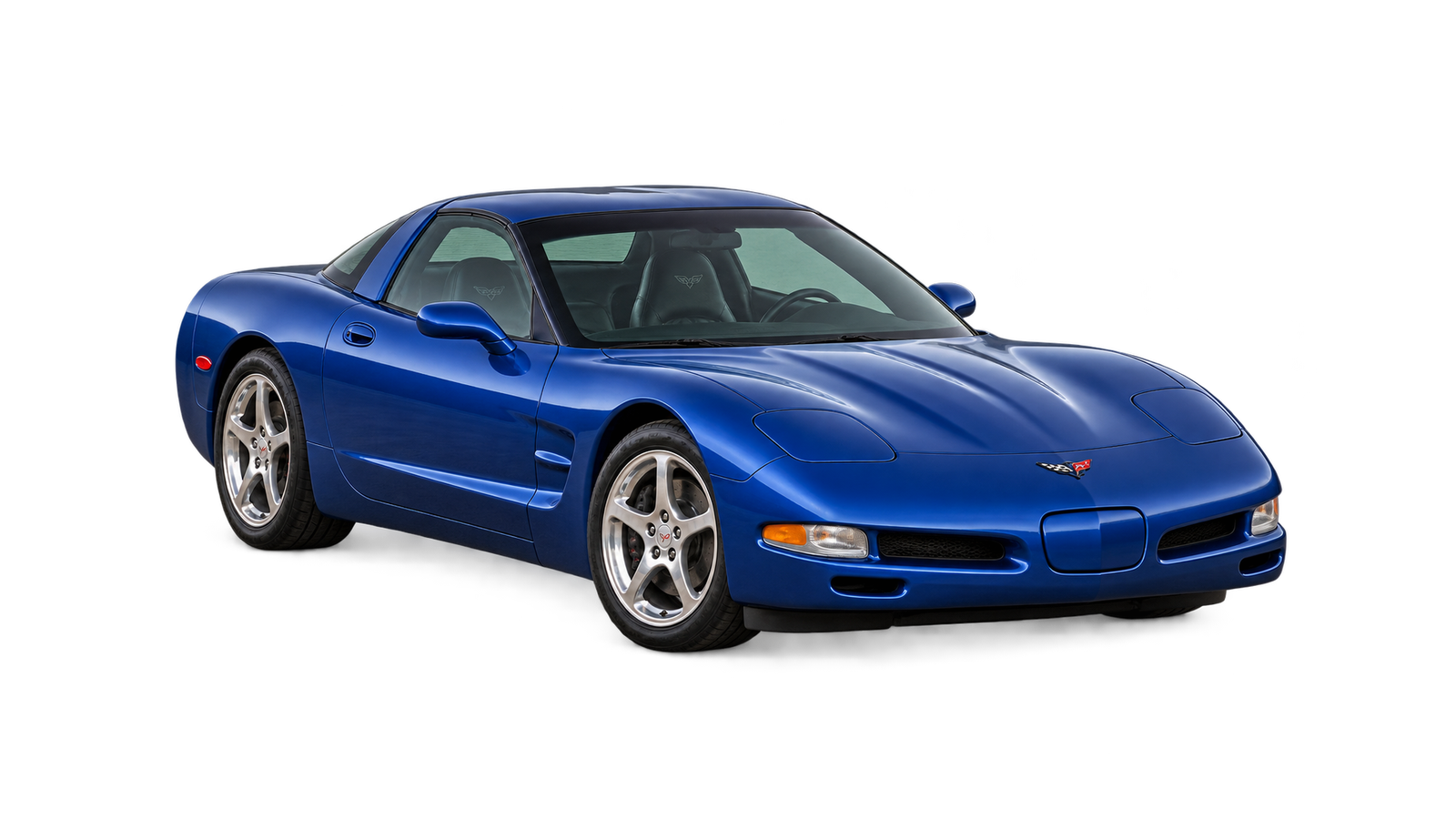
What is the 2014-2019 Chevrolet Corvette Crankshaft Thrust Bearing Wear Causes Stalling, Clutch Chatter and Launch Vibration?
A damaged crankshaft thrust bearing allows excessive crankshaft endplay on both the LT1 and LT4. The symptom set differs by transmission, which is why it is often misdiagnosed. On manual cars owners report engine stalling, clutch chatter, and hard shifting into first gear or reve… Repairs typically run $3,500-$9,000. Severity: high.
What is the 2014-2017 Chevrolet Corvette Left Fuel Tank Pump Module Flange Cracks and Leaks Fuel?
The C7 uses a saddle-style twin fuel tank. On 2014-2017 cars, cracks develop on the top surface of the left-hand fuel tank's primary fuel pump module flange, allowing liquid fuel and vapor to escape. Owners report a strong fuel smell - most obvious after parking a full car in a c… Repairs typically run $0-$5,300. Severity: high.
What is the 2025-2026 Chevrolet Corvette LT7 Engine Placed on GM Part Restriction for Possible Engine Failure (PIP6089)?
GM has placed the 5.5L twin-turbo LT7 in the 2025-2026 Corvette ZR1 - and the naturally aspirated 5.5L LT6 in the 2023-2026 Z06 - on a Technical Assistance Center part restriction, published as #PIP6089 and highlighted in GM TechLink. A part restriction means a dealer cannot simp… Repairs typically run $0-$30,000. Severity: high.
What is the 2016-2019 Chevrolet Corvette Coolant Entering Cylinders From Cylinder Head Casting Causes White Smoke and P050D?
On 2016-2019 LT1 and LT4 engines, coolant migrates into the combustion chambers from two casting defects: pinhole porosity at the cylinder liner-to-deck-face casting, and a compromised casting line inside the intake port of the cylinder head. Symptoms are white smoke and a sweet… Repairs typically run $3,000-$7,500. Severity: high.
What is the 2015-2019 Chevrolet Corvette Cast Aluminum Wheels Crack and Bend at the Inner Bead Without Impact Damage?
The cast aluminum wheels fitted to the C7 Z06 (2015-2019) and Grand Sport (2017-2019) crack and deform under ordinary driving. Cracks initiate on the inner rim near the bead seat and propagate outward, producing a slow air leak that owners often first notice as a recurring low-ti… Repairs typically run $700-$4,000. Severity: high.
What is the 2023-2024 Chevrolet Corvette LT6 Bottom-End Failure and Rod Knock Within the Break-In Period (Z06)?
A cluster of 2023 Corvette Z06 cars suffered catastrophic LT6 engine failures at extraordinarily low mileage — documented cases at 52 miles and at 621 miles, both during or immediately after the factory break-in period and both on cars driven gently (one showed a 18.7 mph lifetim… Repairs typically run $0-$28,000. Severity: high.
What is the 2020-2024 Chevrolet Corvette TR-9080 Dual-Clutch (M1L) Failures, Filter Contamination and Stuck 'Service Transmission' Message?
The Tremec TR-9080 eight-speed dual-clutch transaxle (RPO M1L) fitted to every C8 has generated a sustained pattern of failures serious enough that GM formally notified NHTSA in November 2021 that it was investigating. The signature complaint is a 'Service Transmission' message t… Repairs typically run $150-$9,000. Severity: high.
What is the 2023-2026 Chevrolet Corvette Fuel Spillage into Filler Pocket Reaching Ignition Source - Recall 25V536000?
GM recalled 2023-2026 Corvettes built with a left-side radiator/fan combination because excess fuel can spill into the fuel-filler pocket during refueling and drain onto an ignition source. On the mid-engine C8 the filler pocket sits directly above hot engine and exhaust hardware… Repairs typically run $0-$0. Severity: high.
What is the 2021 Chevrolet Corvette Rear Half-Shaft Assemblies Missing Ball Bearings - Recall 22V091000?
GM recalled 2021 C8 Corvettes because rear half-shaft assemblies may have left the supplier missing one or more ball bearings inside the joint. A half-shaft joint short of its complement of bearings cannot carry the torque this car makes; the joint fails and the affected rear whe… Repairs typically run $0-$0. Severity: high.
What is the 2024-2025 Chevrolet Corvette Front Seat Belt Retractors Locking in the Stowed Position - Recall 24V418000?
GM recalled 2024 C8 Corvettes because the driver and/or passenger seat belt retractor can lock while the belt is fully stowed, leaving the webbing unable to be pulled out and the restraint effectively unusable. Unlike a retractor that fails to lock in a crash, this failure is obv… Repairs typically run $0-$0. Severity: high.