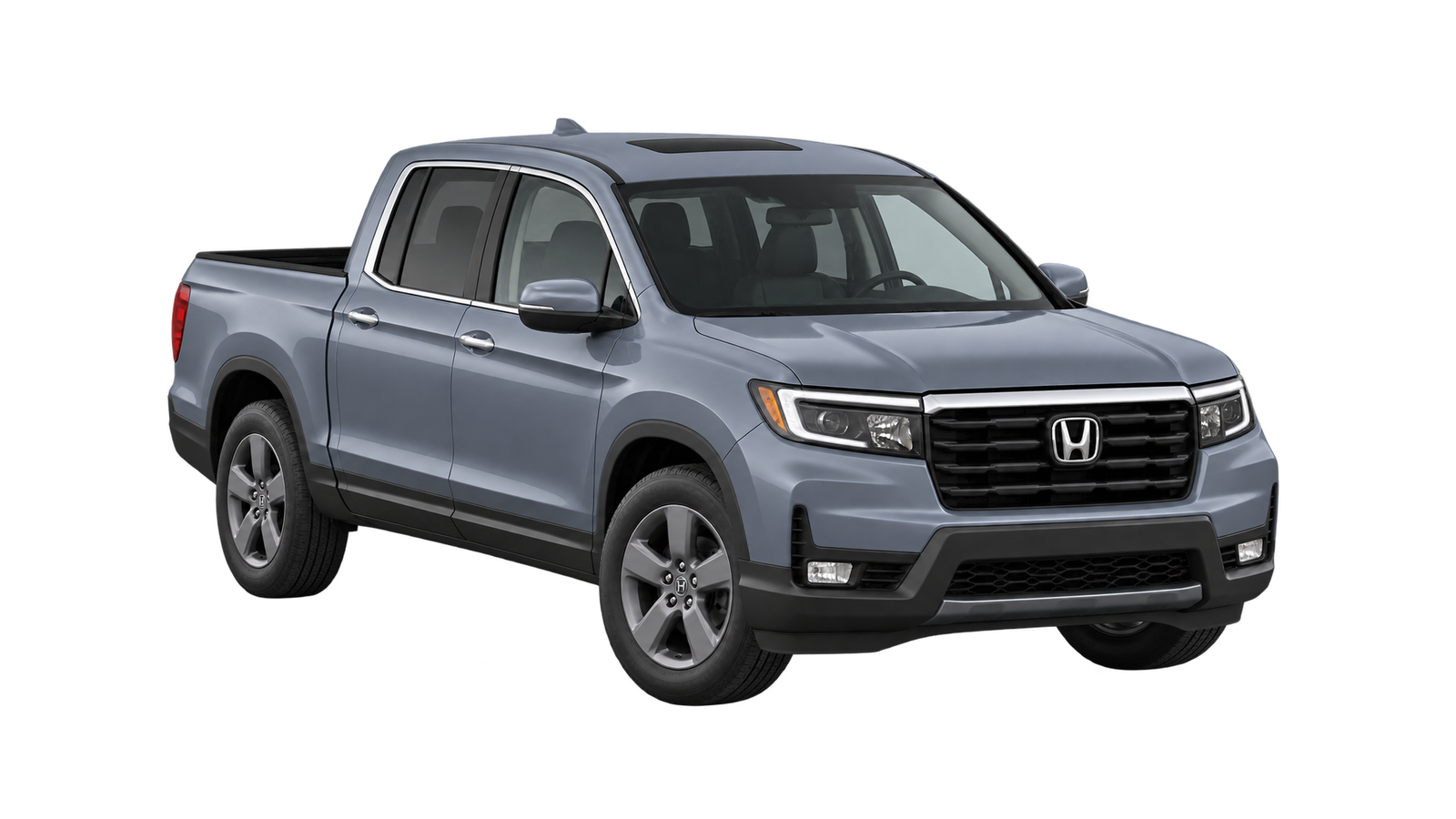
Honda Ridgeline Problems: 11 Issues Every Owner Should Know
2006-2023 model years ยท Based on 1,249+ owner reports ยท Last updated March 2026
According to Au7o's analysis of 1,249+ owner reports, the 2006-2023 Honda Ridgeline has 11 documented known issues, with 7 rated critical by the Au7o research team. The most serious are VCM System - Excessive Oil Consumption and Misfires ($81-$8,000 repair), Fuel Pump Failure Recall (NHTSA 23V-858) ($0-$1,200 repair), Radiator Cross-Contamination (SMOD) - Catastrophic Transmission Failure ($300-$6,000 repair), Brake Master Cylinder Separation Recall (NHTSA 23V-458) ($0-$1,500 repair), 10-Speed Transmission - Rough Shifting and Programming Defect ($200-$6,000 repair), Honda Sensing - Collision Mitigation False Braking ($0-$600 repair) and Spark Plugs Backing Out - Coil Pack Melting and Engine Damage ($150-$8,000 repair). The most commonly reported issue is VCM System - Excessive Oil Consumption and Misfires with 200 owner reports. Across all issues, repair costs range from $0 to $8,000. Full technical analysis and DIY maintenance guides at au7o.io.
All 11 Known Issues
Variable Cylinder Management (VCM) deactivates 3 cylinders during light-load driving to improve fuel economy. When inactive cylinders reactivate, vacuum pulls oil past piston rings into the combustion chamber, causing excessive oil consumption (1 quart per 1,000-1,500 miles vs. normal 1 quart per 3,000-5,000). Oil burning causes spark plug fouling, misfires, rough idle, and accelerated catalytic converter wear. 2013 class action lawsuit identified 1.6 million affected Honda vehicles including 2006-2013 Ridgelines.
Common Symptoms
- Excessive oil consumption (1 quart per 1,000-1,500 miles)
- Engine misfire codes P0300-P0306
- Fouled spark plugs with carbon buildup and wet deposits
- Rough idle or hesitation
- Check engine light illuminated
- Blue or gray smoke from exhaust
- Excessive engine vibration when VCM activates
How to Fix
Disable VCM using aftermarket devices: VCMuzzler II ($81), VCMTuner II ($150-$200), or S-VCM Controller ($180-$250). Check oil level every 500-1,000 miles until VCM disabled. Use synthetic 0W-20 oil. Replace spark plugs every 30,000-50,000 miles instead of 100,000. Severe engine damage may require rebuild ($4,000-$8,000).
What Owners Are Using
Parts and tips from 200+ owners who fixed this issue
- UpgradeVCMuzzler II ($81) is most recommended for budget-conscious owners - simplest install, no power wire needed, 1-minute installation
- UpgradeVCMTuner II ($150-$200) preferred for newer models with automatic temperature sensing and overcooling protection
- TipMonitor oil level obsessively and keep 2-3 quarts in vehicle for top-offs between oil changes
- NoteInstall VCM disabler as preventive measure, not reactive - engine damage from oil consumption is permanent and expensive
- TipReplace spark plugs every 30k-50k miles instead of 100k - fouled plugs cause misfires that damage catalytic converters ($1,500-$3,500)
- TipDisabling VCM also protects engine mounts and transmission from excessive wear and vibration
The 3.5L aluminum engine with steel spark plugs experiences thermal stress due to temperature differences. Spark plugs back out (loosen) due to aluminum block expansion/contraction cycles, causing misfires and potentially breaking inside the combustion chamber. Loose spark plugs allow coil packs to melt and enter the engine block causing catastrophic damage. After 60,000 miles, Honda service bulletins specify spark plug torque should be double-checked. Affects all J35 engine platforms (Pilot, Odyssey, Ridgeline).
Common Symptoms
- Misfire codes P0300-P0306
- Check engine light
- Rough idle or hesitation
- Coil pack melting or burning visible in cylinder
- Complete engine failure if melted coil enters combustion chamber
- Engine won't start (broken/loose plugs)
How to Fix
At 60,000 miles: remove spark plugs and re-torque to proper spec (18 ft-lbs) using torque wrench. Inspect each plug for backing out or looseness. Use OEM Honda spark plugs only. Coil pack replacement if melted: $150-$300 per coil + labor. Engine head repair if melted coil damaged head: $1,500-$3,000+. Full engine rebuild if catastrophic: $4,000-$8,000+.
What Owners Are Using
Parts and tips from 65+ owners who fixed this issue
- TipUse torque wrench when installing spark plugs - do not over-tighten (18 ft-lbs spec exactly)
- TipAlways work on engine when completely cool - aluminum expands significantly when hot and causes incorrect torque readings
- TipCheck spark plug torque at 60,000 miles and every 30,000 miles thereafter as preventive maintenance
- UpgradeUse OEM Honda plugs at $3-$5 each - aftermarket plugs from different manufacturers may have inconsistent heat ranges
- NoteHave coil packs inspected immediately if misfire codes appear - replacing coils early prevents catastrophic $4,000+ engine damage
NHTSA investigation EA25-004 covers 2.2 million Honda vehicles including 2020-2023 Ridgeline for idle stop and go (ISG) system failure to restart engine after automatic shutdown at stop lights. Vehicle may fail to automatically restart when stop ends, requiring driver to manually restart by shifting to Park and pressing ENGINE START/STOP button. Honda released TSBs 23-008, 23-009, 23-010 with two-stage remedy: Stage 1 involves PCM software update; Stage 2 (if software fails) involves starter assembly or relay replacement with 10-year unlimited mileage warranty extension. Despite repairs, NHTSA continues receiving complaints of failures even on vehicles with TSB applied.
Common Symptoms
- Engine fails to automatically restart when traffic resumes
- Requires manual restart by pressing ENGINE START/STOP button
- Intermittent failures (sometimes restarts, sometimes doesn't)
- Check engine light appearing with starting system codes
How to Fix
Stage 1: Visit Honda dealer for PCM software update (free under warranty) - TSB 23-008, 23-009, 23-010 references. Labor: 1-2 hours. Stage 2 (if software doesn't resolve): Replacement of starter motor or related relays. Starter replacement: $300-$500 + labor. Relay replacement: $50-$150 + labor. Free if within extended warranty (10 years unlimited miles per TSB). Out-of-warranty cost: $350-$800.
What Owners Are Using
Parts and tips from 75+ owners who fixed this issue
- TipGet TSB updates completed as soon as possible - Stage 1 software update solves many cases at no cost
- TipDocument all ISG failures with date, time, temperature, and traffic conditions for warranty escalation if issues continue
- TipDisable ISG manually if experiencing repeated failures - use infotainment settings (workaround, not fix)
- TipKeep battery in excellent condition - weak battery may exacerbate ISG restart issues
- TipReport continued failures to Honda corporate after TSB completion - NHTSA investigation ongoing and additional recalls may be forthcoming
- NoteDon't ignore issue - inability to restart at traffic light creates traffic safety hazard and intersection blocking
The radiator internal cooler corrodes at seams and fittings, allowing coolant to mix with transmission fluid in a condition known as "SMOD" (Strawberry Milkshake Of Death). This coolant contamination destroys all clutch packs and friction materials in the 5-speed transmission. 2006-2008 models see highest failure rates, particularly in rust-belt states past 80,000-120,000 miles. Unlike manufacturer recalls, Honda did not formally recall despite numerous failures.
Common Symptoms
- No drive or reverse suddenly
- Transmission refuses to engage gears
- Pink or milky transmission fluid (coolant mixed with ATF)
- Rough shifting before complete failure
- Transmission overheating
- Loss of power during acceleration
How to Fix
Proactive radiator replacement at 100,000 miles as preventive maintenance ($300-$600). If SMOD has occurred: full transmission rebuild or replacement ($4,000-$6,000). Use Honda ATF 3.1 or equivalent. Many owners replace radiator every 100k miles as insurance policy.
What Owners Are Using
Parts and tips from 150+ owners who fixed this issue
- UpgradeReplace radiator at 100k miles with OEM or Denso radiator as preventive measure - $300-600 prevents $4,000+ transmission replacement
- TipCheck transmission fluid color every oil change - pink or milky indicates coolant intrusion and immediate service needed
- UpgradeUse Honda ATF 3.1 or equivalent high-quality automatic transmission fluid for fluid changes
- NoteIn rust-belt states, inspect radiator for corrosion every 50k miles - road salt accelerates radiator failure
- TipJoin RidgelineOwnersClub forums to monitor SMOD failures reported in your region and model year
The 10-speed automatic transmission (replaced 6-speed from 2017-2019) exhibits rough and delayed shifting, loud noises during gear changes, sudden harsh accelerations/decelerations, jerking at all speeds, and sudden loss of power. Class action lawsuit alleges programming defect where the transmission control module doesn't communicate properly with powertrain control module, causing gear shifting to be mistimed. Common complaint: transmission slip followed by hard shift from 2nd to 3rd gear occurring nearly every time under harder acceleration, hill climbing, or with weight in bed.
Common Symptoms
- Rough or delayed shifting between gears
- Transmission jerking or hesitation
- Loud clunking or banging during shifts
- Sudden loss of power or acceleration
- Transmission slip followed by hard shift
- Check engine light with transmission codes
- Issues worse when under load (towing, bed weight, hills)
How to Fix
Perform transmission software update at Honda dealer (may help but may not fully resolve). Transmission fluid change using Honda ATF (specific type for 10-speed) every 30,000 miles: fluid cost $40-$80 + labor $150-$250 = total $200-$330. Check for transmission recall status with VIN. Full transmission replacement if programming update and fluid service don't resolve: $4,000-$6,000. Class action lawsuit may provide compensation.
What Owners Are Using
Parts and tips from 95+ owners who fixed this issue
- TipGet proper diagnosis before assuming catastrophic transmission failure - shift problems often correctable with software updates
- TipFollow aggressive fluid change schedule (every 30k miles) rather than Honda's 100k mile recommendation - extends transmission life
- TipDealers can perform transmission software update - this has resolved issues in some cases at no cost under warranty
- UpgradeUse ONLY Honda-approved ATF for 10-speed transmission - wrong fluid type worsens shifting and causes damage
- NoteDo not ignore rough shifting - continued driving can damage transmission clutches and lead to $4,000+ replacement
- TipDocument all transmission issues and shifting complaints - supports warranty claim or class action lawsuit participation
AWD Ridgelines experience noise and juddering from the rear differential, particularly when turning. The differential fluid breaks down prematurely due to contamination from clutch wear debris, condensation, or water intrusion. Water can enter through the breather tube vent in the rear subframe, especially after launching boats or driving through deep water. Low or contaminated differential fluid causes clutch noise and binding on turns.
Common Symptoms
- Humming or whining noise from rear axle
- Judder or binding when turning
- Clicking noise during turns
- Vibration in rear end during cornering
- Metallic grinding sound from rear
- Noise increases with temperature
How to Fix
Replace rear differential fluid with Honda DPSF (Dual Pump System Fluid): 2 quarts needed ($40-$60 for fluid) + labor ($80-$120) = total $120-$180. Check differential fluid level by removing fill plug - should be at bottom of hole. Change fluid every 30,000-50,000 miles. Avoid launching boats or driving through water covering tires. Differential replacement if severely damaged: $800-$1,500.
What Owners Are Using
Parts and tips from 70+ owners who fixed this issue
- TipChange differential fluid every 30k-50k miles, NOT following original 100k mile maintenance schedule - prevents premature breakdown
- UpgradeUse ONLY Honda DPSF fluid - different fluid specifications can cause clutch slipping and damage
- TipInspect rear diff during every oil change for leaks - catching early saves $1,000+ differential replacement
- NoteAvoid launching boats or deep water driving - causes water contamination through breather vent leading to premature failure
- TipFluid color indicates condition - dark brown or black fluid indicates contamination requiring immediate change
NHTSA recall 23V-858 affects 2.5+ million Honda and Acura vehicles including 2017-2020 Ridgelines. The Denso-branded fuel pump impeller was improperly molded with low-density material that deforms over time and interferes with the fuel pump body. Pump becomes inoperative, causing difficulty starting, engine stalling while driving (safety hazard), or complete no-start. This is an expansion of earlier recalls 20V-314 and 21V-215. Remedy parts were delayed causing extended wait times until Fall 2024.
Common Symptoms
- Engine warning light illuminated
- Difficulty starting engine
- Engine stalling while driving (safety hazard)
- Sudden loss of power or acceleration
- Engine cranks but won't start
- P0087 code (Fuel Rail/System Pressure Too Low)
How to Fix
Check Honda recall website with VIN at owners.honda.com. Contact Honda customer service: 1-888-234-2138. Schedule dealer appointment for FREE fuel pump module replacement. Confirm parts are in stock before scheduling (critical - parts were severely delayed). Keep fuel tank above 1/2 full as workaround until repair. Out-of-pocket replacement: $600-$1,200. Under recall: FREE.
What Owners Are Using
Parts and tips from 180+ owners who fixed this issue
- NoteCheck recall status with VIN immediately - this is a critical safety issue that can cause stalling while driving
- TipKeep fuel tank above 1/2 full while waiting for recall repair - reduces stalling risk by maintaining fuel pressure
- TipParts availability was severely delayed through Fall 2024 - call dealership to confirm parts in stock before scheduling appointment
- NoteIf engine stalls while driving, safely pull over immediately and call for tow truck - do not make unnecessary trips
- TipOwners who paid out-of-pocket may be eligible for reimbursement per recall plan - keep all receipts
The tie rod fastener connecting the brake booster and brake master cylinder may have been improperly assembled during manufacturing. Loose or missing nuts allow the brake master cylinder to separate from the brake booster assembly, causing complete loss of brake function - extreme safety hazard and crash risk. NHTSA reports 124,077 potentially affected vehicles with approximately 1% exhibiting the defect. Issue first discovered December 2020; first brake failure complaint received December 2022.
Common Symptoms
- Soft or spongy brake pedal
- Brake pedal goes to floor with no resistance
- Increased stopping distance
- Brake warning light illuminated
- Brake failure (catastrophic - complete loss of braking ability)
How to Fix
Contact Honda customer service: 1-888-234-2138 IMMEDIATELY. Check recall status with VIN at owners.honda.com. Schedule emergency dealer appointment for FREE brake booster assembly inspection/repair. Dealers will inspect tie-rod studs and replace brake booster if necessary at no charge. If soft brake pedal present: DO NOT continue driving - call for tow truck. Out-of-pocket brake booster replacement: $800-$1,500. Under recall: FREE.
What Owners Are Using
Parts and tips from 124+ owners who fixed this issue
- NoteDO NOT IGNORE soft or mushy brake pedal - this is life-threatening safety issue that can cause accidents
- NoteCheck recall status with VIN IMMEDIATELY - this affects brake safety and approximately 124,000 vehicles
- NoteIf experiencing brake issues, stop driving immediately and have vehicle towed to dealer - brake failure is catastrophic
- TipIf brake pedal feels different than normal, have inspected before problem worsens - early detection prevents accidents
- TipSoft brakes often dismissed as normal wear - get dealer inspection if any doubt about brake pedal feel
Honda Sensing collision mitigation braking system (CMBS) gives false alarms and phantom braking, particularly during left-hand turns through intersections with opposite traffic, and on windy roads. The forward collision warning also fails to alert in actual collision scenarios. NHTSA investigation EA21-005 covers 2017-2022 models (focus on Accord/CR-V but Ridgeline also affected). ODI received 1,294 consumer complaints regarding unexpected AEB activation, with data indicating 47 crashes and 93 injuries potentially linked to phantom braking. Honda attributed some issues to radar positioning.
Common Symptoms
- Sudden automatic braking when no obstacle present (phantom braking)
- False collision warnings during turns
- Braking triggered on windy roads
- System brakes when turning left through intersection
- Forward collision warning fails when actual collision imminent
- Inconsistent system behavior
- Unexpected deceleration in traffic
How to Fix
Contact Honda dealer for radar re-calibration/repositioning (available free under warranty). Honda software updates address some phantom braking scenarios. Radar sensors may need replacement if defective: $400-$600. Full Honda Sensing system recalibration: $200-$400 labor. Some owners disable system via infotainment menu if persistent issues (reduces safety features).
What Owners Are Using
Parts and tips from 85+ owners who fixed this issue
- TipMany owners reported phantom braking on Ridgeline forums - request radar re-calibration at dealer as this has resolved many reported cases
- TipDon't dismiss false braking as driver error - issue is real and documented in 1,294+ NHTSA complaints with 47 crashes
- TipDocument phantom braking incidents with location, weather, and driving conditions for warranty claim support
- TipSoftware updates released - ensure dealer updates your vehicle to latest Honda Sensing version to reduce phantom braking
- NoteWindy weather and left turns through intersections are known trigger scenarios - be prepared for unexpected braking
- TipNHTSA investigation EA21-005 ongoing - stay updated on future TSBs or recalls that may be issued
Center console infotainment touchscreen goes completely black or becomes unresponsive on 2017-2023 models. System may enter infinite shutdown loop draining battery overnight. Software glitches across all model years and loose fuse connections cause complete audio/navigation system failure. Class action lawsuit (2019) alleged multiple defects including crashes, freezes, failure to start/shut down, and failure to connect to smart devices. Honda issued multiple TSBs starting November 2017, but plaintiffs claimed Honda unable to fix defects across multiple service attempts.
Common Symptoms
- Center touchscreen completely black with no display
- Touchscreen frozen or unresponsive to touch
- Infinite reboot loop while parked
- Loss of radio, navigation, and climate controls
- Battery drain when vehicle is off
- System crash during use
- Wireless connectivity failures
How to Fix
Check fuse box for loose fuse controlling infotainment - reseat if loose (common fix). Perform hard reset: hold power button 10 seconds or disconnect battery 10 minutes. Visit Honda dealer for software update (free under warranty) - TSB updates available. Persistent issues may need complete infotainment unit replacement: factory replacement $800-$1,500 + labor $200-$400 = total $1,000-$1,900. Aftermarket head unit option: $400-$800.
What Owners Are Using
Parts and tips from 110+ owners who fixed this issue
- TipCheck for loose fuse before assuming unit failure - very common and free fix that solves many black screen issues
- TipHard reset sometimes resolves temporary glitches - try before dealer appointment (hold power 10 seconds or disconnect battery)
- TipRequest Honda dealer TSB software update - free under warranty and resolves many issues without hardware replacement
- TipDocument all system failures with photos/videos for warranty support - helps escalate case to Honda corporate if needed
- NoteIf screen drains battery overnight, disconnect infotainment fuse until dealer repair to avoid being stranded with dead battery
- TipMultiple service attempts by dealer common - may require escalation to Honda corporate for persistent issues beyond dealer capability
The Ridgeline's unique in-bed trunk has drainage holes and weep holes designed to channel water out. These drainage holes frequently clog with leaves, pine straw, tree debris, pollen, and mildew. When clogged, rainwater and vehicle washing accumulate inside the trunk, causing rust, odor, and rendering storage unusable. The trunk gutter channel and lower perimeter drain holes require periodic cleaning. Some cases involve improper latch alignment or twisted weatherstripping seals.
Common Symptoms
- Inches of standing water inside in-bed trunk after rain
- Water that won't drain after car wash
- Musty smell from trunk area
- Rust and corrosion visible inside trunk
- Debris and leaves accumulating in water
- Water dripping from trunk while driving
How to Fix
Preventive maintenance: inspect and clean all 10 bed drainage holes and trunk perimeter weep holes quarterly. Clear gutter channel around trunk opening of debris. Clean small drain holes at bottom of gutter channel. Verify trunk latch alignment - improper alignment prevents seal closure. Inspect and replace weatherstripping seals if twisted or loose ($50-$150). Dealer inspection: $100-$200.
What Owners Are Using
Parts and tips from 95+ owners who fixed this issue
- TipClean drainage holes every 3 months using small wire probe or compressed air - quarterly inspection prevents major flooding issues
- TipAfter vehicle wash, check trunk for standing water and ensure all holes are clear
- TipInspect weatherstripping seals annually and replace if cracked or twisted - prevents water intrusion
- NoteAvoid high-pressure washer spray directed at trunk area - can push debris into drain holes and cause clogs
- TipRidgelineOwnersClub has detailed forum threads with photos showing exact drainage hole locations and cleaning procedures
Frequently Asked Questions
What are the most common Honda Ridgeline problems?
According to Au7o's analysis of 1,249+ owner reports, the 2006-2023 Honda Ridgeline has 11 documented issues. The most frequently reported are: VCM System - Excessive Oil Consumption and Misfires, Fuel Pump Failure Recall (NHTSA 23V-858), Radiator Cross-Contamination (SMOD) - Catastrophic Transmission Failure. Of these, 7 are rated critical and should be addressed promptly.
Is the Honda Ridgeline reliable?
The 2006-2023 Honda Ridgeline has 11 known issues documented across 1,249+ owner reports. 7 issues are rated critical: VCM System - Excessive Oil Consumption and Misfires and Fuel Pump Failure Recall (NHTSA 23V-858) and Radiator Cross-Contamination (SMOD) - Catastrophic Transmission Failure and Brake Master Cylinder Separation Recall (NHTSA 23V-458) and 10-Speed Transmission - Rough Shifting and Programming Defect and Honda Sensing - Collision Mitigation False Braking and Spark Plugs Backing Out - Coil Pack Melting and Engine Damage. Prospective buyers should inspect for these issues and factor potential repair costs into their purchase decision. Regular maintenance following the manufacturer's schedule helps prevent many common problems.
How much does it cost to fix common Honda Ridgeline problems?
Repair costs for known Honda Ridgeline issues range from $0 to $8,000, depending on the specific problem and whether you choose DIY or professional repair. The most critical issue, VCM System - Excessive Oil Consumption and Misfires, typically costs $81-$8,000 to repair. Au7o provides step-by-step DIY maintenance guides that can help reduce repair costs.
What year Honda Ridgeline is the most reliable?
Reliability varies across model years of the Honda Ridgeline. Based on owner reports, issues are most commonly reported in earlier model years. Au7o recommends checking the specific known issues for your target year before purchasing, and having a pre-purchase inspection performed by a qualified mechanic. Our known issues database covers the 2006-2023 Honda Ridgeline with 11 documented issues from 1,249+ owner reports.
Get DIY Repair Guides for Your Honda Ridgeline
AI-powered step-by-step repair and maintenance guides tailored to your exact vehicle. Enter your year, make, and model to get started.
Get Started Free