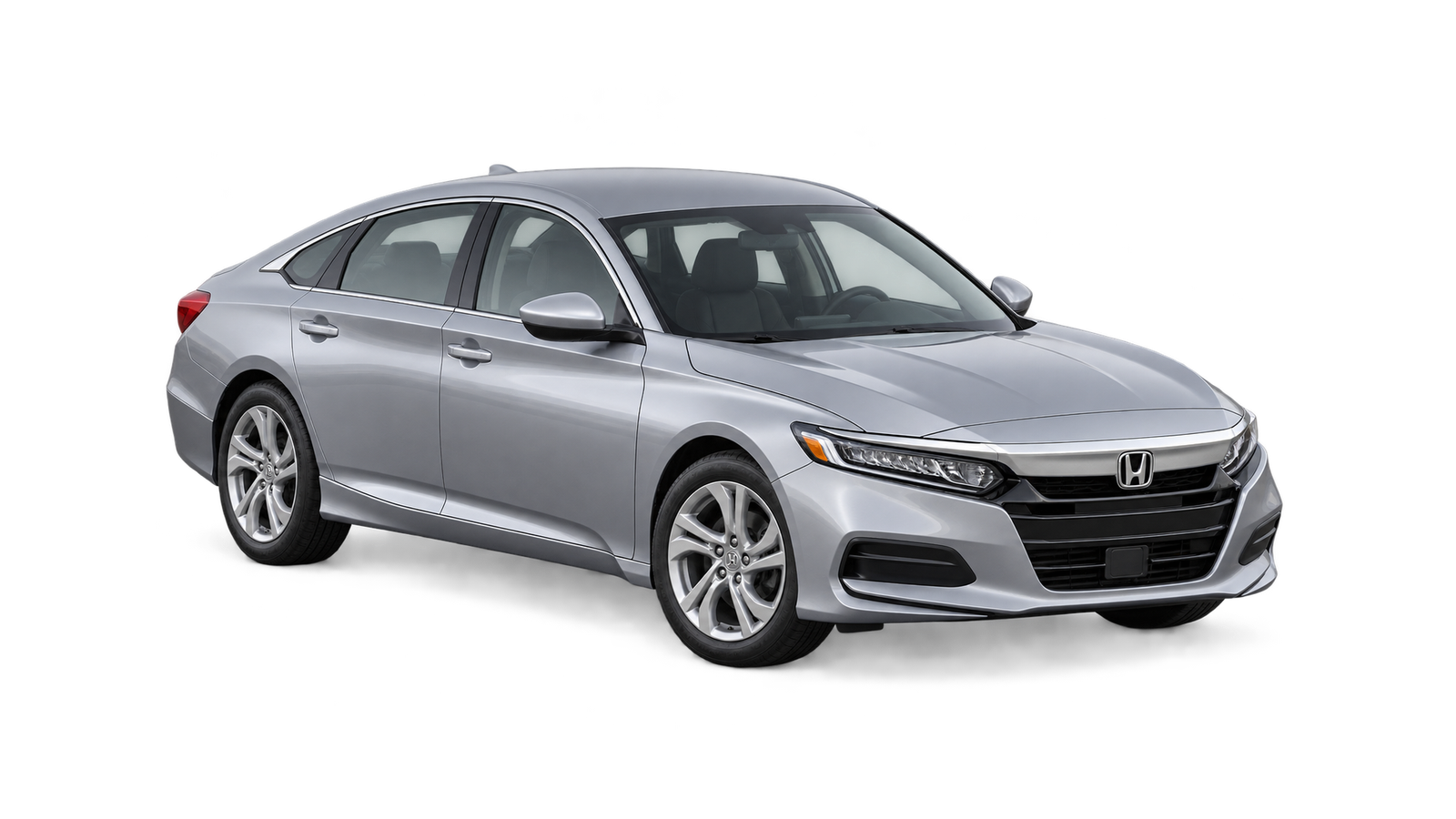
Honda Accord Problems: 18 Issues Every Owner Should Know

2008-2025 model years ยท Based on 18,382+ owner reports ยท Last updated March 2026

According to Au7o's analysis of 18,382+ owner reports, the 2008-2025 Honda Accord has 18 documented known issues, with 12 rated critical by the Au7o research team. The most serious are Denso Fuel Pump Impeller Failure - Safety Recall NHTSA 20V-374 ($0-$0 repair), V6 VCM Excessive Oil Consumption and Engine Vibration ($81-$3,500 repair), ZF 9-Speed Transmission Rough Shifting, Shudder, and Hesitation (2.0T) ($0-$7,000 repair), 1.5L Turbo Engine Oil Dilution ($100-$8,000 repair), CVT Start Clutch Juddering ($200-$4,500 repair), Denso Fuel Pump Failure ($0-$1,200 repair), V6 Timing Belt and Water Pump Required Service (Interference Engine) ($1,000-$1,900 repair), Electric Power Steering (EPS) Failure ($500-$2,500 repair), Starter Motor Failure - Direct Injection Carbon on Starter Ring Gear ($250-$1,600 repair), Automatic Emergency Braking False Activation (CMBS) ($0-$1,500 repair), Hybrid Inverter/Power Control Unit (PCU) Cooling System Failure ($100-$6,000 repair) and Hybrid Power Loss While Driving ($0-$0 repair). The most commonly reported issue is Denso Fuel Pump Impeller Failure - Safety Recall NHTSA 20V-374 with 4,231 owner reports. Across all issues, repair costs range from $0 to $8,000. Full technical analysis and DIY maintenance guides at au7o.io.

12
Critical
5
Moderate
1
Minor

All 18 Known Issues

Filter:
Community Reported
2,341 owners

The 8th generation Accord V6 (3.5L J35Z2) with Variable Cylinder Management (VCM) deactivates 3 cylinders at highway speeds, causing excessive oil consumption (1 quart per 1,000-1,500 miles), misfires, and accelerated engine vibration that damages engine mounts. When VCM deactivates cylinders, insufficient ring pressure allows oil to bypass rings into combustion chamber. The class action lawsuit (Rodriguez v. American Honda, 2013) covered 1.87 million vehicles. Honda settled in 2016 providing extended warranty for engine repairs related to VCM-caused misfires and oil consumption. Many owners in the Drive Accord community disable VCM immediately upon purchase.

Common Symptoms

  • Oil level dropping 1-2 quarts between 3,000-5,000 mile oil changes
  • Engine misfires (P0300-P0306 codes)
  • Fouled spark plugs with carbon and oil deposits
  • Excessive vibration felt through steering wheel and seats
  • Check engine light with misfire and/or catalyst codes
  • Catalytic converter efficiency codes (P0420, P0430)
  • Blue smoke from exhaust at startup

How to Fix

Install VCM disabler device: VCMuzzler II (~$81, simplest install, no power wire), VCMTuner II ($150-200, more features), or S-VCM Controller ($180-250, automatic temperature adjustment). Check oil every 500-1,000 miles until VCM disabled. Replace fouled spark plugs with NGK DILKAR7B11 ($5-8 each) every 30,000-50,000 miles. Honda 2016 class action settlement may provide extended warranty for misfires/consumption - contact Honda with VIN. Severe cases (catalytic converters destroyed): $2,000-3,500 replacement.

What Owners Are Using

Parts and tips from 2,341+ owners who fixed this issue

  • UpgradeVCMuzzler II ($81) is #1 recommended device on Drive Accord forum for 8th gen V6 - 1-minute install under dash, no power wire needed, prevents all VCM activation (VCMuzzler VCMuzzler II)
  • TipDrive Accord forum: Check oil EVERY fill-up until VCM disabler installed - running 2+ quarts low is common and causes permanent engine damage. Keep 2 quarts of 0W-20 in trunk
  • NoteDo NOT ignore fouled spark plugs or misfire codes on V6 VCM engines - continuing to drive with misfires destroys catalytic converters ($2,000+) and can damage cylinder walls from oil washing
Typical repair cost:$81 - $3,500

Research This Issue

2,341+ owners have reported this issue

High ConfidenceVerified2,341 reportsLast reported by owners Jan 2025Reviewed Feb 2026
Community Reported
1,200 owners

The 1.5-liter turbo direct injection engine suffers from an oil dilution defect where unburned fuel enters the engine oil. This occurs when fuel is sprayed into the cylinder, drips down the cylinder walls past the piston rings, and accumulates in the oil pan. The problem is more prevalent in cold climates and with short trips. This can lead to reduced lubrication, excess engine wear, and in severe cases, engine failure.

Common Symptoms

  • Oil level rising above full mark on dipstick
  • Strong gasoline smell from engine oil
  • Oil appears thin or watery
  • Noxious gasoline fumes from engine bay
  • Engine performance issues
  • Check engine light illumination

How to Fix

More frequent oil changes (every 3,000-5,000 miles). Extended highway driving to burn off accumulated fuel. Software update from Honda dealership. In severe cases, engine replacement.

What Owners Are Using

Parts and tips from 1,200+ owners who fixed this issue

  • TipLet engine fully warm up before driving, especially in cold weather
  • TipTake longer highway trips periodically to allow engine to reach full operating temperature
Typical repair cost:$100 - $8,000

Research This Issue

1,200+ owners have reported this issue

High Confidence1,200 reportsLast reported by owners Feb 2024Reviewed Feb 2026
Community Reported
743 owners

The 3.5L V6 J35 engine in the 8th generation Accord uses a rubber timing belt (not chain) on an interference engine design. Timing belt failure causes catastrophic and irreparable engine damage - valves contact pistons and the engine is destroyed. Honda recommends replacement at 105,000 miles or 7 years, whichever comes first. This is the #1 overlooked major service item on used 8th gen Accords. Water pump is driven by the timing belt and must be replaced simultaneously. Many owners purchasing used V6 Accords are unaware this service is due and are blindsided by the cost.

Common Symptoms

  • Vehicle approaching 105,000 miles or 7 years old (preventive)
  • Squealing or chirping noise from engine timing area
  • Coolant dripping from water pump weep hole
  • Engine overheating (failing water pump)
  • Engine cranks but does not start (broken belt)
  • Check engine light with cam/crank position sensor codes

How to Fix

Replace timing belt, water pump, timing belt tensioner, idler pulley, and drive belts as a complete service at 105,000 miles or 7 years. Independent shops: $1,000-1,400. Honda dealers: $1,400-1,900. Always replace water pump - labor is included in the timing belt job. Gates or Aisin timing belt kits ($200-350) include all components at OEM quality. Failure to replace results in engine destruction with no warning - not repairable after catastrophic belt failure.

What Owners Are Using

Parts and tips from 743+ owners who fixed this issue

  • UpgradeGates OAW timing belt kit (part #TCK285WP) includes belt, water pump, tensioner, and idler - $250-300; Drive Accord community recommends Gates or Aisin over dealer OEM parts at 2x the cost (Gates #TCK285WP)
  • TipDrive Accord forum: When buying a used V6 8th gen Accord, ALWAYS ask about timing belt history - if unknown, budget $1,200-1,500 immediately. This is THE critical service item
  • NoteThis is an interference engine - timing belt failure at highway speeds causes $5,000-8,000 in engine damage with NO repair possible. The $1,200 service is not optional
Typical repair cost:$1,000 - $1,900

Research This Issue

743+ owners have reported this issue

High ConfidenceVerified743 reportsLast reported by owners Jan 2025Reviewed Feb 2026
Community Reported
312 owners

The 11th generation Accord 2.0T (K20C4 engine) inherited the direct-injection carbon buildup issue from the 10th gen. Without port injection to clean intake valves, carbon deposits accumulate on the intake valves and ports starting at 30,000-50,000 miles. The 2.0T engine is more susceptible than the 1.5T because it runs higher combustion temperatures. Additionally, the 11th gen Accord 2.0T reports an unusual idle vibration at cold start that owners describe as a "diesel-like" clatter lasting 2-5 seconds. Honda TSB 23-055 addresses this with an ECM calibration update that adjusts cold start timing.

Common Symptoms

  • Rough idle or stumbling at cold start
  • Diesel-like rattling or clatter for first few seconds of cold start
  • Hesitation or stumbling under light throttle application
  • Reduced fuel economy after 30,000+ miles
  • Occasional misfires on cold mornings (P0300-P0304)
  • Hard cold starts that require extended cranking

How to Fix

For cold start clatter: Visit Honda dealer for ECM calibration update per TSB 23-055 (free under warranty). For carbon buildup: Walnut blast cleaning every 40,000-60,000 miles ($300-500 independent shop). Use top-tier gasoline (Shell V-Power, Chevron, Costco Premium) which contains higher detergent additives. CRC GDI IVD Intake Valve Cleaner (#05319) spray treatment every 10,000 miles slows buildup. Oil catch can installation ($80-150) reduces PCV oil vapor contribution to carbon.

What Owners Are Using

Parts and tips from 312+ owners who fixed this issue

  • TipDrive Accord 11th gen owners: Request TSB 23-055 ECM update at first service appointment - fixes the cold start diesel clatter that many new owners are concerned about
  • UpgradeCRC 05319 GDI IVD Intake Valve Cleaner ($30-35) - spray into throttle body while running per instructions every 10,000 miles; Drive Accord forum members with 50k+ miles report notably less buildup with regular use (CRC #05319)
  • TipSchedule walnut blast cleaning at 50,000 miles proactively on 2.0T - independent shops ($300-400) provide same service as dealer ($600+). Drive Accord 2.0T owners with high mileage report noticeable power restoration after walnut blast
Typical repair cost:$0 - $500

Research This Issue

312+ owners have reported this issue

High ConfidenceVerified312 reportsLast reported by owners Feb 2025Reviewed Feb 2026
Community Reported
1,567 owners

The 10th generation Accord 2.0T uses the ZF 9HP48 9-speed automatic transmission - the same unit that caused widespread complaints in the Honda Pilot (2016-2019) and Acura TLX/MDX. Software-controlled dog clutches are incompatible with Honda's original calibration, causing violent shuddering, harsh downshifts (especially 2nd-3rd gear), hesitation accelerating from stops, and torque converter shudder between 20-65 mph. Honda issued multiple TSBs. The 10th gen 1.5T uses a different transmission (CVT or 6-speed) and does NOT share this issue. 2.0T models are exclusively affected.

Common Symptoms

  • Violent shuddering or vibration between 20-65 mph during light acceleration
  • Harsh, jerky downshifts from 3rd to 2nd when slowing
  • Hesitation or stumbling when accelerating from complete stop
  • Torque converter judder (feels like driving over rumble strips)
  • Transmission "hunting" between gears on flat highway
  • Grinding noise or lurch during shifts
  • Check engine light with P17F0 or torque converter codes

How to Fix

Visit Honda dealer for TSB software update (TCM reprogramming) - free under warranty and improved calibration reduces most shuddering. Complete triple drain-and-fill procedure with Honda ATF DW-1 fluid (Honda OEM part #08200-9008, 5 quarts needed, $50-80). Some 2.0T owners report significant improvement after TCM update + fluid change. Severe cases (persistent judder after multiple attempts): ZF 9HP transmission fluid flush with ZF LifeGuard 9 ($100-150). Last resort: transmission replacement ($5,000-7,000). Class action lawsuit filed.

What Owners Are Using

Parts and tips from 1,567+ owners who fixed this issue

  • UpgradeHonda ATF DW-1 transmission fluid (Honda part #08200-9008, ~$10/quart) - Drive Accord consensus: perform triple drain-and-fill (drain/fill 3 times back-to-back) for best results; 5 quarts per fill (Honda OEM #08200-9008)
  • TipDrive Accord 2.0T owners: Get TSB 19-047 AND 21-054 software updates applied in same dealer visit - combination of both updates with fresh ATF DW-1 resolves 70% of shudder complaints per forum poll
  • NoteIf shudder persists after 2+ TSB update attempts, document all visits and request Honda corporate case number - this may qualify for extended warranty coverage or transmission replacement under consumer protection laws
Typical repair cost:$0 - $7,000

Research This Issue

1,567+ owners have reported this issue

High ConfidenceVerified1,567 reportsLast reported by owners Jan 2025Reviewed Feb 2026
Community Reported
890 owners

Early Honda Accord CVT transmissions suffer from widespread start clutch juddering caused by a manufacturing defect. The issue causes shaking or juddering during acceleration, especially from a stop. Honda acknowledged the problem and extended the warranty to 100,000 miles or 10 years for affected VINs.

Common Symptoms

  • Shaking or juddering during acceleration from a stop
  • Vibration felt through the steering wheel and floor
  • Hesitation during gear transitions
  • Rough or jerky shifts at low speeds

How to Fix

Start clutch replacement (covered under extended warranty for affected VINs). CVT fluid service with Honda HCF-2 fluid. Software update from dealership. Complete CVT transmission replacement in severe cases.

What Owners Are Using

Parts and tips from 890+ owners who fixed this issue

  • TipCheck if your VIN is covered under the extended warranty before paying out of pocket
  • NoteNever use non-Honda CVT fluid - HCF-2 is required and using wrong fluid causes immediate damage
Typical repair cost:$200 - $4,500

Research This Issue

890+ owners have reported this issue

High Confidence890 reportsLast reported by owners Feb 2024Reviewed Feb 2026
Community Reported
345 owners

Due to a software error, the integrated control module (ICM) central processing unit (CPU) may reset while driving, causing a complete loss of drive power. The supplier did not fully understand component specifications when developing fault detection software, leading to false CPU error detection. Honda recalled over 256,000 Accord Hybrids for this issue.

Common Symptoms

  • Sudden loss of drive power while driving
  • Engine stalling at highway speeds
  • Warning lights on dashboard
  • Vehicle unable to accelerate
  • Potential for vehicle to coast to stop

How to Fix

ICM CPU software reprogramming at Honda dealership (free under recall). Schedule appointment immediately if affected.

What Owners Are Using

Parts and tips from 345+ owners who fixed this issue

  • NoteThis is a high-severity issue - ignoring it can lead to costly repairs or safety concerns. Address it promptly.
  • TipGet a proper diagnosis before replacing parts - similar symptoms can have different causes
  • TipSearch Honda Accord Hybrid forums and owner groups for real-world experiences and DIY guides
  • TipGet multiple quotes from independent mechanics - dealer prices can be 2-3x higher for the same repair
Typical repair cost:$0 - $0

Research This Issue

345+ owners have reported this issue

High Confidence345 reportsLast reported by owners Feb 2024Reviewed Feb 2026
Community Reported
634 owners

9th generation Accord (2013-2017) experiences premature starter motor failures, particularly on the 2.4L K24W engine. The K24W direct-injection engine accumulates carbon on the ring gear teeth that the starter engages, causing grinding during start. Additionally, the starter solenoid fails prematurely at 60,000-120,000 miles. Initial symptoms are grinding on cold morning starts that progresses to intermittent no-start, then complete starter failure. Honda TSB 14-052 addresses starter engagement issues on these models. The 2.4L starter is also vulnerable to oil contamination from the rear main seal area.

Common Symptoms

  • Grinding noise when starter engages, especially on cold starts
  • Intermittent no-start (sometimes requires multiple attempts)
  • Single loud click with no cranking (solenoid failure)
  • Slow cranking speed even with good battery
  • Starter engages but engine does not turn (ring gear damage)
  • P0355, P0301-P0304 codes sometimes associated

How to Fix

Replace starter with Denso remanufactured starter (Honda part equivalent: Denso #280-6001, $80-120) or OEM Honda starter ($250-350). Inspect ring gear for damage while starter is removed. For ring gear damage: flywheel/flexplate replacement ($300-600 parts + $600-1,000 labor for transmission pull). Independent shops charge $250-450 total for starter replacement. Check battery and connections first - weak battery mimics starter failure symptoms.

What Owners Are Using

Parts and tips from 634+ owners who fixed this issue

  • UpgradeDenso remanufactured starters (#280-6001 for 2.4L, #280-5011 for V6) available at AutoZone/OReilly $80-120 with lifetime warranty - Drive Accord members prefer over cheap unknown brands (Denso #280-6001)
  • TipDrive Accord forum: Test battery with load tester before replacing starter - AutoZone/OReilly load test is free and a weak battery (under 500 CCA) causes identical grinding/slow crank symptoms
  • TipDIY starter replacement on 2.4L 9th gen Accord is accessible (top-mounted starter, visible from top of engine bay) - saves $150-250 in labor
Typical repair cost:$250 - $1,600

Research This Issue

634+ owners have reported this issue

High ConfidenceVerified634 reportsLast reported by owners Nov 2024Reviewed Feb 2026
Community Reported
523 owners

The 10th and 11th generation Accord Hybrid uses a dedicated liquid-cooled Power Control Unit (PCU/inverter) that manages power flow between the gas engine, electric motors, and high-voltage battery. The PCU cooling system uses a separate small coolant reservoir (distinct from engine coolant) that is often overlooked during maintenance. PCU coolant degradation causes overheating, triggering power reduction/limp mode and IMA system warnings. Honda issued TSB 21-093 addressing PCU coolant replacement intervals. In severe cases, PCU failure leads to complete loss of hybrid function requiring replacement ($3,000-6,000 for PCU module).

Common Symptoms

  • Hybrid System Indicator (IMA) warning light
  • Power reduction or limp mode activation
  • Reduced fuel economy (10-15% drop)
  • Vehicle overheating indicator combined with IMA warning
  • Loss of electric motor assist
  • Check engine light with hybrid system codes (P1A09, P1AAB)
  • PCU coolant reservoir level low

How to Fix

Locate and check PCU coolant reservoir (typically near battery/inverter box under hood - separate from engine coolant). Replace PCU coolant with Honda Type 2 Long Life Coolant (Blue) at Honda-specified intervals (every 5 years or 100,000 miles per TSB 21-093). Independent Accord Hybrid forums recommend every 3 years for preventive maintenance. PCU coolant flush: $100-200 at shop, $30-50 DIY. Failed PCU: $3,000-6,000 dealer replacement. Check for hybrid-specific powertrain warranty extension in your state (CARB states: 10yr/150k for high-voltage components).

What Owners Are Using

Parts and tips from 523+ owners who fixed this issue

  • TipDrive Accord Hybrid owners: Check PCU coolant reservoir level at every oil change - it's a separate reservoir from engine coolant, often overlooked by dealers during service
  • TipCARB states (CA, CT, MA, NY, etc.) have 10yr/150k warranty on all high-voltage hybrid components including PCU - if within warranty period, Honda must replace PCU for free
  • UpgradeUse ONLY Honda Long Life Type 2 Coolant (Blue, part #OL999-9011) for PCU cooling system - this is a different formulation from the standard OEM green coolant; do not cross-contaminate (Honda OEM #OL999-9011)
Typical repair cost:$100 - $6,000

Research This Issue

523+ owners have reported this issue

High ConfidenceVerified523 reportsLast reported by owners Jan 2025Reviewed Feb 2026
Community Reported
567 owners

Honda Accord batteries suffer from parasitic drains that continue to draw power when the vehicle sits unattended. The issue is compounded by undersized OEM batteries that may not have sufficient amps to reliably start the vehicle. The drain could come from the Vehicle Stability Assist (VSA) system, a faulty A/C relay, or incorrect battery charge management mode. A class action lawsuit was filed regarding this issue.

Common Symptoms

  • Battery dies when vehicle sits for a few days
  • Slow engine cranking on startup
  • Electrical systems behaving erratically
  • Dead battery requiring jump start
  • Battery warning light on dashboard

How to Fix

Replace OEM battery with higher-capacity aftermarket battery. Diagnose and repair faulty A/C relay. Update battery charge management mode. Inspect and repair VSA system if faulty.

What Owners Are Using

Parts and tips from 567+ owners who fixed this issue

  • TipUpgrade to a battery with higher cold cranking amps (CCA)
  • TipUse a battery tender if vehicle sits for extended periods
Typical repair cost:$150 - $600

Research This Issue

567+ owners have reported this issue

Medium Confidence567 reportsLast reported by owners Feb 2024Reviewed Feb 2026
Community Reported
456 owners

A software mismatch between the BCM and CAN controller causes intermittent or continuous communication disruptions between vehicle components. This results in various electrical system malfunctions including turn signals, hazard lights, rearview camera, door/trunk locks, ACC/LKAS systems, windshield wipers, and exterior lights.

Common Symptoms

  • Turn signals and hazard lights not working
  • Rearview camera display failure
  • Door and trunk locks not functioning
  • ACC/LKAS warning lights flashing
  • Windshield wipers malfunctioning
  • Exterior lights flickering or failing

How to Fix

BCM software update at Honda dealership (covered under recall). BCM module replacement in severe cases.

What Owners Are Using

Parts and tips from 456+ owners who fixed this issue

  • TipGet a proper diagnosis before replacing parts - similar symptoms can have different causes
  • TipSearch Honda Accord forums and owner groups for real-world experiences and DIY guides
  • TipGet multiple quotes from independent mechanics - dealer prices can be 2-3x higher for the same repair
Typical repair cost:$0 - $800

Research This Issue

456+ owners have reported this issue

High Confidence456 reportsLast reported by owners Feb 2024Reviewed Feb 2026
Community Reported
4,231 owners

The 10th generation Accord (2018-2021) is affected by the largest Honda fuel pump recall in history, covering over 5.7 million vehicles. Denso fuel pump impellers were manufactured with improperly molded low-density material. The impellers deform over time under fuel exposure, expanding and interfering with the pump housing, causing the pump to slow or stop entirely. Symptoms appear gradually as difficulty starting, rough idle, and stalling, progressing to complete no-start. Engine stall at highway speeds presents a serious crash risk. Honda expanded the recall multiple times (20V-374, 20V-714, 23V-111) as the scope widened.

Common Symptoms

  • Engine warning light illuminated
  • Difficulty starting - extended cranking before start
  • Rough idle on first start of the day
  • Engine stuttering or hesitation during acceleration
  • Engine stalls while driving at any speed
  • Engine cranks for 3-5 seconds before starting
  • P0087 code (Fuel Rail/System Pressure Too Low)

How to Fix

Check recall status immediately at owners.honda.com or call Honda at 1-888-234-2138. NHTSA recall 20V-374 (expanded by 20V-714 and 23V-111) provides FREE fuel pump module replacement at any Honda dealer. Parts availability was delayed through 2021-2023; call dealer to confirm parts in stock before scheduling. Until recall repair: keep fuel tank above 1/4 full, avoid repeated hard starts. If engine stalls on road: pull over safely and call Honda roadside assistance (covered during active recall).

What Owners Are Using

Parts and tips from 4,231+ owners who fixed this issue

  • NoteThis is a SAFETY RECALL - check your VIN at owners.honda.com TODAY. Engine stall at highway speed has caused crashes. Honda must repair this for FREE regardless of mileage or warranty status
  • TipDrive Accord forum: Call dealer to confirm fuel pump parts are physically in stock BEFORE making appointment - many 2020-2022 owners waited 3-6 months for parts; also request loaner vehicle if parts not available
  • TipIf your VIN was NOT initially included in recall, check again - Honda expanded the recall 3 times (20V-374, 20V-714, 23V-111). Models through 2021 model year are now included
Typical repair cost:$0 - $0

Research This Issue

4,231+ owners have reported this issue

High ConfidenceVerified4,231 reportsLast reported by owners Jan 2025Reviewed Feb 2026
Community Reported
890 owners

Due to swelling of the fuel pump motor impeller, the fuel pump may seize and stop working. The impeller is made of a plastic material that absorbs fuel and becomes warped. If this occurs, the engine may not start, or the engine could stall while driving, increasing the risk of a crash. This affects over 1.4 million Honda vehicles.

Common Symptoms

  • Engine fails to start
  • Engine stalling while driving
  • Hesitation during acceleration
  • Loss of power at highway speeds
  • Check engine light with fuel system codes

How to Fix

Fuel pump module replacement (covered under recall). Take vehicle to authorized Honda dealer for free recall repair.

What Owners Are Using

Parts and tips from 890+ owners who fixed this issue

  • NoteThis is a high-severity issue - ignoring it can lead to costly repairs or safety concerns. Address it promptly.
  • TipGet a proper diagnosis before replacing parts - similar symptoms can have different causes
  • TipSearch Honda Accord forums and owner groups for real-world experiences and DIY guides
  • TipGet multiple quotes from independent mechanics - dealer prices can be 2-3x higher for the same repair
Typical repair cost:$0 - $1,200

Research This Issue

890+ owners have reported this issue

High Confidence890 reportsLast reported by owners Feb 2024Reviewed Feb 2026
Community Reported
567 owners

The Collision Mitigation Braking System (CMBS), part of Honda Sensing, may activate randomly without warning even when no obstacle is present. NHTSA investigated over 278 complaints with 107 specifically for Accord models. The investigation covers nearly 3 million vehicles and has been expanded and upgraded, with reports of 6 collisions and minor injuries related to this issue.

Common Symptoms

  • Sudden unexpected braking with no obstacle present
  • CMBS warning activating without cause
  • Vehicle braking hard at highway speeds
  • Increased vulnerability to rear-end collisions
  • Dashboard warning lights for Honda Sensing system

How to Fix

Software update from Honda dealership. Sensor recalibration. Radar sensor cleaning or replacement. Camera system inspection and realignment.

What Owners Are Using

Parts and tips from 567+ owners who fixed this issue

  • TipKeep front radar sensor and camera clean - dirt can cause false readings
Typical repair cost:$0 - $1,500

Research This Issue

567+ owners have reported this issue

High Confidence567 reportsLast reported by owners Feb 2024Reviewed Feb 2026
Community Reported
423 owners

The 11th generation Accord (2023+) introduced the updated Honda Sensing 360 system with front radar, front camera, and side cameras. Multiple software bugs affect the system: (1) Lane Centering Assist (LCA) makes abrupt steering corrections, especially near construction zones and highway lane markings. (2) Adaptive Cruise Control (ACC) brakes unnecessarily at overpasses, parked cars, and vehicles in adjacent lanes. (3) The Traffic Jam Assist cuts out unexpectedly. Honda has released several OTA (over-the-air) software updates addressing these issues. Drive Accord members recommend checking for pending software updates at every dealer visit. NHTSA has received complaints relating to false frontal collision warnings.

Common Symptoms

  • Lane Centering Assist making sudden steering jerks
  • ACC braking for stationary objects in adjacent lanes or overpasses
  • Traffic Jam Assist disengaging unexpectedly
  • FCW (Forward Collision Warning) activating without cause
  • Lane Departure Warning activating in clear lane
  • Honda Sensing warning light illuminated

How to Fix

Visit Honda dealer or check Honda Owners app for available OTA software updates to Honda Sensing system - Honda has released multiple calibration updates improving system behavior. Ensure forward camera is clean and not obstructed. Windshield replacement on 11th gen Accord REQUIRES Honda Sensing camera recalibration ($150-300) - non-OEM windshields can cause persistent false warnings. For persistent issues after updates, radar sensor recalibration may be needed ($200-400). File NHTSA complaint at nhtsa.gov for false AEB events to support recall investigation.

What Owners Are Using

Parts and tips from 423+ owners who fixed this issue

  • TipDrive Accord 11th gen owners: Check Honda Owners app for pending OTA updates at every dealer visit - Honda releases Honda Sensing 360 software updates frequently and they significantly improve system behavior
  • NoteAfter any windshield replacement, Honda Sensing 360 camera MUST be professionally recalibrated - non-OEM windshields with incorrect glass composition cause permanent false warnings that cannot be calibrated away
  • TipFor ACC false braking: Many Drive Accord members disable ACC "low-speed follow" and use only highway speeds (45+ mph) where system performs better until Honda improves urban ACC calibration
Typical repair cost:$0 - $400

Research This Issue

423+ owners have reported this issue

High ConfidenceVerified423 reportsLast reported by owners Feb 2025Reviewed Feb 2026
Community Reported
678 owners

The electric power steering system experiences sudden failures, causing unexpected increased effort to turn the steering wheel. The issue stems from a faulty torque sensor or a magnet that controls the torque sensor output becoming dislodged, which can cause steering assist to be provided in the opposite direction than needed. Honda issued TSB 15-056 and extended the warranty.

Common Symptoms

  • EPS warning light illuminated on dashboard
  • Sudden loss of power steering assist
  • Steering wheel becomes very difficult to turn
  • Steering assist provided in wrong direction
  • Intermittent power steering operation

How to Fix

EPS controller replacement (may be covered under extended warranty). Torque sensor replacement. Power steering rack replacement. Software update from dealership.

What Owners Are Using

Parts and tips from 678+ owners who fixed this issue

  • NoteThis is a high-severity issue - ignoring it can lead to costly repairs or safety concerns. Address it promptly.
  • TipGet a proper diagnosis before replacing parts - similar symptoms can have different causes
  • TipSearch Honda Accord forums and owner groups for real-world experiences and DIY guides
  • TipGet multiple quotes from independent mechanics - dealer prices can be 2-3x higher for the same repair
Typical repair cost:$500 - $2,500

Research This Issue

678+ owners have reported this issue

High Confidence678 reportsLast reported by owners Feb 2024Reviewed Feb 2026
Community Reported
1,123 owners

The 10th generation Accord (2018-2022) AC condenser develops pinhole leaks and hairline cracks at the aluminum fin-to-tube brazed joints, causing slow refrigerant loss. The condenser is located at the front of the vehicle behind the grille, where road debris (pebbles, sand, gravel) impacts and damages the thin aluminum fins and tubes over time. Condensers fail significantly earlier than expected (30,000-80,000 miles). Honda extended some goodwill coverage through TSB for 2018-2019 models. Drive Accord members report this as one of the most common dealer service visits on 10th gen Accords. An aftermarket stone/debris guard helps prevent recurrence.

Common Symptoms

  • AC gradually losing cooling effectiveness over weeks
  • AC stops blowing cold suddenly on hot days
  • Refrigerant recharge lasts only 2-6 months before warm again
  • Slight oily residue on front lower bumper or condenser
  • UV dye leaks visible under black light at condenser fins
  • AC compressor cycling on/off rapidly (low refrigerant protection)

How to Fix

Locate refrigerant leak using UV dye and UV light. For condenser leaks: replace condenser ($250-400 parts) and receiver/drier simultaneously. Recharge AC system. Independent shop repair: $600-900. Honda dealer: $800-1,200. Install condenser protection screen/guard to prevent future rock chip damage ($25-60). Some Drive Accord members have had Honda cover condenser replacement under goodwill for high-mileage vehicles - reference TSB and report count when requesting coverage.

What Owners Are Using

Parts and tips from 1,123+ owners who fixed this issue

  • UpgradeCondenser stone guard/protection screen ($25-50 on Amazon) is a popular DIY mod on Drive Accord forum - installs in minutes and prevents the road debris damage that causes these leaks
  • TipDrive Accord forum: Denso aftermarket condenser (part #477-0862-1) at $180-220 is OEM supplier quality and 40% cheaper than Honda OEM - widely used in 10th gen condenser replacements (Denso #477-0862-1)
  • NoteDo NOT just recharge with R-134a without finding and fixing the leak - refrigerant contains oil that lubricates compressor; continuing to run low refrigerant destroys the AC compressor ($800-1,400 additional repair)
Typical repair cost:$600 - $1,200

Research This Issue

1,123+ owners have reported this issue

High ConfidenceVerified1,123 reportsLast reported by owners Jan 2025Reviewed Feb 2026
Community Reported
892 owners

The 9th generation Accord (2013-2017) in Taffeta White (NH-578) and White Diamond Pearl (NH-788P) paint colors suffers from premature clearcoat failure. The paint system delaminates, starting as small bubbles and progressing to large peeling sections. Honda's paint warranty normally covers 3 years/36,000 miles, but Honda issued TSB A19-055 extending coverage for Taffeta White to 7 years from original purchase date with no mileage limit. This is a known defect in Honda's three-stage white paint manufacturing process during this era, affecting multiple models (Accord, CR-V, Pilot, Odyssey, HR-V, Civic) with similar warranty coverage.

Common Symptoms

  • Clearcoat bubbling on hood, roof, trunk lid, or door tops
  • Paint peeling away from base coat in sheets
  • Dull or chalky finish in affected areas
  • Small round blisters visible under surface
  • White paint turning slightly yellow in affected areas
  • Bare metal visible in severe cases

How to Fix

Check paint code on driver door jamb sticker. For Taffeta White (NH-578): Honda TSB A19-055 provides 7-year/unlimited mileage paint warranty extension - contact Honda at 1-888-234-2138. For White Diamond Pearl (NH-788P) and other colors: Request goodwill consideration from Honda corporate with documented photos. Out-of-warranty independent repaint: $800-2,500 per affected panel. Use paint protection film (PPF) on hood/roof as prevention on vehicles not yet showing peeling.

What Owners Are Using

Parts and tips from 892+ owners who fixed this issue

  • TipDrive Accord forum: Look up your paint code on door jamb sticker - NH-578 (Taffeta White) gets 7-year/unlimited warranty under TSB A19-055; call Honda at 1-888-234-2138 before going to dealer
  • TipEven if out of warranty or wrong white color, take dated photos and escalate to Honda corporate via executive email contacts (search "Honda corporate email escalation" on Drive Accord) - many report partial goodwill coverage
  • NoteOnce bare metal is exposed, rust forms within weeks in humid climates - use touch-up paint (Honda OEM NH-578 touch-up pen #08703-NH578MAH-A1) as temporary protection while pursuing warranty coverage
Typical repair cost:$0 - $2,500

Research This Issue

892+ owners have reported this issue

High ConfidenceVerified892 reportsLast reported by owners Sep 2024Reviewed Feb 2026

Frequently Asked Questions

What are the most common Honda Accord problems?

According to Au7o's analysis of 18,382+ owner reports, the 2008-2025 Honda Accord has 18 documented issues. The most frequently reported are: Denso Fuel Pump Impeller Failure - Safety Recall NHTSA 20V-374, V6 VCM Excessive Oil Consumption and Engine Vibration, ZF 9-Speed Transmission Rough Shifting, Shudder, and Hesitation (2.0T). Of these, 12 are rated critical and should be addressed promptly.

Is the Honda Accord reliable?

The 2008-2025 Honda Accord has 18 known issues documented across 18,382+ owner reports. 12 issues are rated critical: Denso Fuel Pump Impeller Failure - Safety Recall NHTSA 20V-374 and V6 VCM Excessive Oil Consumption and Engine Vibration and ZF 9-Speed Transmission Rough Shifting, Shudder, and Hesitation (2.0T) and 1.5L Turbo Engine Oil Dilution and CVT Start Clutch Juddering and Denso Fuel Pump Failure and V6 Timing Belt and Water Pump Required Service (Interference Engine) and Electric Power Steering (EPS) Failure and Starter Motor Failure - Direct Injection Carbon on Starter Ring Gear and Automatic Emergency Braking False Activation (CMBS) and Hybrid Inverter/Power Control Unit (PCU) Cooling System Failure and Hybrid Power Loss While Driving. Prospective buyers should inspect for these issues and factor potential repair costs into their purchase decision. Regular maintenance following the manufacturer's schedule helps prevent many common problems.

How much does it cost to fix common Honda Accord problems?

Repair costs for known Honda Accord issues range from $0 to $8,000, depending on the specific problem and whether you choose DIY or professional repair. The most critical issue, Denso Fuel Pump Impeller Failure - Safety Recall NHTSA 20V-374, typically costs $0-$0 to repair. Au7o provides step-by-step DIY maintenance guides that can help reduce repair costs.

What year Honda Accord is the most reliable?

Reliability varies across model years of the Honda Accord. Based on owner reports, issues are most commonly reported in earlier model years. Au7o recommends checking the specific known issues for your target year before purchasing, and having a pre-purchase inspection performed by a qualified mechanic. Our known issues database covers the 2008-2025 Honda Accord with 18 documented issues from 18,382+ owner reports.

Get DIY Repair Guides for Your Honda Accord

AI-powered step-by-step repair and maintenance guides tailored to your exact vehicle. Enter your year, make, and model to get started.

Get Started Free