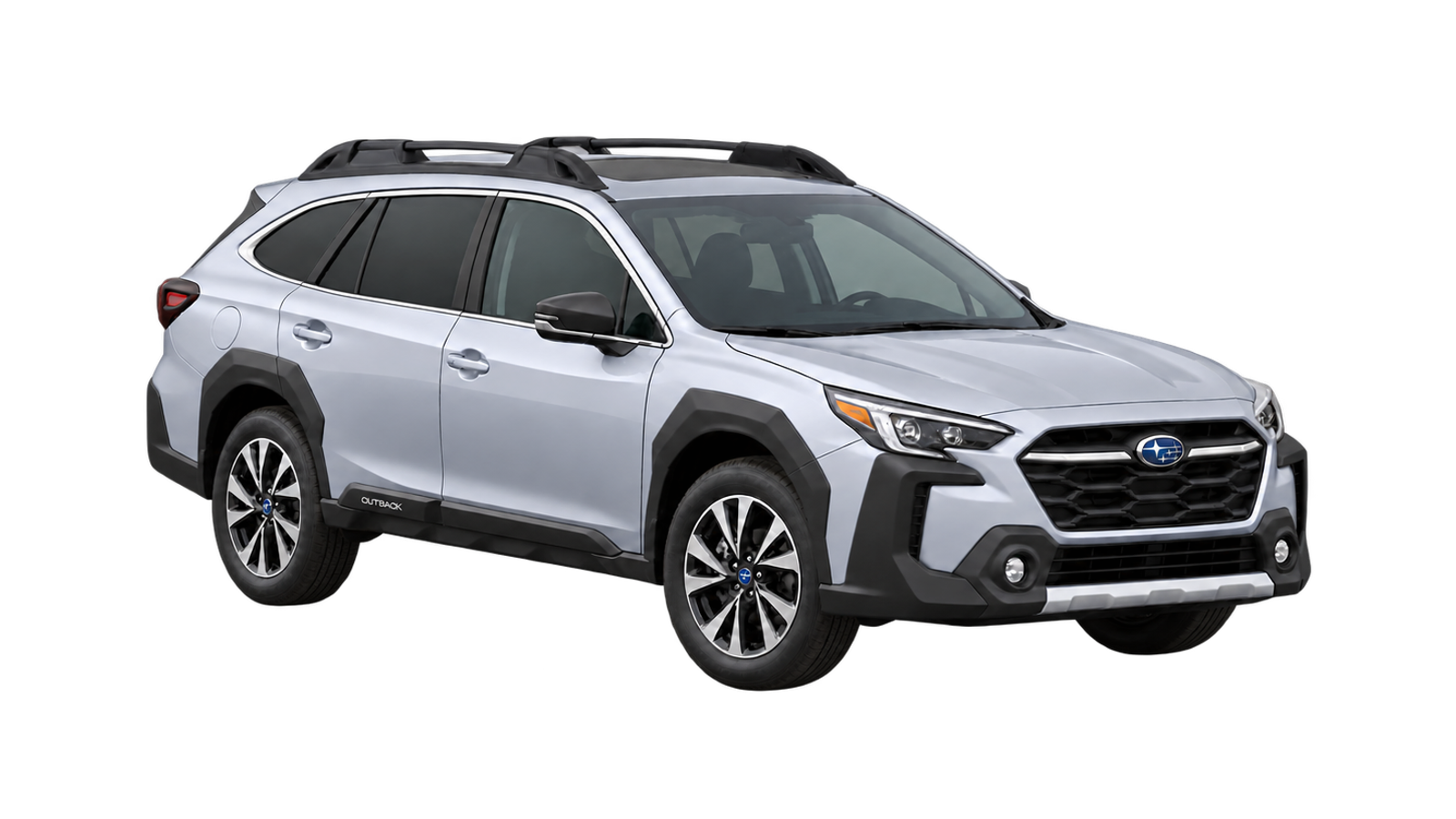
According to Au7o's analysis of 12,181+ owner reports, the 1999-2026 Subaru Outback has 41 documented known issues, with 9 rated critical. The most serious are Head Gasket Failure ($1,500-$2,500 repair), Denso Fuel Pump Impeller Failure Leading to Stalling or No-Start ($0-$900 repair), CVT Valve Body / Internal Failure (10yr-100k Warranty Extension) ($0-$4,500 repair), Thermo Control Valve Failure Causing Check Engine Light and Overheating Risk ($900-$1,800 repair), Front Propeller (Drive) Shaft Separation From Painted Center-Support Brace Bolt Surfaces (Recall 23V647000 / WRN-23) ($0-$0 repair), Occupant Detection System (ODS) Sensor Failure — Front Passenger Airbag May Not Deploy (Recall 24V-227 / WRA-24) ($0-$0 repair), EyeSight Unintended / Phantom Automatic Emergency Braking (2023-2026 Pre-Collision Braking Defect, Hall v. Subaru) ($0-$0 repair), Windshield Wiper Motor Overheating / Bottom-Cover Melt — Crash and Fire Risk (Recall 16V694 / WTK-71). at .
Subaru of America, Inc. (Subaru) is recalling certain 2023 Outback, Legacy, Ascent, and Impreza vehicles. The center support bolts for the driveshaft may loosen, resulting in the disconnection of the front end of the driveshaft.
Campaign #23V64700021/09/2023
POWER TRAIN:AUTOMATIC TRANSMISSION:PARK/NEUTRAL START INTERLOCK SWITCH
Subaru of America, Inc. is recalling certain model year 2021 Crosstrek, 2022 Forester, 2021-2023 Legacy, and Outback vehicles. An insufficient weld may allow water to enter the inhibitor switch, causing it to fail.
Campaign #23V75500009/11/2023
ENGINE AND ENGINE COOLING:ENGINE:ENGINE CONTROL MODULE (ECU/ECM)
Subaru of America, Inc. (Subaru) is recalling certain 2022 Outback vehicles. The engine wiring harness may have been damaged, resulting in a loose electrical connection to the engine control unit (ECU).
Campaign #22V47300001/07/2022
🔧
A mechanic who knows YOUR exact car
Answers tuned to your year, make, model & trim — not generic advice. Save your garage so it always has the right context.
Get ahead of Subaru Outback problems — free
Leave your email and we'll alert you the moment there's a new recall or known issue for your Subaru Outback. Free, no account needed.
According to Au7o's analysis of 12,181+ owner reports, the 1999-2026 Subaru Outback has 41 documented issues. The most frequently reported are: Head Gasket Failure, Denso Fuel Pump Impeller Failure Leading to Stalling or No-Start, CVT Valve Body / Internal Failure (10yr-100k Warranty Extension). Of these, 9 are rated critical and should be addressed promptly.
Is the Subaru Outback reliable?
The 1999-2026 Subaru Outback has 41 known issues documented across 12,181+ owner reports. 9 issues are rated critical: Head Gasket Failure and Denso Fuel Pump Impeller Failure Leading to Stalling or No-Start and CVT Valve Body / Internal Failure (10yr-100k Warranty Extension) and Thermo Control Valve Failure Causing Check Engine Light and Overheating Risk and Front Propeller (Drive) Shaft Separation From Painted Center-Support Brace Bolt Surfaces (Recall 23V647000 / WRN-23) and Occupant Detection System (ODS) Sensor Failure — Front Passenger Airbag May Not Deploy (Recall 24V-227 / WRA-24) and EyeSight Unintended / Phantom Automatic Emergency Braking (2023-2026 Pre-Collision Braking Defect, Hall v. Subaru) and Windshield Wiper Motor Overheating / Bottom-Cover Melt — Crash and Fire Risk (Recall 16V694 / WTK-71) and Takata Passenger Airbag Inflator Explosion Risk (Recall TKB-20). Prospective buyers should inspect for these issues and factor potential repair costs into their purchase decision. Regular maintenance following the manufacturer's schedule helps prevent many common problems.
How much does it cost to fix common Subaru Outback problems?
Repair costs for known Subaru Outback issues range from $0 to $4,500, depending on the specific problem and whether you choose DIY or professional repair. The most critical issue, Head Gasket Failure, typically costs $1,500-$2,500 to repair. Au7o provides step-by-step DIY maintenance guides that can help reduce repair costs.
What year Subaru Outback is the most reliable?
Reliability varies across model years of the Subaru Outback. Based on documented issues, problems are most commonly reported in earlier model years. Au7o recommends checking the specific known issues for your target year before purchasing, and having a pre-purchase inspection performed by a qualified mechanic. Our known issues database covers the 1999-2026 Subaru Outback with 41 documented issues documented across 12,181+ owner reports.
Content on this page was compiled with AI assistance using NHTSA complaints, TSBs, owner reports, and public automotive data. While we strive for accuracy, this information may contain errors. Always verify repair procedures and specifications with your vehicle's service manual or a qualified mechanic.
Filter:
When Issues Typically Appear
Denso Fuel Pump Impeller Failure Leading to Stalling or No-Start
0K-60K
Driver Monitoring System and EyeSight Camera Faults Causing Persistent Warning Messages
1K-60K
Rear Gate Control Module / Power Liftgate Failure and Uncommanded Reversal
5K-70K
Seat Heater Failure or Overheating in Front Seats
10K-70K
Thermo Control Valve Failure Causing Check Engine Light and Overheating Risk
15K-90K
025K50K75K100K mi
Certain 2020-2022 Outback (and Legacy) vehicles have defective Aisin Occupant Detection System sensors in the front passenger seat. A defect in the ODS sensor printed circuit board can crack a capacitor; moisture entering the capacitor causes a short circuit. This illuminates the SRS airbag warning lamp and the front passenger frontal-airbag OFF indicator, and the front passenger airbag may fail to deploy in certain crashes, increasing injury risk to an occupant. About 103,114 Outbacks were among the 118,723 vehicles recalled.
Common Symptoms
SRS / airbag warning light illuminated
Front passenger airbag OFF indicator stays on with a passenger seated
Passenger airbag may not deploy in a crash
How to Fix
Free recall remedy under campaign WRA-24 (NHTSA 24V-227): dealers replace all four ODS sensors in the front passenger seat. Parts supply was constrained, so Subaru re-notified owners in phases beginning February 2025. If the airbag/SRS warning light is on or the passenger airbag stays OFF with an occupant seated, verify the VIN and schedule the recall repair.
Owners of recent EyeSight-equipped Outbacks report unintended, sudden full-force automatic emergency braking ('phantom braking') with no obstacle present — at highway speed, in fog, in construction zones (mistaking cones for vehicles), and even reverse AEB while backing up. A 2026 class action (Hall v. Subaru) alleges the system was improperly tuned to command full ABS-module braking whenever the cameras perceive a stationary object regardless of actual collision risk, citing 25+ NHTSA consumer complaints; one cited 2024 Subaru braked twice without input at 65 mph and was rear-ended. This is distinct from EyeSight camera/driver-monitoring warning faults — the hazard here is unwanted braking that can cause rear-end collisions.
Common Symptoms
Sudden hard braking with no obstacle ahead (phantom braking)
False forward-collision warnings
Reverse automatic emergency braking with nothing behind the vehicle
Braking triggered by fog, shadows, overpasses, or construction cones
Inability to fully disable the intervention
How to Fix
No recall as of mid-2026; an NHTSA-complaint-driven class action is pending. Subaru dealers can update EyeSight/ABS-module software and recalibrate the stereo cameras (recalibration is also required after any windshield replacement). Keep the windshield clean and uncracked, use OEM-spec wiper blades and correct tire sizes (out-of-spec items can degrade EyeSight), and report phantom-braking events to NHTSA. Drivers can temporarily disable Pre-Collision Braking via the EyeSight controls when the behavior recurs.
On 2010-2014 Legacy and Outback models, contamination inside the windshield wiper motor bottom cover can cause internal components to interfere. If an obstruction such as snow or ice prevents the wiper arms from returning to the park position, the motor can overheat: the wipers may stop working (reducing visibility) and the bottom cover may melt, creating a fire risk. NHTSA recall 16V694000 (Subaru campaign WTK-71) covers roughly 592,000 vehicles and supersedes the earlier 11V-469 recall — vehicles remedied under the prior campaign still require the updated bottom-cover replacement.
Common Symptoms
Wipers stop working / stuck off park
Burning smell from base of windshield
Melted plastic near wiper motor
Reduced visibility in snow/ice
Smoke from cowl area
How to Fix
Under recall 16V694 / WTK-71, Subaru dealers replace the windshield wiper motor bottom cover assembly free of charge (about a 30-minute job). Owners of vehicles previously repaired under recall 11V-469 must have the updated cover installed again.
Older Outbacks (part of the 2003-2014 Subaru population) are covered by the industry-wide Takata airbag recall for the FRONT PASSENGER airbag inflator. The ammonium-nitrate propellant can degrade after years of exposure to heat, humidity, and temperature cycling, causing the inflator to rupture during deployment and spray sharp metal fragments at occupants — a defect linked to deaths and serious injuries nationwide. Subaru's campaign for the affected inflators is TKB-20 (with related campaigns TKA-20, etc.). The driver-side front airbag on these Subarus did not use a Takata inflator and is not affected. Risk rises with vehicle age and hot/humid climates, and these inflators have in some cases been recalled a second time ('like-for-like' interim replacements later re-recalled).
Common Symptoms
Airbag warning light (in some cases)
Vehicle listed as open recall on VIN lookup
No visible symptom until deployment (latent hazard)
How to Fix
This is a free safety recall — do not delay. Enter your VIN at the NHTSA recalls site or Subaru's recall lookup to confirm TKB-20 (or related Takata campaign) applicability and completion status, then schedule the dealer to replace the passenger-side inflator/module at no charge. If a prior 'interim/like-for-like' inflator was installed, verify it has since been replaced with the final part, as some early replacements were themselves recalled. Until repaired, be aware some manufacturers advised against carrying front-seat passengers on the most severe-risk vehicles; treat completion as urgent, especially in hot/humid regions.
Owners across the 2020-2025 generation report recurring Driver Monitoring System and EyeSight-related warnings such as 'Driver Monitoring System Disabled' or temporary loss of driver-assist functions even in normal conditions. While some events are environmental, complaint patterns and service visits show that camera alignment, software sensitivity, interior camera faults, and related module issues can cause repeated warnings or feature shutdowns. This does not duplicate windshield cracking; the issue is the electronic sensing/monitoring system itself.
Common Symptoms
Driver Monitoring System disabled message
EyeSight unavailable message
lane keep or adaptive cruise disabled
frequent warning chimes
warnings return after restart
How to Fix
Diagnosis involves scanning ADAS modules for stored faults, checking for software updates, verifying camera visibility and alignment, and inspecting the driver monitoring camera and harness. Repairs may include module reprogramming, camera recalibration, replacement of the driver monitoring unit, or correction of low-voltage conditions that trigger false faults. If the windshield or interior trim has been disturbed, recalibration is especially important.
Owner tips & cautions
TipOwners recommend documenting the exact warning text and weather/light conditions with photos because intermittent ADAS faults are easier for dealers to address when reproduced clearly.
TipIf the windshield has ever been replaced or the battery disconnected repeatedly, ask specifically whether EyeSight and driver monitoring calibration/software updates were completed.
The 2.5L non-turbo engine is known for external head gasket leaks. Oil seeps past the gasket and can contaminate the coolant. Subaru extended warranties and improved gasket design in later years.
Common Symptoms
Oil leaking externally from engine
Coolant mixing with oil (milky appearance)
Overheating
Sweet smell from engine bay
Bubbles in coolant reservoir
How to Fix
Replace head gaskets with updated MLS (multi-layer steel) gaskets. Ensure the machine shop resurfaces cylinder heads to proper flatness. Replace timing belt, water pump, and thermostat while engine is apart. Use Subaru coolant conditioner to help prevent future failures. Budget $1,500-2,500 for a quality repair.
What you need to fix it
Only diagnosis- and fitment-reviewed repair parts are linked here.
head gasket for each bank on the 1999 2.5-liter branch after failure is confirmed Fitment/availability: 1999 Outback 2.5-liter EJ25D DOHC branch; quantity two, confirm VIN Fitment/availability: ships in 1-3 business days with Add to Cart…
head gasket for each bank on the 2000-2009 naturally aspirated branch Fitment/availability: 2000-2009 Outback naturally aspirated 2.5-liter branch; quantity two, confirm VIN and exclude turbo Fitment/availability: ships in 1-3 business d…
head gasket for each bank on the 2010 branch Fitment/availability: 2010 Outback naturally aspirated 2.5-liter EJ253 branch via supersession from 11044AA670; quantity two, confirm VIN Fitment/availability: ships in 1-3 business days with …
timing belt when removed, due or of unknown history on the 1999 branch Fitment/availability: 1999 Outback 2.5-liter EJ25D DOHC branch; confirm VIN Fitment/availability: ships in 1-2 business days with Add to Cart live when reviewed
timing belt when removed, due or of unknown history on the 2000-2009 branch Fitment/availability: 2000-2009 Outback naturally aspirated 2.5-liter branch; confirm VIN Fitment/availability: ships in 1-3 business days with Add to Cart live …
timing belt when removed, due or of unknown history on the 2010 branch Fitment/availability: 2010 Outback naturally aspirated 2.5-liter EJ253 branch; confirm VIN and production date Fitment/availability: ships in 1-3 business days with A…
tensioner renewed with a due or unknown-history complete timing service Fitment/availability: 1999-2010 Outback 2.5-liter timing-belt branches in this card; confirm VIN and configuration Fitment/availability: ships in 1-3 business days w…
early water pump only when failed, leaking, rough, due or selected for unknown-history service Fitment/availability: 1999-2005 Outback 2.5-liter branch within this card; confirm VIN and required seal Fitment/availability: ships in 1-2 bu…
middle-year water pump when condition or service history warrants replacement Fitment/availability: 2006-2009 Outback naturally aspirated 2.5-liter branch; confirm VIN Fitment/availability: ships in 1-3 business days with Add to Cart liv…
2010 water pump when condition or service history warrants replacement Fitment/availability: 2010 Outback naturally aspirated 2.5-liter branch; confirm VIN Fitment/availability: ships in 1-3 business days with Add to Cart live when reviewed
Genuine Subaru 21210AA030 Thermostat and Gasket Assembly
thermostat only when diagnosis or condition warrants replacement on the 2000-2009 branch Fitment/availability: 2000-2009 Outback 2.5-liter branch; the 1999 branch requires VIN-specific selection Fitment/availability: Add to Cart live whe…
Genuine Subaru 21210AA080 Thermostat and Gasket Assembly
2010 thermostat only when diagnosis or condition warrants replacement Fitment/availability: 2010 Outback naturally aspirated 2.5-liter branch; confirm VIN Fitment/availability: ships in 1-3 business days with Add to Cart live when reviewed
High ConfidenceVerified4,521 owner reportsLast reported by owners Jan 2024Reviewed Feb 2026
Community reported
2,800 owners
The FB25 2.5L engine is known for excessive oil consumption, sometimes using 1 quart every 1,000-2,000 miles. Subaru extended warranty coverage and offered piston ring replacement for affected vehicles. Most common on 2011-2014 models.
Common Symptoms
Need to add oil between changes
Low oil warning light
Blue smoke from exhaust
Oil level drops quickly
Burning oil smell
How to Fix
Monitor oil level frequently. Check if covered by Subaru oil consumption warranty extension. If consumption test confirms issue, piston ring replacement may be covered. Use Subaru-recommended oil.
Owner tips & cautions
TipGet a proper diagnosis before replacing parts - similar symptoms can have different causes
TipSearch Subaru Outback forums and owner groups for real-world experiences and DIY guides
TipGet multiple quotes from independent mechanics - dealer prices can be 2-3x higher for the same repair
High Confidence2,800 owner reportsLast reported by owners Jun 2022Reviewed Feb 2026
Community reported
680 owners
While the FB25 has improved head gasket reliability compared to older EJ engines, some vehicles still experience head gasket failures. External oil leaks and coolant leaks can develop, particularly at higher mileage.
Common Symptoms
Oil leak near head gasket
External coolant leak
Overheating
Sweet coolant smell
Oil mixing with coolant (rare)
How to Fix
Monitor for coolant and oil leaks around head gasket area. Replace head gaskets if leaking. Use proper Subaru coolant. This is less common than on older EJ engines but still occurs.
Owner tips & cautions
TipGet a proper diagnosis before replacing parts - similar symptoms can have different causes
TipSearch Subaru Outback forums and owner groups for real-world experiences and DIY guides
TipGet multiple quotes from independent mechanics - dealer prices can be 2-3x higher for the same repair
Medium Confidence680 owner reportsLast reported by owners Feb 2023Reviewed Feb 2026
P0016 means the ECM sees the Bank 1 (passenger-side) intake camshaft out of sync with the crankshaft. Subaru's variable valve timing (AVCS) is oil-pressure driven, so on the FB-series Outback (FB25/FB20) this code is highly sensitive to oil level and condition. The common Subaru-specific chain: neglected/low oil starves the AVCS, and metal debris and sludge clog the tiny filter screens inside the banjo bolts that feed oil to the cam phasers, and/or the Bank 1 intake oil control valve (OCV) sticks. Only after those are ruled out is a stretched timing chain the cause. Subaru has issued service bulletins covering the AVCS/cam-timing code family (P0016-P0019). Chronic oil neglect is the root cause far more often than a mechanical timing failure.
Common Symptoms
Check engine light
Rough idle or hesitation
Rattle at cold start (chain/tensioner in worst cases)
Reduced power/fuel economy
Occasional hard start
How to Fix
Check oil first — level to the full mark and condition (should not be black/gritty); change oil and filter with the specified 0W-20 synthetic if degraded, then clear and re-drive. If it returns, remove and clean or replace the clogged banjo-bolt filter screens and replace the Bank 1 intake oil control valve (OCV, ~$70-180 part). Verify actual VVT advance angle with a scan tool; only replace the timing chain/guides if mechanical stretch is confirmed. ECM VVT learned values may need a reset.
What you need to fix it
Only diagnosis- and fitment-reviewed repair parts are linked here.
Genuine Subaru 10921AA231 Oil Control Valve
only when the correlation diagnostic proves an OCV fault Fitment/availability: 2013-2017 Outback 2.5-liter FB25 branch; confirm VIN and bank/position Fitment/availability: Add to Cart live when reviewed
later OCV only after failed test results Fitment/availability: 2018-2019 Outback 2.5-liter FB25 branch within this card; confirm VIN and position Fitment/availability: ships in 1-3 business days with Add to Cart live when reviewed
conditional filter renewal, not an automatic P0016 repair Fitment/availability: FB25 Outback branch; quantity and exact position must follow the current service procedure Fitment/availability: ships in 1-3 business days with Add to Cart …
The turbocharged FA24 (FA24F/FA24DIT) 2.4L boxer in Outback XT, Onyx Edition XT, and Wilderness trims uses port-less direct injection only, so fuel never washes the back of the intake valves. Carbon sludge accumulates on the intake ports/valves, typically becoming noticeable around 40,000-60,000 miles, causing rough idle, misfires, hesitation, and gradual power loss. Some owners also report elevated oil consumption on this engine, which accelerates deposit formation. Because no port injectors exist, fuel-additive cleaners do not reach the valves.
Common Symptoms
Rough or unstable idle
Cylinder misfire
Hesitation and reduced power
Check engine light (misfire codes)
Elevated oil consumption between changes
How to Fix
The effective remedy is mechanical cleaning — walnut-shell media blasting of the intake valves every ~50,000-60,000 miles (about $400-$1,200 depending on shop). Mitigate (not prevent) buildup with top-tier synthetic oil at shorter 4,000-5,000 mile intervals, top-tier fuel, and an occasional intake cleaner/Italian tune-up. Monitor oil level between changes given the engine's consumption tendency.
P0011 sets when the Bank 1 (passenger-side) intake camshaft is advanced beyond the ECM's commanded position — the AVCS phaser is stuck advanced or the ECM can't control it. On the Outback this is almost always oil-related: low or dirty engine oil, or the passenger-side intake oil control valve (OCV) sticking, or the classic Subaru issue of clogged filter screens inside the banjo bolts that supply oil to the AVCS solenoids. The ECM drives the oil-flow control solenoids mounted on the valve covers, which move spool valves to route oil pressure into the cam phaser; any restriction over-advances or locks the cam. It often appears in extreme cold (thick cold oil starves the AVCS) and on cars with stretched oil-change intervals. A useful test is swapping the Bank 1 and Bank 2 intake OCVs and seeing whether the code follows to P0021.
Common Symptoms
Check engine light
Rough or unstable idle
Hesitation or slight loss of power
Worse in very cold weather
Minor fuel-economy drop
How to Fix
Check oil level and condition first and change with spec 0W-20 synthetic if degraded. If the code persists, remove and clean/replace the AVCS banjo-bolt filter screens and replace the Bank 1 intake oil control valve (OCV, ~$95-350 OEM) — a straightforward job. Inspect the OCV connector/harness for open or short. Reset ECM VVT learned values after repair.
What you need to fix it
Only diagnosis- and fitment-reviewed repair parts are linked here.
Genuine Subaru 10921AA231 Oil Control Valve
OCV only after the Subaru diagnostic path proves the valve fault Fitment/availability: 2013-2017 Outback 2.5-liter FB25 branch; confirm VIN and bank/position Fitment/availability: Add to Cart live when reviewed
later OCV only after the fault is proven Fitment/availability: 2018-2019 Outback 2.5-liter FB25 branch within this card; current replacement for 10921AA23A, confirm VIN and position Fitment/availability: ships in 1-3 business days with A…
filter only when the applicable TSB diagnostic procedure identifies restriction Fitment/availability: cataloged for the FB25 Outback branch; quantity and position are procedure/VIN dependent Fitment/availability: ships in 1-3 business da…
The FB25 2.5L engine (2013+ Outback) has a widely reported oil leak from the cam carrier — the aluminum housing that holds the camshafts and functions as the valve cover on this engine. The RTV/gasket seal between the cam carrier and cylinder head degrades and weeps oil, which pools in the spark-plug tube area and on the block, drips onto hot exhaust (burning smell), and shows up as oil on the garage floor. It is largely a nuisance/consumption leak rather than a catastrophic failure, but it is labor-intensive to fix because the cam carrier must be unsealed. Later-production engines received a revised factory sealing method. Subaru of America has issued goodwill assistance on many of these repairs.
Common Symptoms
Oil pooling around spark plug tubes
Burning oil smell after driving
Oil drips on driveway near front of engine
Visible oil film on side/rear of engine
Slowly dropping oil level between changes
How to Fix
Confirm the source with a clean-and-dye or by cleaning the area and re-inspecting after driving — the leak originates at the cam carrier-to-head mating surface and/or the half-moon/cam cap seals, not the block gasket. Repair requires removing the cam carrier cover, cleaning all old sealant, and re-sealing with the correct Subaru anaerobic/RTV sealant (Three Bond / Subaru genuine liquid gasket) to spec, plus new spark-plug tube seals and cam seals as needed. Many owners have successfully requested partial goodwill reimbursement from Subaru of America even out of warranty. Budget shop labor accordingly; it is not a quick gasket swap.
What you need to fix it
Only diagnosis- and fitment-reviewed repair parts are linked here.
liquid gasket only after the cam-carrier joint is confirmed leaking and the repair procedure calls for 1217H Fitment/availability: specified Subaru/ThreeBond sealing chemistry for applicable cam-carrier reseal procedures; technician must…
spark-plug-pipe seals renewed when hardened, leaking or disturbed during the confirmed repair Fitment/availability: 2013-2019 Outback 2.5-liter FB25 branch; current replacement for 10966AA040/041/042, quantity four when renewal is requir…
Early Lineartronic CVT Outbacks (2010-2015) have documented internal CVT failures — most commonly valve-body faults, but also chain/pulley and pressure-control problems — that can cause harsh or delayed engagement, RPM flare, jerking, limp mode, or complete loss of drive. Subaru acknowledged the problem with a CVT Warranty Extension to 10 years / 100,000 miles covering the CVT and everything associated with it (valve bodies, internal parts, harnesses, and leaks) on 2010-2015 Legacy/Outback (and related models). A revised/upgraded valve body is installed at repair. This is separate from the low-speed torque-converter shudder complaint; here the transmission can set fault codes and go into failsafe. Out of warranty, a full CVT replacement is a multi-thousand-dollar repair.
Common Symptoms
Harsh or delayed engagement into gear
RPM flare / slipping under acceleration
Jerking or shuddering
Transmission warning light / limp mode
Whining or loss of drive
How to Fix
If you experience harsh/delayed engagement, flaring, jerking, or a transmission warning, scan for CVT codes and get it evaluated quickly. First verify the vehicle is within (or was serviced under) the 10-year/100,000-mile CVT Warranty Extension — if so the valve-body or CVT repair should be free; escalate to Subaru of America if a dealer initially denies coverage, since owners report success on valve-body claims. Keep CVT fluid at the correct level/spec and address any leaks promptly, as low pressure accelerates valve-body wear. Out of warranty, a rebuilt/updated valve body is far cheaper than a complete CVT unit — get a diagnosis of the specific failed component before authorizing a full replacement.
What you need to fix it
Only diagnosis- and fitment-reviewed repair parts are linked here.
Genuine Subaru 31706AA331 CVT Control Valve Body
early CVT valve body only after TCM diagnosis proves the valve-body fault Fitment/availability: 2010-2012 Outback 2.5-liter EJ253 CVT branch; confirm VIN and production date Fitment/availability: ships in 1-2 business days with Add to Ca…
later 2.5-liter CVT valve body only after TCM diagnosis proves the fault Fitment/availability: 2013-2015 Outback 2.5-liter FB25 CVT branch; current supersession of 31825AA050-054, confirm VIN Fitment/availability: Add to Cart live when r…
Genuine Subaru 31706AA144 High-Torque CVT Control Valve Body
2015 3.6R high-torque CVT valve body after exact diagnosis and VIN selection Fitment/availability: 2015 Outback 3.6R CVT branch within this card; current supersession of production-specific 31706AA140/141, confirm VIN Fitment/availabilit…
The Lineartronic CVT can develop shudder, hesitation, or jerky operation, especially during light acceleration at low speeds. Subaru has updated CVT software multiple times to address these concerns.
Common Symptoms
Shudder during light acceleration
Hesitation from stop
Jerky operation at low speeds
CVT whine or noise
Delayed engagement
How to Fix
Have dealer update CVT software to latest version. CVT fluid change may help. In severe cases, valve body or CVT replacement may be needed. Subaru extended CVT warranty on some vehicles.
Owner tips & cautions
TipGet a proper diagnosis before replacing parts - similar symptoms can have different causes
TipSearch Subaru Outback forums and owner groups for real-world experiences and DIY guides
TipGet multiple quotes from independent mechanics - dealer prices can be 2-3x higher for the same repair
High Confidence1,400 owner reportsLast reported by owners May 2023Reviewed Feb 2026
P0741 sets when the ECM/TCM commands the torque converter clutch to lock up but the expected reduction in converter slip doesn't happen. On the older automatic-transmission Outbacks (4EAT/5EAT, roughly 2005-2014) the dominant real-world causes are a failed torque-converter-clutch (lockup) solenoid on the valve body, a poor ground on the transmission harness, or dark/burnt/contaminated ATF and debris blocking fluid flow to the converter. It is frequently misdiagnosed: shops assume the converter itself is bad and quote a transmission-out job, when the actual fault is a cheap solenoid, a bad ground, or fluid that was never serviced. Neglected fluid is the common thread on high-mileage cars.
Common Symptoms
Check engine light
Torque converter shudder or vibration at cruise
Harsh or delayed lockup
Slightly higher RPM at highway speed
Possible reduced fuel economy
How to Fix
Check ATF level and condition first — if burnt or contaminated, do a proper fluid/filter service. Inspect and clean the transmission harness ground and the TCC solenoid connector for corrosion or looseness. Test the lockup solenoid; replace it (on the valve body) if it fails. Only pull the transmission for the torque converter if the solenoid tests good AND there is confirmed shudder/noise — do not replace the converter blindly.
On certain 2023 Outback (and Legacy, Ascent, Impreza) vehicles, mounting surfaces for the propeller-shaft center support brace bolts may have been inadvertently painted during the supplier's manufacturing process. The paint prevents the bolts from retaining specified torque; with continuous vibration both center-support bolts can back fully out, allowing the front end of the propeller (drive) shaft to separate from the vehicle, increasing crash risk. About 2,490 Outbacks were among the 4,311 vehicles recalled.
Common Symptoms
Irregular noise from under the vehicle / driveshaft area
Vibration from the propeller shaft area
Clunk or driveline rattle
Risk of driveshaft dropping/separating
How to Fix
Free recall remedy under campaign WRN-23 (NHTSA 23V647000): dealers clean the bolt mounting surfaces of the center support brace and install new bolts. Owner letters mailed November 20, 2023. Owners noticing irregular noises or vibration from the driveshaft/center area should have it inspected immediately.
Owners report a speed-dependent whine/howl or turbine-like noise from the rear/undercarriage that turns out to be the rear differential or a driveline carrier bearing rather than a wheel bearing. The tell-tale difference: differential and driveshaft-related noise rises in pitch about 4x as fast as road speed (and often changes on accel vs coast/decel), while wheel-bearing noise scales ~2x with speed and shifts with cornering load. Causes include premature rear-diff gear-surface wear under severe use (steep grades, extreme weather, towing) and worn carrier/center-support bearings. Subaru issued a service bulletin (03-87-21) addressing rear differential noise and introduced a higher-viscosity gear oil to better protect gear surfaces under demanding conditions.
Common Symptoms
Whine or howl from rear that scales with speed
Pitch changes between acceleration and coasting
Turbine/gear-like drone under the car
Vibration from driveline at certain speeds
Noise unaffected by steering input (vs wheel bearing)
How to Fix
Distinguish diff/driveline noise from a wheel bearing by testing on accel vs coast and noting the 4x-vs-2x speed relationship, and by inspecting the driveshaft center support/carrier bearing for play and cracked rubber. For gear-surface wear caught early, a fluid change to the updated higher-viscosity Subaru rear-differential gear oil per bulletin 03-87-21 can help; a worn carrier/center bearing is replaced as a unit; a howling, worn ring-and-pinion requires diff service or replacement. Verify correct fluid level and that the rear diff hasn't been run low. Have a tech road-test to localize the source before authorizing an expensive diff teardown.
What you need to fix it
Only diagnosis- and fitment-reviewed repair parts are linked here.
complete shaft for the validated non-serviceable center-support branch Fitment/availability: 2015-2019 Outback 2.5i CVT only; confirm VIN and that center-support/shaft fault is localized Fitment/availability: ships in 1-3 business days w…
Subaru SOA427V1700 High Performance 75W-90 Gear Oil, 1 Quart
required fill for the applicable replacement differential, not a guaranteed noise cure Fitment/availability: Subaru fluid explicitly listed in bulletin 03-87-21 for the applicable R152 replacement procedure Fitment/availability: Add to C…
ratio-matched carrier after bulletin diagnosis confirms worn differential Fitment/availability: 2020-2021 Outback 2.5 branch with R152 ID 42/VB1AAB and 3.700 ratio; verify label and VIN Fitment/availability: ships in 1-3 business days wi…
alternate ratio-matched carrier after diagnosis Fitment/availability: 2018-2021 Outback 2.5 branch with R152 ID 43/VB1BAA and 3.900 ratio; verify label and VIN Fitment/availability: ships in 1-3 business days with Add to Cart live when r…
alternate ratio-matched carrier after diagnosis Fitment/availability: 2018-2019 Outback 2.5 branch with R152 ID 44/VB1CAA and 4.111 ratio; verify label and VIN Fitment/availability: ships in 1-3 business days with Add to Cart live when r…
Certain 2020 Outback vehicles were included in the large Denso low-pressure fuel pump recall affecting many manufacturers. The impeller can deform, causing the pump to seize or lose output, which may result in hard starting, rough running, engine stall, or a no-start condition. This is a documented safety-related defect because loss of propulsion can occur while driving.
Common Symptoms
engine stalls while driving
extended cranking
no-start
hesitation from low fuel pressure
rough idle
How to Fix
Diagnosis includes checking fuel pressure, confirming pump command, and reviewing VIN-specific recall eligibility. The proper repair is replacement of the in-tank low-pressure fuel pump with the updated part under recall or service campaign. After repair, technicians typically verify fuel pressure and road-test for stall/no-start recurrence.
Owner tips & cautions
TipOwners recommend checking VIN recall status directly before paying for diagnosis if the vehicle has intermittent stalling or no-start symptoms.
TipIf a stall occurs, document fuel level, ambient temperature, and whether the engine restarts after cooling down; this helps the dealer reproduce intermittent pump issues.
Multiple 2020-2023 Outback owners with the 2.5L FB25 engine report failure of the thermo control valve assembly, which can trigger a check engine light, disable normal coolant flow control, and in some cases lead to overheating or poor heater performance. Subaru issued a warranty extension and service communications because the valve's internal position sensor/motor can fail. Owners commonly see the problem well before 100,000 miles, often with no prior cooling-system symptoms.
Common Symptoms
check engine light
engine coolant temperature warning
poor cabin heat
engine running cooler or hotter than normal
reduced fuel economy
cooling fan behavior changes
How to Fix
Diagnosis usually begins with stored cooling-system related DTCs and confirmation of improper thermo control valve operation using scan data. The standard repair is replacement of the thermo control valve assembly, followed by coolant refill/bleed and code clearing. If the vehicle has overheated, the cooling system should be pressure-tested and checked for secondary damage.
What you need to fix it
Only diagnosis- and fitment-reviewed repair parts are linked here.
Genuine Subaru 21319AA040 Thermo Control Valve Assembly
updated valve assembly after diagnosis and warranty-extension check Fitment/availability: 2020-2025 Outback 2.5-liter FB25 only; not the 2.4-liter turbo, confirm VIN and coverage Fitment/availability: ships in 1-2 business days with Add …
As an Amazon Associate, we earn from qualifying purchases; other part links may also earn au7o a commission. Confirm fitment by VIN before buying.
Owner tips & cautions
TipIf the CEL appears with cooling-related codes, avoid repeated long trips until coolant temperature behavior is confirmed; some owners caught the issue early before overheating by scanning codes immediately.
TipAfter replacement, owners recommend confirming the cooling system was properly vacuum-filled or bled to avoid trapped air and erratic heater performance.
The A/C compressor can fail, particularly on vehicles in hot climates with heavy A/C usage. Internal compressor failure can contaminate the A/C system with debris.
Common Symptoms
A/C blows warm air
Loud noise when A/C engages
A/C clutch not engaging
A/C works intermittently
Refrigerant leak
How to Fix
Replace A/C compressor assembly. If internal failure, flush system, replace condenser, receiver/drier, and expansion valve. Use quality replacement parts.
What you need to fix it
Only diagnosis- and fitment-reviewed repair parts are linked here.
Genuine Subaru 73111AJ00A A/C Compressor
early H4 compressor after system diagnosis confirms compressor failure Fitment/availability: 2011 Outback 2.5-liter H4 branch and cataloged production overlap; confirm VIN before purchase Fitment/availability: ships in 1-3 business days …
2012 H4 compressor after system diagnosis confirms compressor failure Fitment/availability: 2012 Outback 2.5-liter H4 branch; confirm VIN and production date Fitment/availability: ships in 1-3 business days with Add to Cart live when rev…
early H6 compressor after system diagnosis confirms compressor failure Fitment/availability: 2011-2016 Outback 3.6-liter H6 branch within this card; confirm VIN Fitment/availability: ships in 1-3 business days with Add to Cart live when …
FB25 compressor after system diagnosis confirms compressor failure Fitment/availability: 2013-2016 Outback 2.5-liter FB25 branch; confirm VIN Fitment/availability: ships in 1-3 business days with Add to Cart live when reviewed
later H4 compressor after system diagnosis confirms compressor failure Fitment/availability: 2017-2019 Outback 2.5-liter H4 branch; confirm VIN Fitment/availability: ships in 1-3 business days with Add to Cart live when reviewed
later H6 compressor after system diagnosis confirms compressor failure Fitment/availability: 2017-2019 Outback 3.6-liter H6 branch; confirm VIN Fitment/availability: ships in 1-3 business days with Add to Cart live when reviewed
Genuine Subaru 73210AJ00A A/C Condenser with Receiver-Drier
early condenser/drier only when damaged, leaking or non-flushable contamination requires replacement Fitment/availability: 2011-2014 Outback all listed engine branches; confirm VIN Fitment/availability: ships in 1-3 business days with Ad…
Genuine Subaru 73210AL00A A/C Condenser with Receiver-Drier
later condenser/drier only when damaged, leaking or non-flushable contamination requires replacement Fitment/availability: 2015-2019 Outback all listed engine branches; confirm VIN Fitment/availability: ships in 1-3 business days with Ad…
early expansion valve only when restriction, damage or contamination requires replacement Fitment/availability: 2011 Outback branch within the retailer's 2010-2012 catalog range; confirm VIN Fitment/availability: ships in 1-2 business da…
middle-year expansion valve only when restriction, damage or contamination requires replacement Fitment/availability: 2012-2016 Outback expansion-valve branch; confirm VIN Fitment/availability: ships in 1-3 business days with Add to Cart…
later expansion valve only when restriction, damage or contamination requires replacement Fitment/availability: 2017-2019 Outback expansion-valve branch; confirm VIN Fitment/availability: ships in 1-3 business days with Add to Cart live …
High Confidence520 owner reportsLast reported by owners Jul 2023Reviewed Feb 2026
An insufficient weld between the switch stator and cover of the transmission inhibitor (park/neutral start interlock) switch allows water intrusion over time, causing the switch to become inoperative. When it fails, the reverse lights do not illuminate and the rearview/backup camera image does not display when the vehicle is shifted into reverse, increasing the risk of a backover crash. Subaru recalled certain 2021-2023 Outback (and Legacy, plus 2021 Crosstrek and 2022 Forester) vehicles; roughly 51,470 Outbacks were among the ~95,830 total affected.
Common Symptoms
Backup/rearview camera image does not display when in reverse
Reverse (backup) lights do not illuminate
Intermittent loss of rear camera
Possible no-crank or shift-interlock related faults
How to Fix
Free recall remedy: Subaru dealers replace the inhibitor switch under campaign WRQ-23 (NHTSA 23V755000). Owner notification letters mailed beginning January 2024. If the backup camera goes dark or reverse lights stop working, verify the VIN at NHTSA or with a dealer and have the switch replaced.
Like many modern automakers, Subaru switched to soy/plant-based wire insulation, and owners widely report that rodents (mice/rats) are attracted to and chew through the harnesses, causing warning lights, no-starts, sensor faults, and blown fuses. Documented Outback repair bills range from ~$1,500 to $3,500+, with damage found in the engine-bay harnesses, MAP/MAF wiring, fuel lines, and even dash harnesses. The soy-insulation issue has spawned class-action litigation against several manufacturers including Subaru. Owners report being unaware of the vulnerability at purchase, and standard warranty typically excludes 'rodent/animal damage,' pushing the cost onto comprehensive insurance or the owner.
Common Symptoms
Multiple/unrelated warning lights
Intermittent no-start or stalling
Blown fuses
Bite marks and nesting debris in engine bay
HVAC or sensor malfunctions
How to Fix
Inspect the engine bay and under-dash harnesses for bite marks, droppings, and nesting material at the first sign of intermittent electrical faults or warning lights. Repair chewed sections with proper splices/soldered-and-heatshrink joints or harness replacement — avoid quick tape jobs on safety circuits. Prevent recurrence with rodent-deterrent tape (capsaicin-treated harness tape), ultrasonic/peppermint deterrents, hood/cabin traps, and keeping the car driven and free of nearby food sources. Comprehensive (not collision) insurance often covers rodent damage — file a claim for large repairs. Keep the cabin air intake and blower area clear, as nests there also damage HVAC wiring.
Gen-5 Outbacks (and Legacys) equipped with the larger Harman Kardon infotainment head unit suffer from touchscreen delamination: the silicone gel bond between the glass digitizer and the LCD fails, producing bubbles, lifting/oil-slick spots at the edges, and — most disruptively — 'ghost touches' where the system registers phantom presses, cycles menus, changes climate/audio settings, or locks up on its own. Symptoms worsen with heat, cold, sun angle, and pressure over a bubble. This is a physical hardware/bonding defect distinct from the general STARLINK software/freezing complaints. It has driven the Cilluffo, et al. v. Subaru of America class-action lawsuit (Case No. 1:23-cv-01897). Dealer replacement units frequently delaminate again.
Common Symptoms
Bubbles or lifting at screen edges
'Oil slick' blotches under the glass
Phantom/ghost touches selecting on their own
Menus/climate/audio changing by themselves
Symptoms worse in heat or direct sun
How to Fix
Confirm the failure is delamination (visible bubbles/edge-lift plus self-actuating touches) rather than a software glitch — a reboot won't fix delamination. Options: (1) check for any active class-action remedy/goodwill under Cilluffo v. Subaru; (2) OEM head-unit replacement at the dealer (expensive and can recur); or (3) a growing aftermarket of screen-only digitizer/LCD refurbish services that re-bond the assembly at far lower cost. As a stopgap, disabling the touchscreen and using steering-wheel/voice controls, or parking out of direct sun, reduces ghost-touch episodes. Save documentation and repair receipts for any class-action claim.
What you need to fix it
Only diagnosis- and fitment-reviewed repair parts are linked here.
Genuine Subaru 86431AL66A Harman Radio Assembly
uncovered 2018 non-navigation full-unit replacement only after physical failure and exact configuration are confirmed Fitment/availability: 2018 Outback 2.5i Limited and 3.6R Limited Harman non-navigation configuration only; confirm VIN,…
The Starlink infotainment system can experience freezing, lag, and connectivity problems. Bluetooth pairing issues and touchscreen responsiveness problems are common complaints.
Common Symptoms
Touchscreen freezes
Slow response to inputs
Bluetooth won't connect
Random reboots
Navigation issues
How to Fix
Update Starlink software to latest version. Perform system reset. Delete paired devices and re-pair. Some owners have had head units replaced under warranty. Aftermarket head unit is an option.
Owner tips & cautions
TipConsider OEM parts for critical components like sensors and electrical parts - aftermarket can be unreliable
TipGet a proper diagnosis before replacing parts - similar symptoms can have different causes
TipSearch Subaru Outback forums and owner groups for real-world experiences and DIY guides
TipGet multiple quotes from independent mechanics - dealer prices can be 2-3x higher for the same repair
High Confidence680 owner reportsLast reported by owners Mar 2023Reviewed Feb 2026
Community reported
520 owners
Some Outback owners experience battery drain issues, especially with vehicles that have keyless access and push-button start. The Eyesight system and other electronics can contribute to parasitic draw.
Common Symptoms
Dead battery after sitting
Slow cranking
Battery warning light
Keyless system issues
Electronic glitches
How to Fix
Have dealer check for parasitic draw. Battery replacement may be needed - use AGM battery for better performance. Ensure all software updates are installed. Consider battery maintainer if vehicle sits.
Owner tips & cautions
TipGet a proper diagnosis before replacing parts - similar symptoms can have different causes
TipSearch Subaru Outback forums and owner groups for real-world experiences and DIY guides
TipGet multiple quotes from independent mechanics - dealer prices can be 2-3x higher for the same repair
Medium Confidence520 owner reportsLast reported by owners Jun 2023Reviewed Feb 2026
P0455 indicates a large (gross) EVAP leak — the system can't hold pressure/vacuum at all during the self-test. Across the Subaru lineup (Outback, Forester, Impreza, Crosstrek) the standout pattern is the purge control solenoid valve failing due to internal seal degradation, which leaves the system effectively open. The other frequent Outback source is the charcoal canister assembly behind the left-rear wheel: later Outbacks integrate a leak-check valve mounted on the canister, and a stuck/failed valve or a cracked canister triggers P0455. A badly missing, cross-threaded, or grossly leaking gas cap will also set it. Unlike the small-leak P0442, a gross leak often comes with a noticeable fuel-vapor smell near the tank/filler.
Common Symptoms
Check engine light
Fuel/gas smell near tank or filler
Slightly reduced fuel economy
No lasting drivability problem
How to Fix
Verify the gas cap is present, correct, and sealing. Smoke-test the EVAP system — apply smoke at the purge line and watch where it escapes. Most Outback fixes are replacing the purge control solenoid valve; if the leak is at the rear, drop the left-rear wheel-well liner to access and replace the charcoal canister / leak-check valve assembly. Inspect vapor lines for cracks or disconnection.
What you need to fix it
Only diagnosis- and fitment-reviewed repair parts are linked here.
Genuine Subaru 42031AJ001 Fuel Filler Cap
only for a missing cap or one that fails inspection/seal testing Fitment/availability: 2010-2012 Outback all listed engines; confirm VIN Fitment/availability: ships in 1-2 business days with Add to Cart live when reviewed
later cap only when the cap is the proven gross leak Fitment/availability: 2013-2022 Outback branch within this card, all listed engines; confirm VIN Fitment/availability: Add to Cart live when reviewed
2.5L Outbacks are prone to premature catalytic converter degradation that sets a P0420 (Catalyst System Efficiency Below Threshold) check-engine light, often well before 100,000 miles. On some 2015-2016 2.5L Legacy/Outback models the front exhaust pipe assembly (which houses the front catalyst) can crack at the flexible bellows — Subaru issued voluntary recall/campaign WUJ-95 to replace the assembly. Separately, cars with the FB-series oil-consumption issue can contaminate and prematurely poison the catalyst with burnt oil, accelerating the P0420 failure. Subaru extended catalytic-converter coverage to 10 years/100,000 miles (bulletin WVI-19) for certain vehicles that can set P0420, on top of the federal 8-year/80,000-mile emissions warranty.
Common Symptoms
Check engine light with P0420
Reduced fuel economy
Rotten-egg/sulfur exhaust smell
Rattle from exhaust (broken catalyst substrate)
Failed emissions/smog test
How to Fix
Read the code and verify it is a true catalyst-efficiency fault (compare upstream A/F sensor vs downstream O2 sensor switching) and rule out a lazy rear O2 sensor or exhaust leak first. Before paying out of pocket, check eligibility for recall/campaign WUJ-95 (2015-2016 2.5L), the WVI-19 10yr/100k catalytic extension, and the federal 8/80 emissions warranty — many owners get a free converter/front-pipe. If out of coverage, replace with a CARB-compliant OEM or OE-grade converter and address any underlying oil consumption first, or the new cat will fail again. Do NOT clear the code and ignore it — a degrading cat can overheat.
What you need to fix it
Only diagnosis- and fitment-reviewed repair parts are linked here.
Genuine Subaru 44620AD16B Front Exhaust Pipe and Converter
front converter/pipe only after catalyst or pipe failure is confirmed and coverage is excluded Fitment/availability: 2013-2014 Outback 2.5-liter FB25 branch; confirm VIN, transmission and emissions certification Fitment/availability: Add…
Genuine Subaru 44620AD88B Front Exhaust Pipe and Converter
later front converter/pipe after campaign/coverage checks and diagnosis confirm replacement Fitment/availability: 2015-2019 Outback 2.5-liter branch; 2015-2016 owners must check WUJ-95 first, and all buyers must confirm VIN/emissions con…
one-time sealing gasket when the corresponding pipe flange is separated Fitment/availability: 2004-2021 Outback catalog range including the approved pipe branches; confirm VIN and exact flange position Fitment/availability: ships in 1-3 …
On the Subaru boxer engine, Bank 2 is the driver's side (cylinders 2 and 4). P0430 sets when the driver-side rear (downstream) O2 sensor tracks the front sensor too closely, telling the ECM the catalytic converter is no longer scrubbing exhaust efficiently. On the Outback this most commonly appears on the 3.6R H6 (EZ36), which has a separate catalyst per bank; note that 4-cylinder Outbacks typically set the Bank 1 twin P0420 rather than P0430. A well-known Subaru wrinkle: excessive oil consumption on some cars coked the O2 sensors and contaminated the converter, so a P0430 (or P0420) is frequently traced to a lazy/oil-fouled rear O2 sensor rather than a truly dead cat. After ~120k-150k miles the washcoat genuinely degrades and the converter itself fails.
Common Symptoms
Check engine light
Failed emissions/smog test
Slight loss of fuel economy
No obvious drivability change in most cases
Occasional faint sulfur/rotten-egg smell
How to Fix
Confirm before condemning the cat: watch the driver-side rear O2 sensor voltage at a steady cruise — it should hold roughly 0.5-0.8V; if it swings with the front sensor, the converter has failed. If the sensor is old or oil-fouled, replace it first with an OEM Denso unit (aftermarket units are widely reported to cause repeat codes). On oil-consuming cars, address oil consumption/PCV as well. If voltage confirms a dead converter, replace the Bank 2 catalytic converter (OEM preferred to avoid re-triggering).
What you need to fix it
Only diagnosis- and fitment-reviewed repair parts are linked here.
Genuine Subaru 22690AB06A Bank 2 Rear Oxygen Sensor
rear sensor only after heater/wiring/response testing proves it failed Fitment/availability: 2015-2019 Outback 3.6R H6, catalog position code 22690*B; confirm VIN and driver-side downstream position Fitment/availability: ships in 1-3 bus…
Genuine Subaru 44620AC23A Driver-Side Front Exhaust Pipe and Catalyst
early driver-side catalyst only when this exact branch is confirmed Fitment/availability: one 2010-2014 Outback 3.6R H6 emissions/configuration branch; exact VIN and emissions label required Fitment/availability: ships in 1-3 business da…
Genuine Subaru 44620AD980 Driver-Side Front Exhaust Pipe and Catalyst
later driver-side catalyst after diagnosis and coverage check Fitment/availability: 2015-2019 Outback 3.6R H6 driver-side branch; current replacement for 44620AD98A, confirm VIN/emissions Fitment/availability: ships in 1-2 business days …
P0442 means the ECM detected a small leak in the sealed evaporative-emissions system during its self-test. On the Outback the three usual culprits, in order, are: (1) the fuel filler cap — its rubber O-ring hardens and cracks with age, or the cap isn't clicked tight, or a non-OEM cap seals poorly; (2) the EVAP purge valve (solenoid), which should hold vacuum but starts to weep past its internal seal; and (3) the vent valve on/near the charcoal canister, which can't seal during the leak test if dirt or corrosion is present. Because the leak is tiny, drivers usually notice nothing but the check-engine light, and the code is often intermittent (comes and goes with temperature and fuel level).
Common Symptoms
Check engine light (often intermittent)
No drivability change
Occasional faint fuel smell
Code may clear itself then return
How to Fix
Start with the cheapest fix: inspect the gas cap, make sure it clicks, and replace it with an OEM cap if the O-ring is cracked or the cap is aftermarket. Clear the code and re-drive. If it returns, smoke-test the EVAP system to pinpoint the leak, then replace the purge solenoid or vent valve as indicated. Check vapor hoses and the canister connections for cracks.
What you need to fix it
Only diagnosis- and fitment-reviewed repair parts are linked here.
Genuine Subaru 42031AG00A Fuel Filler Cap
cap only after inspection or seal testing proves the original cap failed Fitment/availability: 2005-2009 Outback 2.5, 2.5 turbo and 3.0 H6 branches; confirm VIN Fitment/availability: ships in 1-3 business days with Add to Cart live when …
middle-generation cap only after a failed cap test Fitment/availability: 2010-2012 Outback all listed engines; replaces 42031AJ000, confirm VIN Fitment/availability: ships in 1-2 business days with Add to Cart live when reviewed
later cap only after a failed cap test Fitment/availability: 2013-2022 Outback branch within this card, all listed engines; replaces 42031FJ000, confirm VIN Fitment/availability: Add to Cart live when reviewed
Owners of 2020-2024 Outbacks frequently report power rear gate problems including failure to open or close, repeated beeping, stopping mid-travel, or reversing unexpectedly. Subaru issued service information for rear gate control module logic and initialization issues, and owner complaints commonly describe the hatch becoming unusable until reset or repair. In some cases the problem is tied to low system voltage, latch alignment, or module/software faults.
Common Symptoms
power liftgate will not open
power liftgate stops halfway
repeated warning beeps
liftgate reverses direction
manual operation only
dash rear gate warning
How to Fix
Diagnosis should include battery voltage testing, scan-tool checks for rear gate module faults, latch/strut inspection, and confirmation of proper gate initialization. Repairs range from module reprogramming or reset procedures to latch, switch, spindle drive, or control module replacement. If the gate is misaligned, adjustment may be required to prevent false pinch detection.
Owner tips & cautions
TipMany owners report that a weak battery can aggravate rear gate faults, so load-test the battery before replacing liftgate parts.
TipAfter repairs or battery disconnect, perform the factory rear gate initialization procedure exactly as specified; incomplete initialization can mimic a hardware failure.
Outbacks with a sunroof/moonroof commonly develop interior water leaks caused by clogged, kinked, or (on some 2020 Touring XT builds) factory-blocked sunroof drain tubes. Rather than draining out, water backs up in the sunroof frame and overflows into the headliner and down the A-pillars, soaking the front and rear footwells, wetting carpet/underlay, and in some cases flooding audio/electrical components under the seats — which can then cause secondary electrical faults and musty odors/mold. Subaru has issued service bulletins for water intrusion (e.g., leaks appearing at the map-light/overhead area on 2010-2013 Legacy/Outback). Complaints span many model years and generations.
Common Symptoms
Wet carpet in front or rear footwells
Water stains on headliner near A-pillar
Dripping from overhead/map-light area
Musty/mildew smell in cabin
Fogged windows or electrical faults after rain
How to Fix
Diagnose by pouring a small amount of water into the sunroof channel corners and watching where it exits — it should drain out below each A-pillar/rocker, not into the cabin. Clear the four drain tubes with low-pressure compressed air or a soft trimmer line (never a stiff wire that can pop the hose off the fitting). On affected builds, remove assembly grease/debris plugging the drain holes. Dry out and treat any soaked carpet/insulation promptly to prevent mold and electrical corrosion, and check under-seat modules for water damage. For vehicles in the New Car warranty window, reference the applicable water-leak TSB for coverage. Periodic drain cleaning is good preventive maintenance.
Outbacks equipped with Eyesight can be prone to windshield cracking, possibly due to stress from the Eyesight camera mounting or windshield design. Replacement windshields require Eyesight camera recalibration.
Common Symptoms
Stress cracks appearing
Cracks spreading from edges
Chips turning into cracks quickly
Cracks appearing without impact
How to Fix
Replace cracked windshield with OEM or Subaru-approved glass. Eyesight recalibration required after replacement - this adds cost. Some owners report multiple windshield replacements.
Owner tips & cautions
TipConsider OEM parts for critical components like sensors and electrical parts - aftermarket can be unreliable
TipGet a proper diagnosis before replacing parts - similar symptoms can have different causes
TipSearch Subaru Outback forums and owner groups for real-world experiences and DIY guides
TipGet multiple quotes from independent mechanics - dealer prices can be 2-3x higher for the same repair
Medium Confidence480 owner reportsLast reported by owners May 2023Reviewed Feb 2026
The factory foam gasket behind the roof-mounted center high-mount stop lamp (CHMSL) on the tailgate deteriorates within a few years, allowing rainwater and car-wash water to seep past the light housing and run down the inside of the rear glass into the cargo area. This is a widely reported complaint on 4th-generation (2010-2014) and 5th-generation (2015-2019) Outbacks and is distinct from the sunroof/moonroof drain-tube leak (the water path here is the tailgate brake-light seal, not the roof drains). Standing water can wick into the spare-tire well and rear wiring/connectors, causing corrosion and occasionally electrical faults.
Common Symptoms
Water pooling in rear cargo area / spare-tire well after rain or car wash
Wet or musty rear carpet and side trim
Water running down inside of rear hatch glass
Fogged rear window interior
Corrosion on rear cargo-area wiring or connectors
How to Fix
Remove the two 8mm nuts holding the CHMSL assembly to the tailgate, pull the housing, scrape off all remnants of the disintegrated foam gasket, clean the mating surfaces, and re-seal the perimeter with a bead of clear RTV silicone (or a replacement butyl gasket) before reinstalling. Dry out and treat any water-soaked cargo carpet/trim to prevent mildew and corrosion.
The forward-mounted A/C condenser and its connecting refrigerant lines are vulnerable to leaks - sometimes from road-debris/stone damage to the thin condenser, sometimes from a damaged line or failed O-ring at a hose connection. The system slowly loses refrigerant and cooling fades, with reports on low-mileage cars including a 2022 Onyx at ~5,800 miles found with a damaged condenser line. Because the condenser sits at the front, it isn't economically repairable and must be replaced.
Common Symptoms
A/C blows warm or only cools weakly after a period of normal operation
Gradual loss of cooling over weeks/months (slow refrigerant leak)
Oily/dye residue at the condenser or a line fitting
A/C works at highway speed but not at idle as charge drops
How to Fix
Pressure-test/UV-dye the system to locate the leak, then replace the leaking A/C condenser (or repair the damaged line / failed O-ring), evacuate and recharge the system. A condenser replacement with recharge typically runs roughly $500-$1,100 at an independent shop.
What you need to fix it
Only diagnosis- and fitment-reviewed repair parts are linked here.
Genuine Subaru 73210AL00A A/C Condenser with Integrated Receiver-Drier
condenser only after the condenser itself is confirmed leaking or damaged Fitment/availability: 2015-2019 Outback 2.5-liter and 3.6-liter branches; confirm VIN Fitment/availability: ships in 1-3 business days with Add to Cart live when r…
Genuine Subaru 73210AN00A A/C Condenser with Integrated Receiver-Drier
later condenser only after the condenser itself is confirmed leaking or damaged Fitment/availability: 2020-2022 Outback 2.5-liter and 2.4-liter turbo catalog branch; direct summary lists 2020-2021 and the 2022 vehicle catalog carries the…
Owners report the HVAC blower fan suddenly stops working on all or some speeds, leaving no air from the vents for heat or A/C. Common root causes on the Outback are a blown blower fuse, a failed blower motor resistor (manual A/C) or power transistor/output stage (automatic climate control), a worn-out blower motor (dry bearings, often preceded by a whirring/droning noise behind the dash), and corroded connectors or rodent-chewed wiring. A useful clue: with a bad resistor the fan often still runs only on HIGH (which bypasses the resistor); if nothing works on any speed, suspect the fuse, motor, connector, or control head. It's a comfort/defrost issue (defrost failure can be a safety concern in winter).
Common Symptoms
No air from vents on any/some fan speeds
Fan only works on highest setting
Whirring or droning noise behind dash
Intermittent blower operation
Weak airflow even at high fan speed
How to Fix
Diagnose in order: check the blower fuse; test whether the fan runs on HIGH only (points to the resistor on manual systems, or the power transistor on auto-climate cars); listen for a whirring/grinding motor (dry bearings = replace the blower motor); and inspect the blower connector for heat/corrosion damage (a common failure that can also cause intermittent operation) and for rodent damage. Replace the specific failed part — resistor/power transistor, blower motor, or repair the connector/harness. Also replace a clogged cabin air filter, which restricts airflow and overworks the motor. Auto-climate cars with no fan and a dead A/C light may need control-head diagnosis.
What you need to fix it
Only diagnosis- and fitment-reviewed repair parts are linked here.
Genuine Subaru 72223AJ01A HVAC Blower Motor
blower motor after load testing confirms an open, stalled, noisy or excessive-current motor Fitment/availability: 2010-2019 Outback all listed engines and climate configurations; confirm VIN Fitment/availability: ships in 1-3 business da…
manual-system resistor after testing confirms lost lower/intermediate speed control Fitment/availability: 2010-2019 Outback manual climate-control configurations listed by the catalog; confirm VIN and control type Fitment/availability: s…
Genuine Subaru 73533AJ00A Automatic Climate Blower Power Transistor
automatic-system output stage after command and output testing confirms transistor failure Fitment/availability: 2010-2019 Outback automatic/dual-zone climate-control configurations listed by the catalog; confirm VIN and control type Fit…
early-generation filter only when inspection confirms restriction or scheduled replacement is due Fitment/availability: 2010-2014 Outback all listed engines/trims; confirm VIN Fitment/availability: ships in 1-2 business days with Add to …
later-generation filter only when inspection confirms restriction or scheduled replacement is due Fitment/availability: 2015-2019 Outback all listed engines/trims; confirm VIN Fitment/availability: ships in 1-3 business days with Add to …
Owners have reported front seat heaters that stop working, heat unevenly, or become excessively hot in localized areas. Complaints and forum reports point to failures in the seat heater element, thermostat/control logic, or seat cushion wiring within this generation. The issue is more than comfort-related when overheating occurs, as some owners describe burning sensations or needing to shut the heater off immediately.
Common Symptoms
seat heater inoperative
one seat heats less than the other
hot spot in seat cushion
heater shuts off unexpectedly
burning sensation from seat
How to Fix
Diagnosis typically includes checking heater switch operation, seat heater current draw, and continuity of the seat cushion/backrest elements. Repair often requires replacing the failed heater pad or seat trim assembly, and in some cases the seat control module or wiring repair. Technicians should verify both cushion and backrest elements because one section may fail while the other still heats.
Owner tips & cautions
TipIf the seat gets unusually hot in one spot, stop using the heater until inspected; owners recommend not assuming it is normal break-in behavior.
TipWhen only one section of the seat heats, ask the shop to test cushion and backrest elements separately before replacing expensive seat trim assemblies.
On 2005-2009 Legacy and Outback models, the top surface of the dashboard/instrument panel degrades in heat and humidity, becoming sticky, shiny/glossy, and giving off a chemical odor. The high-gloss surface reflects into the windshield and can create glare for the driver. A proposed class-action lawsuit (Parks et al. v. Subaru of America / Fuji Heavy Industries, S.D. Fla.) alleged the dashboards were prone to melt into a tacky residue. Subaru declined a recall but issued a Dashboard Warranty Extension program (coverage extended to 10 years for a one-time replacement) and reimbursement for prior out-of-pocket replacements.
Common Symptoms
Sticky or tacky dashboard surface
Shiny/glossy dash reflecting glare into windshield
Chemical smell from dashboard
Discoloration of the instrument panel top
How to Fix
Replace the dashboard/instrument panel assembly with an updated part; 2005-2009 Legacy/Outback vehicles are covered under Subaru's Dashboard Warranty Extension (10-year one-time replacement, and reimbursement for owners who previously paid). Out-of-warranty, owners use replacement panels or aftermarket dash covers/mats to reduce glare.
Owners across multiple Outback generations report premature wheel hub bearing failure, most commonly showing up between roughly 80,000 and 120,000 miles. The classic symptom is a low-pitched droning/humming or 'beehive' noise that begins around 45-55 mph and gets louder with speed, and that changes pitch when the car is loaded up in a curve (louder turning one direction, quieter the other). Subaru hubs frequently fail WITHOUT the traditional 'play' you can feel by rocking the wheel, which leads to misdiagnosis as tire noise. Some owners report replacing three separate bearings on a single car. A useful field test is an infrared thermometer after a highway drive: a failing bearing runs noticeably hotter (~150F+) than its healthy siblings (~120F).
Common Symptoms
Droning or humming noise starting around 45-55 mph
Noise gets louder as speed increases
Pitch changes when turning left vs right
Growling/grinding from one corner
Bearing hotter than others by IR thermometer
Sometimes no detectable wheel play despite failure
How to Fix
Diagnose by road-testing for a speed-dependent hum that shifts with cornering load, and confirm with an IR temperature check across all four hubs or by listening with a chassis-ear/stethoscope. The correct repair is replacement of the complete hub bearing assembly (the bearing is pressed into the knuckle on many years; the pressed cartridge or full knuckle-mounted hub is replaced as a unit). Use OEM Subaru or a top-tier supplier (Koyo/NSK/NTN, which are the OE bearing makers, or Timken/SKF) rather than budget bearings, which frequently fail again quickly. Replace in axle pairs only if both are noisy. Have the tech torque the axle nut to spec and inspect the ABS tone ring/sensor while apart.
What you need to fix it
Only diagnosis- and fitment-reviewed repair parts are linked here.
Genuine Subaru 28373AG01A Front Axle Hub Complete
early-generation front bolt-on hub after that corner is confirmed failed Fitment/availability: 2010-2014 Outback front, all listed engines/trims; quantity one for the confirmed corner, confirm VIN Fitment/availability: ships in 1-3 busin…
later-generation front bolt-on hub after that corner is confirmed failed Fitment/availability: current supersession covering 2015-2024 Outback front branches in this card, all listed engines; confirm VIN Fitment/availability: ships in 1-…
early-generation rear bolt-on hub after that corner is confirmed failed Fitment/availability: 2010-2014 Outback rear, all listed engines/trims; quantity one for the confirmed corner, confirm VIN Fitment/availability: ships in 1-3 busines…
later-generation rear bolt-on hub after that corner is confirmed failed Fitment/availability: current replacement for 28473AL00A and 28473XC00A/B/C/D covering 2015-2024 Outback rear branches in this card; confirm VIN Fitment/availability…
new staked axle nut when the front hub procedure removes the original nut Fitment/availability: cataloged on the front-axle branch through 2024 Outback including 2.5-liter and 2.4-liter turbo models; one per disturbed front axle, confirm…
The front suspension can develop clunking or squeaking noises, often from worn strut mounts, sway bar end links, or control arm bushings. This is common on vehicles with higher mileage or those driven on rough roads.
Common Symptoms
Clunking over bumps
Squeaking from front suspension
Noise when turning
Loose feeling steering
Uneven tire wear
How to Fix
Inspect and replace strut mounts if worn. Check sway bar end links and control arm bushings. Strut replacement may be needed if internals are worn. Consider upgraded components for off-road use.
What you need to fix it
Only diagnosis- and fitment-reviewed repair parts are linked here.
Genuine Subaru 20420XA000 Front Stabilizer Link
early-generation front stabilizer link after play or noise is confirmed Fitment/availability: 2011-2014 Outback all engines; quantity two only if both sides fail inspection, confirm VIN Fitment/availability: ships in 1-3 business days wi…
Genuine Subaru 20420AL011 Left Front Stabilizer Link
later-generation left front link after that side is confirmed failed Fitment/availability: 2015-2019 Outback left front, all listed engines; confirm VIN Fitment/availability: ships in 1-2 business days with Add to Cart live when reviewed
Genuine Subaru 20420AL001 Right Front Stabilizer Link
later-generation right front link after that side is confirmed failed Fitment/availability: 2015-2019 Outback right front, all listed engines; confirm VIN Fitment/availability: ships in 1 business day with Add to Cart live when reviewed
early-generation front mount after mount rubber/bearing failure is confirmed Fitment/availability: current supersession for the 2011-2014 Outback front mount branch; confirm VIN Fitment/availability: ships in 1-2 business days with Add t…
later-generation front mount after mount rubber/bearing failure is confirmed Fitment/availability: 2015-2019 Outback all listed engines; confirm VIN Fitment/availability: ships in 1-3 business days with Add to Cart live when reviewed
Genuine Subaru 20204AG030 Front Position Control-Arm Bushing
early front-position control-arm bushing after tearing or excess movement is confirmed Fitment/availability: 2011-2014 Outback front position of each front control arm; quantity two, confirm VIN Fitment/availability: ships in 1-3 busines…
Genuine Subaru 20204AJ000 Front Position Control-Arm Bushing
later front-position control-arm bushing after tearing or excess movement is confirmed Fitment/availability: 2015-2019 Outback front position of each front control arm; quantity two, confirm VIN Fitment/availability: ships in 1-3 busines…
Genuine Subaru 20204AJ020 Rear Position Control-Arm Bushing
early rear-position control-arm bushing after diagnosis confirms failure Fitment/availability: 2011-2014 Outback rear position of each front control arm; quantity two, confirm VIN Fitment/availability: ships in 1-2 business days with Add…
Genuine Subaru 20219AL01A Left Rear-Position Front Control-Arm Bushing
later left rear-position control-arm bushing after diagnosis confirms failure Fitment/availability: 2015-2019 Outback driver-side rear position of front control arm; confirm VIN Fitment/availability: ships in 1-3 business days with Add t…
Genuine Subaru 20219AL00A Right Rear-Position Front Control-Arm Bushing
later right rear-position control-arm bushing after diagnosis confirms failure Fitment/availability: 2015-2019 Outback passenger-side rear position of front control arm; confirm VIN Fitment/availability: ships in 1-3 business days with A…
High Confidence580 owner reportsLast reported by owners Apr 2023Reviewed Feb 2026
Numerous owners report paint peeling and clear-coat/base-coat delamination on later Outbacks, frequently on lighter colors such as Crystal White Pearl, with peeling appearing on the bumpers, behind the wheel wells, and on horizontal panels — sometimes flaking off in sheets after a car wash and appearing surprisingly early in the vehicle's life. The likely root cause is a bonding/adhesion failure between the primer and base coat (or clear coat and base), a manufacturing paint-process defect rather than owner damage. Dealers often push back on bumper paint claims by attributing them to impact, making warranty resolution inconsistent. It's cosmetic (no mechanical risk) but affects resale value and can lead to rust on metal panels once bare metal is exposed.
Common Symptoms
Clear coat flaking or peeling in sheets
Paint lifting on bumpers or behind wheel wells
Dull/rough patches after washing
Bare primer or metal exposed
Peeling spreading over time
How to Fix
Document the peeling with dated photos as soon as it appears and open a paint-warranty claim (Subaru's paint/surface coverage is time/mileage limited; earlier claims fare better). For a strong case, note that the failure is adhesion/delamination (paint lifting cleanly in areas) rather than chips from road debris. If denied or out of warranty, the fix is proper body-shop refinishing: strip the affected panel to a sound layer, re-prime with adhesion-promoting primer, and repaint/clear the panel — spot-blending peeling clear coat rarely lasts. Address any bare-metal areas promptly to prevent corrosion. Consider paint protection film on high-exposure areas afterward.
A very common owner complaint is that the Outback's rear brake pads and rotors wear out dramatically faster than the fronts — often gone by 20,000-40,000 miles while the fronts still have most of their life. Multiple owners report metal-on-metal rear pads and scored rotors at low mileage, sometimes replaced twice before the fronts need service (the reverse of most cars). The cause is design/software: the Outback uses the ABS/VDC system as an electronic brake-force distributor and biases braking rearward for straight-line stability, while the rear pads/rotors are physically smaller than the fronts. Stability control and hill-holder also drag the rears. It rarely leaves owners stranded but is a recurring, unexpected maintenance expense.
Common Symptoms
Rear brake squeal or grinding at low mileage
Rear pads worn out well before fronts
Scored/grooved rear rotors
Metal-on-metal noise from rear
Brake dust heavier on rear wheels
How to Fix
Inspect rear pads more often than you would on a typical vehicle (every service after ~15k miles). When replacing, this is a routine pad-and-rotor job — use quality pads (Akebono ceramic is the OE-style choice on many Subarus) and properly bed them in. Ensure caliper slide pins are cleaned and greased and that the parking-brake/caliper isn't dragging, which accelerates wear. Owners who tow, drive hilly terrain, or use the car in stop-and-go traffic should expect rear service roughly twice as often as fronts. There is no recall — this is inherent to the brake-bias design, so budget for it rather than chasing a nonexistent defect.
What you need to fix it
Only diagnosis- and fitment-reviewed repair parts are linked here.
Genuine Subaru 26696AG051 Rear Brake Pad Kit
rear axle pad set after measurement and drag diagnosis Fitment/availability: 2013-2014 Outback 2.5i branch; kit covers both rear wheels, confirm VIN Fitment/availability: ships in 1-3 business days with Add to Cart live when reviewed
H6 rear axle pad set after inspection Fitment/availability: 2013-2014 Outback 3.6R branch; replaces 26696XA000/010, confirm VIN Fitment/availability: ships in 1-3 business days with Add to Cart live when reviewed
2015-2019 rear axle pad set after measurement and diagnosis Fitment/availability: 2015-2019 Outback rear branch within this card; supersedes 26696AL000/01A, confirm VIN Fitment/availability: direct OEM product page live when reviewed
2020-2024 rear axle pad set after measurement and EPB-aware diagnosis Fitment/availability: 2020-2024 Outback rear branch within this card, all listed engines; confirm VIN Fitment/availability: Add to Cart live when reviewed
Subaru of America, Inc. (Subaru) is recalling certain 2022 Impreza and Outback vehicles. The incorrect paint clearcoat may have been applied, which can cause the windshield to be insufficiently bonded to the vehicle. As such, these vehicles fail to comply with the requirements of Federal Motor Vehicle Safety Standard number 212, "Windshield Mounting."
Campaign #22V71200022/09/2022
AIR BAGS:SENSOR:OCCUPANT CLASSIFICATION:FRONT PASSENGER
Subaru of America, Inc. (Subaru) is recalling certain 2020-2022 Outback and Legacy vehicles. A capacitor in the sensors for the Occupant Detection System (ODS) may crack and short circuit, which can prevent the front passenger air bag from deploying in a crash.
Campaign #24V22700022/03/2024
Enter your VIN at NHTSA.gov to check recalls specific to your vehicle.
What is the 1999-2010 Subaru Outback Head Gasket Failure?
The 2.5L non-turbo engine is known for external head gasket leaks. Oil seeps past the gasket and can contaminate the coolant. Subaru extended warranties and improved gasket design in later years. Repairs typically run $1,500-$2,500. Severity: high.
What is the 2020 Subaru Outback Denso Fuel Pump Impeller Failure Leading to Stalling or No-Start?
Certain 2020 Outback vehicles were included in the large Denso low-pressure fuel pump recall affecting many manufacturers. The impeller can deform, causing the pump to seize or lose output, which may result in hard starting, rough running, engine stall, or a no-start condition. T… Repairs typically run $0-$900. Severity: high.
What is the 2010-2015 Subaru Outback CVT Valve Body / Internal Failure (10yr-100k Warranty Extension)?
Early Lineartronic CVT Outbacks (2010-2015) have documented internal CVT failures — most commonly valve-body faults, but also chain/pulley and pressure-control problems — that can cause harsh or delayed engagement, RPM flare, jerking, limp mode, or complete loss of drive. Subaru… Repairs typically run $0-$4,500. Severity: high.
What is the 2020-2023 Subaru Outback Thermo Control Valve Failure Causing Check Engine Light and Overheating Risk?
Multiple 2020-2023 Outback owners with the 2.5L FB25 engine report failure of the thermo control valve assembly, which can trigger a check engine light, disable normal coolant flow control, and in some cases lead to overheating or poor heater performance. Subaru issued a warranty… Repairs typically run $900-$1,800. Severity: high.
What is the 2023 Subaru Outback Front Propeller (Drive) Shaft Separation From Painted Center-Support Brace Bolt Surfaces (Recall 23V647000 / WRN-23)?
On certain 2023 Outback (and Legacy, Ascent, Impreza) vehicles, mounting surfaces for the propeller-shaft center support brace bolts may have been inadvertently painted during the supplier's manufacturing process. The paint prevents the bolts from retaining specified torque; with… Repairs typically run $0-$0. Severity: high.
What is the 2020-2022 Subaru Outback Occupant Detection System (ODS) Sensor Failure — Front Passenger Airbag May Not Deploy (Recall 24V-227 / WRA-24)?
Certain 2020-2022 Outback (and Legacy) vehicles have defective Aisin Occupant Detection System sensors in the front passenger seat. A defect in the ODS sensor printed circuit board can crack a capacitor; moisture entering the capacitor causes a short circuit. This illuminates the… Repairs typically run $0-$0. Severity: high.
What is the 2023-2026 Subaru Outback EyeSight Unintended / Phantom Automatic Emergency Braking (2023-2026 Pre-Collision Braking Defect, Hall v. Subaru)?
Owners of recent EyeSight-equipped Outbacks report unintended, sudden full-force automatic emergency braking ('phantom braking') with no obstacle present — at highway speed, in fog, in construction zones (mistaking cones for vehicles), and even reverse AEB while backing up. A 202… Repairs typically run $0-$0. Severity: high.
What is the 2010-2014 Subaru Outback Windshield Wiper Motor Overheating / Bottom-Cover Melt — Crash and Fire Risk (Recall 16V694 / WTK-71)?
On 2010-2014 Legacy and Outback models, contamination inside the windshield wiper motor bottom cover can cause internal components to interfere. If an obstruction such as snow or ice prevents the wiper arms from returning to the park position, the motor can overheat: the wipers m… Repairs typically run $0-$150. Severity: high.
What is the 2010-2014 Subaru Outback Takata Passenger Airbag Inflator Explosion Risk (Recall TKB-20)?
Older Outbacks (part of the 2003-2014 Subaru population) are covered by the industry-wide Takata airbag recall for the FRONT PASSENGER airbag inflator. The ammonium-nitrate propellant can degrade after years of exposure to heat, humidity, and temperature cycling, causing the infl… Repairs typically run $0-$0. Severity: high.
What is the 2011-2019 Subaru Outback Excessive Oil Consumption?
The FB25 2.5L engine is known for excessive oil consumption, sometimes using 1 quart every 1,000-2,000 miles. Subaru extended warranty coverage and offered piston ring replacement for affected vehicles. Most common on 2011-2014 models. Repairs typically run $0-$4,000. Severity: medium.
What is the 2012-2019 Subaru Outback CVT Transmission Shudder/Hesitation?
The Lineartronic CVT can develop shudder, hesitation, or jerky operation, especially during light acceleration at low speeds. Subaru has updated CVT software multiple times to address these concerns. Repairs typically run $0-$4,000. Severity: medium.
What is the 2011-2019 Subaru Outback Head Gasket Issues?
While the FB25 has improved head gasket reliability compared to older EJ engines, some vehicles still experience head gasket failures. External oil leaks and coolant leaks can develop, particularly at higher mileage. Repairs typically run $1,200-$2,500. Severity: medium.
What is the 2011-2019 Subaru Outback A/C Compressor Failure?
The A/C compressor can fail, particularly on vehicles in hot climates with heavy A/C usage. Internal compressor failure can contaminate the A/C system with debris. Repairs typically run $600-$1,500. Severity: medium.
What is the 2021-2023 Subaru Outback Inhibitor (Park/Neutral) Switch Water Intrusion Disabling Reverse Lights and Rearview Camera (Recall 23V755000 / WRQ-23)?
An insufficient weld between the switch stator and cover of the transmission inhibitor (park/neutral start interlock) switch allows water intrusion over time, causing the switch to become inoperative. When it fails, the reverse lights do not illuminate and the rearview/backup cam… Repairs typically run $0-$0. Severity: medium.
What is the 2010-2022 Subaru Outback P0455 — Gross EVAP Leak from Failed Purge Control Solenoid or Charcoal Canister Assembly?
P0455 indicates a large (gross) EVAP leak — the system can't hold pressure/vacuum at all during the self-test. Across the Subaru lineup (Outback, Forester, Impreza, Crosstrek) the standout pattern is the purge control solenoid valve failing due to internal seal degradation, which… Repairs typically run $30-$700. Severity: medium.
What is the 2013-2019 Subaru Outback P0016 — Bank 1 Crank/Cam Correlation Fault from Low/Dirty Oil, Clogged Banjo-Bolt Filter Screen, or Failed AVCS Oil Control Valve?
P0016 means the ECM sees the Bank 1 (passenger-side) intake camshaft out of sync with the crankshaft. Subaru's variable valve timing (AVCS) is oil-pressure driven, so on the FB-series Outback (FB25/FB20) this code is highly sensitive to oil level and condition. The common Subaru-… Repairs typically run $70-$2,500. Severity: medium.
What is the 2015-2022 Subaru Outback A/C Condenser / Refrigerant Line Leak Causing Loss of Cooling?
The forward-mounted A/C condenser and its connecting refrigerant lines are vulnerable to leaks - sometimes from road-debris/stone damage to the thin condenser, sometimes from a damaged line or failed O-ring at a hose connection. The system slowly loses refrigerant and cooling fad… Repairs typically run $500-$1,100. Severity: medium.
What is the 2020-2024 Subaru Outback Seat Heater Failure or Overheating in Front Seats?
Owners have reported front seat heaters that stop working, heat unevenly, or become excessively hot in localized areas. Complaints and forum reports point to failures in the seat heater element, thermostat/control logic, or seat cushion wiring within this generation. The issue is… Repairs typically run $300-$1,200. Severity: medium.
What is the 2020-2024 Subaru Outback Rear Gate Control Module / Power Liftgate Failure and Uncommanded Reversal?
Owners of 2020-2024 Outbacks frequently report power rear gate problems including failure to open or close, repeated beeping, stopping mid-travel, or reversing unexpectedly. Subaru issued service information for rear gate control module logic and initialization issues, and owner… Repairs typically run $150-$1,800. Severity: medium.
What is the 2011-2019 Subaru Outback Catalytic Converter / Front Exhaust Pipe Failure Triggering P0420?
2.5L Outbacks are prone to premature catalytic converter degradation that sets a P0420 (Catalyst System Efficiency Below Threshold) check-engine light, often well before 100,000 miles. On some 2015-2016 2.5L Legacy/Outback models the front exhaust pipe assembly (which houses the… Repairs typically run $0-$2,500. Severity: medium.