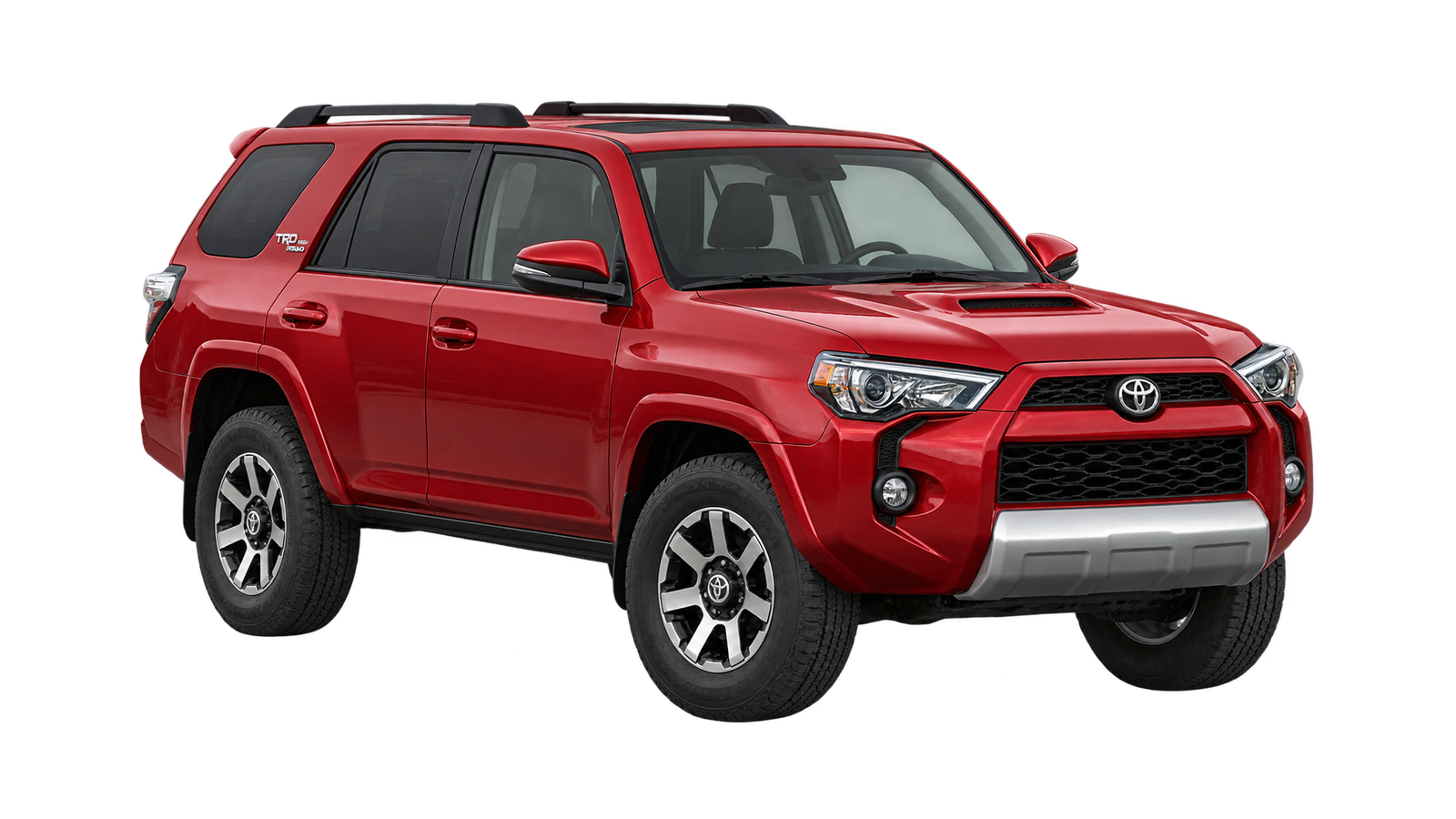
According to Au7o's analysis of 13,726+ owner reports, the 1990-2025 Toyota 4Runner has 47 documented known issues, with 16 rated critical. The most serious are Takata Airbag Recall ($0-$0 repair), Frame Rust and Corrosion ($200-$15,000 repair), ABS Actuator / Master Cylinder Assembly Failure Triggering ABS/VSC/TRAC Lights and Brake Pump Noise ($1,200-$3,000 repair), Brake Booster / Master Cylinder Internal Leak Causing Hard Pedal and Reduced Braking Assist ($1,200-$2,800 repair), 1GR-FE V6 Head Gasket Failure with External Coolant Leak at Rear of Cylinder Head ($1,800-$4,000 repair), Front Lower Ball Joint Wear and Separation (3rd Gen) ($400-$950 repair), 2UZ-FE 4.7L V8 Timing Belt is an Interference Belt - Failure at Neglected 90k Interval Destroys the Engine ($600-$1,500 repair), Secondary Air Injection Pump/Valve Failure Triggering Limp Mode on 4.7L V8 ($900-$3,000 repair), . at .
Gulf States Toyota, Inc. (GST) is recalling certain Toyota 2023 GR Supra, 2024 4 Runner, Corolla, Grand Highlander, Grand Highlander Hybrid, Land Cruiser Hybrid, Tacoma, Tacoma Hybrid, 2023-2024 BZ4X, Corolla Cross Hybrid, GR Corolla, GR86, Highlander, Highlander Hybrid, Prius, Prius Prime, Sequoia Hybrid, Tundra, Tundra Hybrid, Venza Hybrid, 2023-2025 Crown, and 2025 Camry Hybrid vehicles equipped with GST accessories. The load carrying capacity modification label may display inaccurate added weight values. As such, these vehicles fail to comply with the requirements of Federal Motor Vehicle Safety Standard number 110, "Tire Selection and Rims."
Campaign #24V54800023/07/2024
ELECTRICAL SYSTEM: INSTRUMENT CLUSTER/PANEL
Toyota Motor Engineering & Manufacturing (Toyota) is recalling certain 2023-2024 Toyota Venza, 2023-2025 RAV4 Prime, RAV4, Highlander, GR Corolla, Crown, 2024-2025 Lexus TX, LS, Toyota Tacoma, Grand Highlander, and 2025 Lexus RX, Toyota Crown Signia, Camry, RAV 4 Plug-in Hybrid (PHEV), and 4 Runner vehicles. Due to an error in the instrument panel software at vehicle startup, the instrument panel may fail to display vehicle speed, brake system, and tire pressure warning lights.
Campaign #25V59500011/09/2025
🔧
A mechanic who knows YOUR exact car
Answers tuned to your year, make, model & trim — not generic advice. Save your garage so it always has the right context.
Get ahead of Toyota 4Runner problems — free
Leave your email and we'll alert you the moment there's a new recall or known issue for your Toyota 4Runner. Free, no account needed.
According to Au7o's analysis of 13,726+ owner reports, the 1990-2025 Toyota 4Runner has 47 documented issues. The most frequently reported are: Takata Airbag Recall, Frame Rust and Corrosion, ABS Actuator / Master Cylinder Assembly Failure Triggering ABS/VSC/TRAC Lights and Brake Pump Noise. Of these, 16 are rated critical and should be addressed promptly.
Is the Toyota 4Runner reliable?
The 1990-2025 Toyota 4Runner has 47 known issues documented across 13,726+ owner reports. 16 issues are rated critical: Takata Airbag Recall and Frame Rust and Corrosion and ABS Actuator / Master Cylinder Assembly Failure Triggering ABS/VSC/TRAC Lights and Brake Pump Noise and Brake Booster / Master Cylinder Internal Leak Causing Hard Pedal and Reduced Braking Assist and 1GR-FE V6 Head Gasket Failure with External Coolant Leak at Rear of Cylinder Head and Front Lower Ball Joint Wear and Separation (3rd Gen) and 2UZ-FE 4.7L V8 Timing Belt is an Interference Belt - Failure at Neglected 90k Interval Destroys the Engine and Secondary Air Injection Pump/Valve Failure Triggering Limp Mode on 4.7L V8 and Pink Milkshake Radiator Failure Mixing Coolant and Automatic Transmission Fluid and 4WD Transfer Case Actuator Seizure from Infrequent Use Preventing 4HI/4LO Engagement and 2025 4Runner Instrument Panel Startup Software Fault — Missing Speed and Warning Lights (Recall 25V595000) and Lower Ball Joint Wear/Separation on 3rd-Gen Front Suspension and 3.0L 3VZ-E V6 Head Gasket Failure (Coolant Loss, White Smoke, Rough Idle) — SSC V06 / Extended Warranty and 3.0L V6 (3VZ-E) Head Gasket Failure — Toyota Special Service Campaign V06 and Rocker Panel, Rear Wheel-Arch and Pinch-Weld Rust and X-REAS Suspension Hydraulic Shock Leaks Leading to Harsh Ride and Expensive Replacement. Prospective buyers should inspect for these issues and factor potential repair costs into their purchase decision. Regular maintenance following the manufacturer's schedule helps prevent many common problems.
How much does it cost to fix common Toyota 4Runner problems?
Repair costs for known Toyota 4Runner issues range from $0 to $15,000, depending on the specific problem and whether you choose DIY or professional repair. The most critical issue, Takata Airbag Recall, typically costs $0-$0 to repair. Au7o provides step-by-step DIY maintenance guides that can help reduce repair costs.
Content on this page was compiled with AI assistance using NHTSA complaints, TSBs, owner reports, and public automotive data. While we strive for accuracy, this information may contain errors. Always verify repair procedures and specifications with your vehicle's service manual or a qualified mechanic.
Filter:
When Issues Typically Appear
Transmission Shudder / Torque Converter Issues
10K-15K
Dashboard Cracking and Melting from Heat/UV Exposure
50K-200K
Secondary Air Injection Pump/Valve Failure Triggering Limp Mode on 4.7L V8
70K-180K
4WD Transfer Case Actuator Seizure from Infrequent Use Preventing 4HI/4LO Engagement
70K-200K
Lower Ball Joint Wear/Separation on 3rd-Gen Front Suspension
80K-200K
X-REAS Suspension Hydraulic Shock Leaks Leading to Harsh Ride and Expensive Replacement
80K-160K
Fuel Gauge Sending Unit Failure Causing Inaccurate Fuel Level Readings
80K-180K
Brake Booster / Master Cylinder Internal Leak Causing Hard Pedal and Reduced Braking Assist
90K-180K
Cracked Exhaust Manifolds on 4.7L V8 Causing Ticking Noise and Exhaust Leaks
100K-220K
1GR-FE V6 Head Gasket Failure with External Coolant Leak at Rear of Cylinder Head
120K-220K
Pink Milkshake Radiator Failure Mixing Coolant and Automatic Transmission Fluid
120K-220K
063K125K188K250K mi
Early 4th-generation 4Runners with the 4.0L 1GR-FE V6 are known for head gasket failures, often presenting as an external coolant leak near the rear of the passenger-side cylinder head. Owners report gradual coolant loss, sweet smell, overheating risk, and misfires if the leak worsens. The issue is widely discussed in owner communities and repair databases, especially on 2003-2006 trucks.
Common Symptoms
slow coolant loss with no obvious front-engine leak
sweet coolant smell
coolant residue on rear of engine
overheating
rough running on cold start
misfire
How to Fix
Pressure-test the cooling system, inspect for coolant residue at the rear of the heads, and check for combustion-gas intrusion if overheating or misfires are present. Repair typically involves head gasket replacement, machine-shop inspection of the heads, and replacement of related seals, head bolts, water pump, and timing components as needed. Continuing to drive with low coolant can lead to severe engine damage.
What you need to fix it
Only diagnosis- and fitment-reviewed repair parts are linked here.
Fel-Pro HS 26330 PT complete cylinder-head gasket set
complete gasket-set branch after a head-gasket failure is confirmed and both heads are inspected Fitment/availability: 2003-2009 Toyota 4Runner 4.0L V6 1GR-FE according to retailer; review is for 2003-2006 and head bolts are explicitly n…
new torque-to-yield head bolts required with the approved gasket-set repair Fitment/availability: 2003-2020 Toyota 4Runner 4.0L V6 listing; confirm 1GR-FE VIN and required set quantity with the service procedure before purchase Fitment/a…
The 4.7L V8 (2UZ-FE) in V8 4Runners uses a rubber timing belt, not a chain, on a 90,000-mile / ~7-10 year interval. The 2005+ VVT-i version is an interference engine, so a belt that snaps at speed lets pistons strike valves, causing severe and expensive internal damage. Many owners are unaware their V8 even has a belt (the V6 is chain-driven), and neglected or unknown service history is a real risk on used trucks. The water pump is belt-driven and routinely fails around the same interval, soaking and shortening the belt.
Common Symptoms
Engine won't crank/start after belt failure
Rattle or squeal from timing cover (failing tensioner/idler)
Coolant weep at front of engine (water pump)
Rough running / misfire if belt jumps a tooth
Unknown timing-belt service history
How to Fix
Replace the timing belt on schedule (every 90k miles or per Toyota's time interval) and always do it as a complete kit - belt, water pump, hydraulic tensioner, and idler pulleys (e.g., Aisin TKT-001/TKT-021 kit) - so all belt-driven wear items are refreshed together. On any used V8 4Runner with unknown history, treat the timing belt as due. Catching it before failure is far cheaper than the valve/piston damage that results from a snapped interference belt.
What you need to fix it
Only diagnosis- and fitment-reviewed repair parts are linked here.
AISIN TKT-021 timing-belt kit with water pump and hydraulic tensioner
complete scheduled timing-belt-system service kit Fitment/availability: 2003-2009 Toyota 4Runner 4.7L V8 2UZ-FE according to the retailer; kit listing includes timing belt, water pump, hydraulic tensioner and required pulley components F…
The 4.7L 2UZ-FE V8 used in later 4th-generation 4Runners is known for secondary air injection system failures involving the air pump and switching valves. When the system sticks or fails electrically, the truck may illuminate the check engine light and enter reduced-power or limp mode. This problem is widely documented across Toyota V8 trucks and SUVs of the era and can be very expensive when repaired with OEM components.
Common Symptoms
check engine light
reduced power or limp mode
poor acceleration
cold-start noise from air pump area
traction and VSC lights illuminated with CEL
How to Fix
Scan for stored air injection codes and verify pump operation, valve movement, and moisture intrusion in the system. Repair usually requires replacing one or both air pumps and/or switching valves, plus related hoses or control components. Some owners use aftermarket bypass modules for off-road or out-of-warranty vehicles, but emissions legality varies by location.
What you need to fix it
Only diagnosis- and fitment-reviewed repair parts are linked here.
Genuine Toyota 17600-0F010 secondary-air pump assembly
pump branch only when command, power, pressure and debris inspection confirm failure Fitment/availability: 2005-2009 Toyota 4Runner 4.7L 2UZ-FE bulletin branch; broader catalog fitment does not justify use without code-directed pump test…
Genuine Toyota 25710-50022 secondary-air switching/check valve
main switching-valve branch only after the bulletin test identifies valve failure or debris damage Fitment/availability: 2005-2009 Toyota 4Runner 4.7L 2UZ-FE bulletin branch; supersedes 25710-50020 and 25710-50021 Fitment/availability: s…
The 3.0L 3VZ-E V6 used in the 2nd-generation 4Runner (and its 1990-1994/early-1995 build window) is notorious for premature cylinder head gasket failure. The original-design gasket leaks combustion and coolant, causing progressive coolant loss, chronic overheating, unusually rough idle, and continuous white exhaust smoke. Toyota acknowledged the defect with Special Service Campaign V06 and a Special Policy Adjustment that extended head-gasket coverage to 8 years / 100,000 miles. Owners of surviving high-mileage examples that never received the campaign fix still hit this failure, and left unaddressed it leads to warped heads and overheating engine damage. This is one of the most-searched failures for early V6 4Runners.
Common Symptoms
Overheating / gradual coolant loss with no visible external leak
Continuous white smoke from the exhaust
Unusually rough idle when cold or warm
Coolant reservoir empties repeatedly
Milky oil or coolant bubbling in reservoir
Reduced engine performance
How to Fix
Confirm via combustion-gas (block) test at the coolant, coolant loss without external leak, and white smoke. Repair is replacing both head gaskets with Toyota's improved-design gaskets, resurfacing/inspecting the heads, and replacing head bolts and coolant. Check the truck's VIN with any Toyota dealer to see if SSC V06 was ever completed (it was free regardless of mileage). Use a genuine Toyota head gasket set (the superseded improved gasket, not the original part) plus new intake/exhaust gaskets and coolant. DIY parts run roughly $150-300 for a full gasket set; professional replacement is a large timing-belt-off job.
The first-generation Toyota V6, the 3.0L 3VZ-E fitted to 1990-1995 4Runners (and the companion Pickup/T100), is notorious for blown head gaskets. The root cause Toyota identified was excess heat around the #6 cylinder (the exhaust crossover area) combined with the original gasket design/material. Failures typically show up between roughly 90,000-150,000 miles and often before if the truck has ever been overheated. Toyota acknowledged the defect with Special Service Campaign V06 (following TSB EG94-003, issued Oct 1994), which covered late-1990 through early-1995 production (Jan 1990 to Oct 1994 build dates) and replaced the head gaskets regardless of whether they were currently leaking, with no age or mileage limit. That campaign expired (Sept 24, 2018), so today it is an out-of-pocket repair and a primary thing to inspect on any surviving 3VZ-E truck. Because the 3VZ-E is an aluminum-head/iron-block V6, a single overheating event can warp a head, so failures frequently recur if the underlying cooling issue or a warped head is not addressed.
Common Symptoms
Engine overheating or fluctuating temperature gauge
White exhaust smoke / sweet coolant smell
Coolant loss with no visible external leak
Milky oil or oil in the coolant
Rough running or hard start when warm
Bubbling/pressurized coolant in the reservoir
How to Fix
Replace both head gaskets with the updated OEM gasket set; have the heads checked for flatness and resurfaced (and pressure-tested for cracks) at a machine shop while off. Always refresh the cooling system (thermostat, radiator, hoses, and the timing-belt-driven water pump) at the same time, and inspect for a warped head that caused or resulted from the failure.
What you need to fix it
Only diagnosis- and fitment-reviewed repair parts are linked here.
Genuine Toyota 04007-02135 updated 3VZ-E cylinder-head gasket set
complete updated head-gasket set after diagnosis and machine-shop inspection Fitment/availability: 1988-1995 Toyota 4Runner 3.0L 3VZ-E according to the retailer; genuine updated-design campaign-style complete gasket set Fitment/availabil…
The 2UZ-FE V8 in 4th-generation 4Runners is known for exhaust manifold cracking, especially as the vehicle ages and heat cycles accumulate. Owners usually hear a cold-start ticking or tapping from the engine bay that quiets somewhat as the manifolds warm up, and some eventually get catalyst-efficiency or oxygen-sensor-related codes due to exhaust leaks. The issue is well documented in owner forums and repair shops because manifold replacement is labor-intensive and often expensive on both banks.
Common Symptoms
Ticking noise on cold start
Exhaust leak smell
Tapping from engine bay
Noise decreases as engine warms
Possible check engine light
Reduced exhaust efficiency
How to Fix
Diagnose by listening for cold-start exhaust tick near the manifolds, checking for soot marks, and smoke-testing the exhaust if needed. Confirm whether the leak is from a cracked manifold, broken stud, or gasket failure. Repair typically involves replacing the affected manifold(s), hardware, and gaskets; many owners choose aftermarket headers/manifolds, while others prefer OEM-style replacements for emissions compliance and noise control.
What you need to fix it
Only diagnosis- and fitment-reviewed repair parts are linked here.
Dorman 673-113 left integrated manifold/catalytic converter
early fourth-generation left-side repair after crack/leak and EFN diagnosis Fitment/availability: left side 2003-2004 Toyota 4Runner 4.7L V8; CARB compliant only for the listed 2003 EFN 3TYXT04.7FFP and 2004 EFN 4TYXT04.7VRM, which must …
Dorman 673-114 right integrated manifold/catalytic converter
early fourth-generation right-side repair after crack/leak and EFN diagnosis Fitment/availability: right side 2003-2004 Toyota 4Runner 4.7L V8; CARB-compliant listing is EFN-specific, so match the underhood label and exact year Fitment/a…
late fourth-generation left-side federal-emissions repair after diagnosis Fitment/availability: front left 2005-2009 Toyota 4Runner 4.7L V8 federal/EPA branch; retailer will not ship to CA, CO, NY or ME and legality must be confirmed for…
Walker 16519 right integrated manifold/catalytic converter
late fourth-generation right-side federal-emissions repair after diagnosis Fitment/availability: right side 2005-2009 Toyota 4Runner 4.7L V8 federal/EPA branch; not legal in California or other CARB-compliant states and additional gasket…
On the 3rd-gen 4Runner's 3.4L 5VZ-FE V6, the two knock sensors sit in the engine valley beneath the upper and lower intake manifolds, and their sub-wiring harness bakes over time. The harness insulation becomes brittle and crumbles, opening the circuit and setting P0325 (knock sensor 1 circuit) and/or P0330 (knock sensor 2 circuit). The ECU then pulls timing, hurting fuel economy and power. It is a very high-demand repair topic because the fix is buried under the intake, and because the ECU is extremely sensitive to sensor signal quality.
Common Symptoms
Check engine light with P0325 and/or P0330
Noticeably reduced fuel economy
Slight loss of power / sluggish acceleration
Brittle, crumbling wiring found under the intake manifold
Code returns after aftermarket sensor install
How to Fix
Remove the upper and lower intake manifolds and replace BOTH knock sensors plus the knock-sensor sub-harness. Use OEM/Denso sensors only — aftermarket knock sensors very frequently fail to clear the code, forcing you to redo the whole labor-intensive job. Key parts: knock-sensor sub-harness Toyota 82219-34010; two Denso knock sensors (Denso 89615-series); new upper and lower intake manifold gaskets and a fresh coolant fill. Budget roughly $150-300 in genuine parts (harness + 2 sensors + gaskets), or ~$400-900 done at a shop given the intake teardown labor.
What you need to fix it
Only diagnosis- and fitment-reviewed repair parts are linked here.
Genuine Toyota 82219-34010 5VZ-FE knock-sensor sub-harness
heat-aged valley sub-harness replaced during diagnosed knock-circuit repair Fitment/availability: 1996-2002 Toyota 4Runner 3.4L 5VZ-FE according to the retailer Fitment/availability: quantity control and purchase path live when reviewed
Genuine Toyota/Denso 89615-12090 knock control sensor
current superseding sensor for a bank whose sensor is confirmed faulty Fitment/availability: 1996-2002 Toyota 4Runner 3.4L 5VZ-FE in the Toyota catalog; Denso manufacturer note; one sensor per listing and quantity must follow diagnosis F…
The accessory-drive belt tensioner and idler pulley bearings (a 6203-size sealed bearing) wear out and get noisy on the 1GR-FE, producing a persistent squeal/squeak/grinding from the front of the engine that is often mistaken for the water pump or a glazed belt. A weak tensioner also fails to keep the belt tight, which prematurely chews up a new belt. Owners commonly find the tensioner pulley is the culprit and either replace the whole tensioner assembly or just press in a fresh bearing (e.g., SKF 6203-2RS).
Common Symptoms
Squealing/squeaking from front of engine
Grinding or rumble at idle
Belt chirp that changes with RPM
Premature belt wear/fraying
Noise mistaken for water pump
How to Fix
With the belt off, spin the tensioner and idler pulleys by hand and check for roughness/play; replace the noisy unit. Best practice is to replace the serpentine belt, tensioner, and idler pulley together as a kit so a worn tensioner doesn't destroy the new belt. OEM idler pulley 16603-31030 and tensioner assembly 16620-31040 (1GR-FE) are the canonical parts; the pressed-in bearing is a 6203-2RS.
What you need to fix it
Only diagnosis- and fitment-reviewed repair parts are linked here.
Genuine Toyota 16620-31013 serpentine tensioner
fourth-generation tensioner branch after weak damping, misalignment, binding or bearing failure Fitment/availability: 2003-2009 Toyota 4Runner 4.0L 1GR-FE; replaces 16620-31010, -31011 and -31012 Fitment/availability: ships in 1-3 busine…
fifth-generation tensioner branch after weak damping, misalignment, binding or bearing failure Fitment/availability: 2010-2024 Toyota 4Runner 4.0L 1GR-FE; replaces 16620-31050 Fitment/availability: ships in 1-3 business days and Add to C…
No.1 idler branch after roughness, play or alignment failure Fitment/availability: current No.1/lower idler cataloged across 2003-2024 4Runner 1GR-FE; verify build-specific plate and hardware Fitment/availability: ships in 1-3 business d…
No.2 idler branch after roughness, play or alignment failure Fitment/availability: current No.2 idler cataloged across 2003-2024 4Runner 1GR-FE; replaces 16604-31010 and 16604-31020 and may require the matching pulley plate Fitment/avail…
fourth-generation belt branch when wear or pulley failure has damaged the belt Fitment/availability: 2003-2009 Toyota 4Runner 4.0L 1GR-FE; current replacement for the earlier D2120/02571 belt numbers Fitment/availability: ships in 1-2 bu…
fifth-generation belt branch when wear or pulley failure has damaged the belt Fitment/availability: 2010-2024 Toyota 4Runner 4.0L 1GR-FE; replaces 99367-H2150 Fitment/availability: ships in 1-3 business days and Add to Cart live when rev…
The 1GR-FE develops a slow oil seep/leak at the front of the engine where the Bank 1 (passenger-side) cylinder head, engine block, and timing cover all meet. Toyota acknowledged it in TSB EG007-07 for 2003-2007 4Runners, and the leak persists on later 1GR-FE trucks. A secondary leak source is the small square access plate (4 bolts) on the passenger-side timing cover, which covers the timing-chain tensioner and whose gasket fails in the same area. Owners notice oil drips on the front skid plate/crossmember and a burning-oil smell, and it is commonly misdiagnosed as a valve-cover leak.
Common Symptoms
Oil drips at front of engine / on skid plate
Burning oil smell
Oil residue where head, block and timing cover meet (passenger side)
Low oil level over time
Misdiagnosed as valve cover leak
How to Fix
Confirm the leak origin (clean the area and re-inspect). For a tensioner access-plate gasket leak, the plate can be resealed relatively cheaply. A true timing-cover seam leak per the TSB requires removing the timing cover and resealing with Toyota FIPG (form-in-place gasket); on the 1GR-FE this also requires dropping the upper oil pan so the sealing surfaces are assembled in the correct sequence - a labor-intensive job. Use Toyota Seal Packing/FIPG 1282B (00295-01282) for resealing.
What you need to fix it
Only diagnosis- and fitment-reviewed repair parts are linked here.
Toyota 00295-00103 Seal Packing 103 oil-grade FIPG
oil-side timing-cover seam reseal consumable Fitment/availability: oil-contact sealing material for specified Toyota oil-pan, cam-housing and timing-cover joints; use only where the exact repair manual maps it Fitment/availability: usual…
Genuine Toyota 08826-00100 Seal Packing 1282B coolant-grade FIPG
coolant-junction reseal consumable when that joint is opened Fitment/availability: coolant-contact joints only where the exact 1GR-FE repair manual specifies 1282B; not the general oil-side sealant Fitment/availability: 1 in stock and Ad…
Genuine Toyota 11328-31030 timing-cover access-plate gasket
lower-cost access-plate leak branch Fitment/availability: 2003-2024 Toyota 4Runner 4.0L 1GR-FE; use only if dye tracing confirms the access plate rather than the main cover seam Fitment/availability: ships in 1 business day and Add to Ca…
The front lower ball joints on 3rd-generation 4Runners (1996-1999, sharing the same part through 2002) wear out and, in worst cases, separate from the steering knuckle, causing loss of steering control and front-corner collapse. Toyota issued a formal safety recall/Special Service Campaign 50J (NHTSA 05V-225) for 2001-2002 4Runners, Tacoma and Tundra where the ball surface could be scratched in assembly, but owners and mechanics widely report the same lower ball joint wearing out and failing on the earlier 1996-2000 3rd-gen trucks that fall outside the recall. Because failure can be sudden and cause a crash, this is treated as a high-severity inspection item — checked for play and torn boots at every service on high-mileage examples.
Common Symptoms
Clunking or knocking from the front end over bumps
Increased or uneven steering effort / vague steering
Uneven inner/outer tire wear
Torn ball joint grease boot
Visible vertical play when the wheel is levered
How to Fix
Inspect lower ball joints for vertical/lateral play and torn grease boots; replace worn joints (typically both sides) with OEM or premium aftermarket units and perform a front-end alignment afterward. Repack/boot-protect the new joints and re-inspect periodically on high-mileage trucks.
What you need to fix it
Only diagnosis- and fitment-reviewed repair parts are linked here.
Genuine Toyota 43340-39465 front-left lower ball joint
left safety-critical joint replacement after inspection Fitment/availability: front driver side 1996-2002 Toyota 4Runner 2.7L or 3.4L; replaces earlier left-side numbers Fitment/availability: ships in 1-3 business days and Add to Cart li…
Genuine Toyota 43330-39585 front-right lower ball joint
right safety-critical joint replacement after inspection Fitment/availability: front passenger side 1996-2002 Toyota 4Runner 2.7L or 3.4L Fitment/availability: ships in 1-3 business days and Add to Cart live when reviewed
On late 3rd-generation 4Runners, the front lower ball joints are a well-documented failure point and can develop excessive play or separate without much warning. Toyota issued a safety recall because separation can cause loss of steering control and front wheel collapse. Owners commonly report clunking, wandering, uneven tire wear, or sudden suspension failure if the joints are neglected.
Common Symptoms
front-end clunk over bumps
loose or wandering steering
uneven front tire wear
popping noise while turning
sudden front wheel collapse in severe cases
How to Fix
Inspect the lower ball joints for play, torn boots, grease loss, and looseness at every front-end service, especially on higher-mileage vehicles. Replace both lower ball joints with updated OEM Toyota parts and new hardware; many owners also replace the tie-rod ends if wear is present. An alignment should be performed after repair.
What you need to fix it
Only diagnosis- and fitment-reviewed repair parts are linked here.
Genuine Toyota 43340-39465 front-left lower ball joint
left safety-critical joint replacement after inspection Fitment/availability: front driver side 1996-2002 Toyota 4Runner 2.7L or 3.4L; covers the full 2000-2002 record Fitment/availability: ships in 1-3 business days and Add to Cart live…
Genuine Toyota 43330-39585 front-right lower ball joint
right safety-critical joint replacement after inspection Fitment/availability: front passenger side 1996-2002 Toyota 4Runner 2.7L or 3.4L; covers the full 2000-2002 record Fitment/availability: ships in 1-3 business days and Add to Cart …
4th-generation 4Runners equipped with the optional X-REAS cross-linked shock system commonly develop leaking shocks or hydraulic line failures as mileage climbs. Owners notice a bouncy or harsh ride, fluid seepage at the shocks, and degraded handling, but the real pain point is cost because the system is interconnected and OEM replacement parts are expensive. Many owners ultimately delete X-REAS and convert to conventional shocks and springs.
Common Symptoms
Oil leaking from shock body
Harsh ride
Excessive bouncing
Poor body control
Clunk over bumps
Uneven damping front to rear
How to Fix
Inspect all four shocks and hydraulic junctions for oily residue and verify whether ride control has deteriorated. If one component leaks, Toyota generally treats the system as non-serviceable in sections, so replacement can be costly. A common long-term fix is removing the X-REAS system entirely and installing standard suspension components such as Bilstein or KYB assemblies, which are cheaper to maintain later.
What you need to fix it
Only diagnosis- and fitment-reviewed repair parts are linked here.
ShockWarehouse 2002-2009 4Runner X-REAS-to-standard Bilstein/KYB conversion set
complete standard-damper conversion branch after qualified X-REAS decommissioning Fitment/availability: merchant-scoped 2002-2009 Toyota 4Runner with X-REAS; package lists two Bilstein 24-325462 front shocks, two 33-329093 rear shocks an…
As an Amazon Associate, we earn from qualifying purchases; other part links may also earn au7o a commission. Confirm fitment by VIN before buying.
Owner tips & cautions
TipIf X-REAS is leaking, many owners skip OEM replacement and convert all four corners to standard shocks because future maintenance is much cheaper.
TipDo not disconnect X-REAS lines casually unless you are deleting the system; once opened, the linked hydraulic setup is not easily recharged like a normal shock.
The KDSS hydraulic suspension system can develop leaks at the hydraulic lines and accumulators, especially in areas with road salt. The system helps reduce body roll on-road while allowing articulation off-road. Corrosion of the KDSS lines is common in northern states.
Common Symptoms
Hydraulic fluid leaking under front/rear
KDSS warning light on dash
Poor handling or excessive body roll
Clicking from front suspension
Visible corrosion on KDSS lines
How to Fix
Inspect KDSS lines annually for corrosion. Apply rust protectant to exposed lines. For leaking accumulators: Replace with new units ($300-600 each). Hydraulic line leaks require line replacement. Some owners delete KDSS entirely and install conventional sway bars ($500-1,500). Full KDSS repair at dealer: $1,500-4,000.
What you need to fix it
Only diagnosis- and fitment-reviewed repair parts are linked here.
Fluid Film AS11 11.75-ounce lanolin corrosion inhibitor
annual prevention branch after confirming the system is dry and structurally intact Fitment/availability: universal external corrosion barrier for dry, intact KDSS lines and brackets; keep off brakes, belts and exhaust and do not use as …
High Confidence876 owner reportsLast reported by owners Feb 2024Reviewed Feb 2026
High-mileage 4th-gen 4Runners commonly develop front wheel-bearing wear, producing a humming or roaring noise that grows with vehicle speed and changes as the truck loads/unloads a wheel in turns. Off-road use, water/mud intrusion, and heavy tires accelerate it. Left unaddressed a failing bearing/hub can develop play, trigger ABS/wheel-speed-sensor faults, and in the worst case allow the wheel to separate.
Common Symptoms
Humming/roaring from the front that increases with speed
Noise changes pitch or volume when turning left vs right
Grinding or growling at higher mileage
Play/wobble when rocking the tire at 6-and-12 o'clock
Confirm the side by noting when the noise worsens: if it gets louder turning right, the LEFT bearing is usually the culprit (and vice-versa). Check for wheel play with the tire jacked up. The standard repair on this generation is to replace the front wheel bearing/hub with an OEM or premium bearing (SKF, NSK, or Moog 'Problem Solver' are well regarded); re-torque the axle nut to spec. Because part numbers vary by exact build (2WD vs 4WD), confirm the correct hub/bearing against your VIN before ordering. Parts commonly $80-250 per side; shop labor adds $150-300 per side.
What you need to fix it
Only diagnosis- and fitment-reviewed repair parts are linked here.
Koyo/JTEKT 2DUF054N-2GR front wheel bearing
press-fit bearing common to the diagnosed front corner Fitment/availability: front left or right 2003-2009 Toyota 4Runner 4.0L or 4.7L, 2WD or 4WD; cross-references Toyota 43570-60010 superseded by 43570-60011 Fitment/availability: Add t…
4WD hub replacement when wear or press damage makes hub renewal necessary Fitment/availability: 2003-2009 Toyota 4Runner 4WD hub branch; catalog identifies 43502-60201 as replacement for 43502-60180 Fitment/availability: ships in 1 busin…
2WD hub replacement when wear or press damage makes hub renewal necessary Fitment/availability: 2003-2009 Toyota 4Runner 2WD hub branch; supersedes 43502-35210 Fitment/availability: ships in 1 business day and Add to Cart live when reviewed
A clunk or pop may be heard from the steering column area when turning the wheel, especially at low speeds or when going from left to right. The issue is typically the intermediate steering shaft or worn rack bushings. Common on vehicles driven off-road.
Common Symptoms
Clunk when turning wheel at low speed
Pop when turning from stop
Noise from steering column area
Play in steering wheel
How to Fix
For intermediate shaft noise: Lubricate the shaft splines with white lithium grease (temporary fix) or replace shaft ($200-400). For steering rack clunk: Tighten rack mounting bolts or replace rack bushings. Full rack replacement if worn ($800-1,500). Have alignment checked after any steering work.
What you need to fix it
Only diagnosis- and fitment-reviewed repair parts are linked here.
Genuine Toyota 45220-60280 steering intermediate shaft assembly
intermediate-shaft branch only when joint/spline play or noise is isolated there Fitment/availability: 2010-2024 Toyota 4Runner; verify VIN and steering-column diagram Fitment/availability: ships in 1-2 business days and Add to Cart live…
High Confidence678 owner reportsLast reported by owners Feb 2024Reviewed Feb 2026
Community reported
1,654 owners
The frame on 4Runners, especially in northern/salt belt states, can develop severe rust and corrosion. This is a safety concern as the frame provides structural integrity. Toyota had a frame replacement program for some Tacomas/Tundras but 4Runners were not included.
Common Symptoms
Visible rust on frame rails
Rust flakes falling when driving
Holes developing in frame
Suspension mounts rusted
Failed inspection due to frame
How to Fix
Prevention: Apply Fluid Film or similar undercoating annually, especially before winter. Wash undercarriage regularly to remove salt. For existing rust: Wire brush loose rust, apply rust converter like POR-15, then undercoat. Severe cases may require frame section replacement ($2,000-5,000) or frame swap ($8,000-15,000).
What you need to fix it
Only diagnosis- and fitment-reviewed repair parts are linked here.
Fluid Film AS11 11.75-ounce lanolin corrosion inhibitor
renewable prevention branch after the frame passes structural inspection Fitment/availability: universal frame/chassis corrosion barrier; not a structural repair and must not contact friction surfaces or hot exhaust Fitment/availability:…
prepared-surface coating branch for structurally sound steel Fitment/availability: universal coating system for stable rust or seasoned metal after full clean and metal-prep steps; UV-exposed areas require topcoat Fitment/availability: m…
High Confidence1,654 owner reportsLast reported by owners Feb 2024Reviewed Feb 2026
1990s 4Runners are structurally durable but very prone to age- and salt-driven body rust, especially at the rocker panels, lower quarter/rear wheel arches, and the pinch-weld seams. On 3rd-gen trucks (1996-1999) the factory sunroof drain lines route into the rocker cavities, and the rocker weep/drain holes clog, so water is trapped and the rocker rusts from the inside out. Running-board mounts and rock chips accelerate it. This is well documented across enthusiast communities as the defining corrosion weak point of these trucks in the salt belt. Rear hatch bottoms, tailgate, and the area around the third brake/spare are also common. Left unaddressed the rot spreads into structural sheet metal and body mounts, which is what makes it a high-severity find on an otherwise mechanically sound truck.
Common Symptoms
Bubbling/blistering paint along rocker panels and wheel arches
Flaking or perforated metal at rocker-to-floor pinch weld
Rust stains below the doors and behind running boards
Water pooling inside the rocker (clogged drains)
Rot at the bottom of the rear hatch/tailgate
How to Fix
Catch it early: keep the rocker/quarter drain holes clear and treat cavities annually with Fluid Film or a cavity wax. For existing rot, cut out and weld in new rocker/wheel-arch sections with weld-through primer, then re-coat inside and out; adhesive/rivet patch panels are a lower-cost cosmetic option but are debated for structural areas. Verify sunroof drains are clear to stop recurrence.
What you need to fix it
Only diagnosis- and fitment-reviewed repair parts are linked here.
Fluid Film AS11 11.75-ounce lanolin corrosion inhibitor
annual prevention branch for intact rocker and wheel-arch cavities Fitment/availability: universal cavity and seam corrosion barrier for sound metal after drains are cleared; not a structural repair Fitment/availability: pickup, delivery…
The sunroof tray has plastic drain tubes at each corner that route water down the A-pillars (front) and into the rear pillars, exiting near the rockers. Leaves and debris clog these tubes, so water backs up in the tray and overflows into the headliner, down the A-pillar, and onto the driver/passenger floor (wet carpet, musty smell, fogging). A rear drain tube can also become disconnected. This is one of the most common 4Runner water-leak complaints and is frequently misdiagnosed as a door-seal or windshield leak.
Common Symptoms
Wet driver or passenger floor / carpet
Water dripping from headliner or A-pillar
Musty/mildew smell in cabin
Window fogging from interior moisture
Water sloshing sound from roof
How to Fix
Open the sunroof, locate the corner drain holes in the tray, and clear them with low-pressure compressed air or a soft flexible wire (avoid stiff wire that can pop a tube off its nipple). Verify flow by pouring a cup of water into each corner and confirming it exits under the vehicle. Re-seat any disconnected rear drain tube. Dry out the carpet/padding to prevent mold and check the cowl/sunroof seal if leaks persist.
On 4th-gen 4Runners the integrated ABS actuator/brake master cylinder assembly (with electric pump motor and accumulator) fails internally. The pump motor or accumulator wears out so the pump never reaches pressure and runs continuously; owners get simultaneous ABS, BRAKE, VSC and TRAC warning lights, a loud continuous in-cabin alarm, electronic noise when braking, and a hard or sinking pedal with reduced assist. It is a safety-relevant failure and the assembly is one of the most expensive non-drivetrain parts on the truck. This is distinct from the brake booster/master-cylinder internal-leak issue: this is the ABS hydraulic actuator/accumulator unit.
Common Symptoms
ABS, BRAKE, VSC and TRAC lights on together
Loud continuous in-cabin warning alarm
Brake pump motor runs constantly / electronic noise
Hard or sinking brake pedal, reduced assist
C-series ABS/brake control codes
How to Fix
First scan and inspect the wheel-speed (ABS) sensors and connectors, as dirty/damaged sensors mimic the symptoms cheaply. If the fault is the actuator/accumulator (continuous pump run, pressure faults), replace the integrated ABS actuator with master cylinder assembly - OEM 47050-60080/47050-60081 (4th gen) - and bleed/initialize the system with a capable scan tool. The part alone runs roughly $1,700-$2,300; remanufactured units are available cheaper.
Multiple 4th-generation 4Runner owners report the brake pedal becoming hard, requiring excessive effort to stop, often accompanied by ABS/VSC/TRAC warning lights and a buzzing or continuously running brake actuator. Toyota issued service information for brake booster pump/master cylinder concerns on related platforms, and owner complaints frequently describe internal accumulator or actuator failure rather than simple pad/rotor wear. Repairs are expensive because the booster/master/actuator assembly is typically replaced as a unit.
Common Symptoms
Hard brake pedal
Longer stopping distance
ABS light on
VSC TRAC light on
Brake warning light on
Buzzing or frequently running brake pump
Intermittent loss of brake assist
How to Fix
Diagnose by scanning the ABS/VSC system for stored brake actuator codes, checking whether the pump runs excessively, and verifying loss of assist with the engine running. Inspect for internal hydraulic leakage and confirm whether the accumulator pressure will not hold. Repair usually involves replacing the brake booster assembly and/or master cylinder actuator unit, followed by brake bleeding with a scan tool-capable procedure and calibration of the brake system.
Owner tips & cautions
TipScan the ABS/VSC module before replacing parts; many owners initially chase wheel speed sensors when the real fault is the booster/actuator assembly.
TipIf the pump runs every few seconds with the key on, do not ignore it; owners report the condition usually worsens into warning lights and reduced assist.
The 2025 4Runner — the first model year of the new generation, with its full digital instrument panel — is included in NHTSA recall 25V595000. Toyota's stated cause is an error in the instrument panel software at vehicle startup, after which the panel may fail to display vehicle speed, the brake system warning light, and the tire pressure warning light. On a body-on-frame SUV that owners air down, tow with, and take off pavement, losing the tire pressure telltale and the brake system telltale in one shot is the meaningful part, and the missing speed display compounds it. NHTSA states that an instrument panel not showing critical information can increase the risk of a crash or injury. The 591,377 units reported are the campaign-wide total across all affected Toyota and Lexus models.
Common Symptoms
Instrument panel fails to display vehicle speed at startup
Brake system warning light does not show in the cluster
Tire pressure warning light does not show in the cluster
How to Fix
Free. For non-plug-in vehicles like the 2025 4Runner, Toyota updates the instrument panel software over the air; a dealer can apply the update if the OTA does not complete. Owner letters were mailed December 5, 2025, and additional letters are anticipated in May 2026 as this phased recall continues. Enter your VIN at nhtsa.gov/recalls to confirm your 4Runner is included and whether the update has already been performed, or contact Toyota customer service at 1-800-331-4331 referencing 25TB08 / 25TA08.
The starter on 2010-2022 4Runners is prone to corrosion, and if corrosion migrates into the starter relay/solenoid contacts it can cause intermittent no-crank (a single click or nothing on key turn) and, in some cases, additional driveability gremlins. Because the starter sits low and in the heat, the contacts and connections degrade over time. Owners often replace or rebuild the starter (or just the contacts/plunger) to restore reliable cranking.
Common Symptoms
Single click or no crank on key turn
Intermittent failure to start (worse when hot)
Slow/lazy cranking
Corrosion visible on starter and lead
Occasional stalling tied to electrical fault
How to Fix
Verify battery, terminals, and grounds first (corroded/loose connections mimic a bad starter). If the starter is at fault, replace it or rebuild it with a new contact/plunger kit and clean the heavy power lead. OEM starter for the 1GR-FE is 28100-31130 (cross-references to common Denso reman units). Clean and dielectric-grease the connections on reassembly to slow future corrosion.
What you need to fix it
Only diagnosis- and fitment-reviewed repair parts are linked here.
Genuine Toyota 28100-31131 starter assembly
complete starter branch after battery, cable, ground, relay/control and voltage-drop tests confirm starter failure Fitment/availability: 2010-2024 Toyota 4Runner 4.0L 1GR-FE; confirm VIN and production date Fitment/availability: ships in…
On 5th-gen 4Runners the door lock actuator is built into the door latch assembly and fails frequently, often just outside the factory warranty. Owners find one or more doors that no longer lock or unlock with the key fob or interior switch, sometimes with a rapid clicking from inside the door as the actuator motor cycles without throwing the latch. The failure is widespread enough to have generated class-action complaints. A former Toyota technician attributes it to the factory grease drying/gumming inside the actuator. Because the actuator is integrated into the latch on this generation, the whole latch assembly is replaced rather than a standalone actuator.
Common Symptoms
One or more doors won't lock or unlock with key fob
Door won't lock/unlock from interior switch
Rapid clicking inside the door when locking
Exterior or interior handle does not actuate the latch
Intermittent lock operation
How to Fix
Diagnose which specific door is affected (a single failing door points to that door's actuator/latch, not the body control module). Replace the affected front door lock actuator/latch assembly with an OEM unit: driver/front-left 69040-42250, passenger/front-right 69030-42230 (aftermarket Dorman/Standard/TRQ units cross-reference these). Job involves removing the interior door panel, peeling back the weather barrier, transferring the rods, and bolting in the new latch; roughly a 1-hour DIY per door.
What you need to fix it
Only diagnosis- and fitment-reviewed repair parts are linked here.
AISIN W0133-2211638 front-left door lock assembly
driver-door repair after side-specific electrical and linkage diagnosis Fitment/availability: front left 2010-2024 Toyota 4Runner; includes latch/motor according to the year-specific listing Fitment/availability: product page and orderin…
AISIN W0133-2211283 front-right door lock assembly
passenger-door repair after side-specific electrical and linkage diagnosis Fitment/availability: front right 2010-2024 Toyota 4Runner; includes latch/motor according to the year-specific listing Fitment/availability: product page and ord…
4th-gen 4Runner instrument clusters use small stepper motors to drive each gauge needle, and these motors fail with age — most often the speedometer, sometimes the tach, fuel, or temp gauges. Symptoms range from a needle stuck at a false reading (e.g., speedo frozen at ~40 mph) to twitching/clicking at startup and a dead gauge while driving. Owners commonly search whether it's the cluster, the vehicle speed sensor (VSS), or a fuse, since a bad VSS or blown dome-circuit fuse can mimic it.
Common Symptoms
Speedometer stuck at a false value or reading zero
Tachometer or other gauges frozen/erratic
Clicking or twitching needle at startup
Multiple gauges failing over time
Speedo/tach dead but odometer digits still lit
How to Fix
First rule out the cheap causes: check the dome/gauge fuse and inspect/scan the transmission Vehicle Speed Sensor (VSS) — a failing VSS kills the speedo signal. If fuses and VSS are good and the fault is a single stuck/erratic needle, the cluster's stepper motor(s) are the cause. Repair by replacing the failed stepper motor(s) (common X27.168-type) or sending the cluster to a rebuild service; full cluster replacement requires mileage transfer to stay legal. Stepper-motor DIY repair is inexpensive ($10-40 in motors); professional cluster repair/replace runs $150-350.
The signature rear tailgate power glass on the 4Runner is a high-failure, high-search item. The window stops rolling up or down, rolls part way and falls back, moves slowly/unevenly, or makes grinding noises. Root causes are a worn rear window regulator/motor sub-assembly, a failed rear-window relay (located in the engine-bay fuse box and known to quit after enough heat cycles), or an out-of-sync auto-down feature needing a regulator reset. Because the glass is the only way to access the cargo area without opening the whole gate, owners treat this as a must-fix.
Common Symptoms
Rear hatch glass won't roll up or down
Glass rolls up then drops back down
Slow or uneven rear window movement
Grinding/clicking from the tailgate
Auto-down feature stopped working
How to Fix
First swap the rear-window relay in the engine-bay fuse box with an identical relay to rule it out, and try the regulator reset (hold the switch 2+ seconds past full-open and again past full-close). If the glass still won't operate, replace the rear back-door power window regulator/motor sub-assembly: OEM 69807-35030 (2010-2024) or 69807-35020 (2003-2009). Replacement takes 1-2 hours and requires removing the tailgate trim.
What you need to fix it
Only diagnosis- and fitment-reviewed repair parts are linked here.
Genuine Toyota 69807-35020 back-door power-window regulator
fourth-generation regulator branch after broken cable, track or binding diagnosis Fitment/availability: 2003-2009 Toyota 4Runner; cable/track regulator only, not the motor Fitment/availability: ships in 1 business day and Add to Cart liv…
Genuine Toyota 85720-35150 rear back-glass lift motor
fourth-generation motor branch after power/ground and direct motor testing Fitment/availability: 2003-2009 Toyota 4Runner Limited, Sport or SR5 with 4.0L or 4.7L; separate motor for the back-glass regulator Fitment/availability: ships in…
Genuine Toyota 69807-35030 back-door power-window regulator
fifth-generation regulator branch after broken cable, track or binding diagnosis Fitment/availability: 2010-2024 Toyota 4Runner; cable/track regulator only, not the motor Fitment/availability: ships in 1-3 business days and Add to Cart l…
Genuine Toyota 85720-35161 rear back-glass lift motor
fifth-generation motor branch after power/ground and direct motor testing Fitment/availability: 2010-2024 Toyota 4Runner; separate motor, replacing 85720-35160 Fitment/availability: ships in 1-2 business days and Add to Cart live when re…
On 3rd-generation automatic 4Runners, the internal transmission cooler inside the radiator can rupture and allow coolant and ATF to mix, commonly called the 'pink milkshake.' Once fluids cross-contaminate, the transmission can begin slipping, shuddering, or fail completely. This is heavily documented in owner forums and repair discussions because the damage can escalate quickly if not caught early.
Common Symptoms
strawberry-milkshake fluid in radiator or overflow bottle
milky or foamy ATF
transmission slipping
delayed shifting
overheating
coolant loss
How to Fix
Inspect the radiator and transmission fluid condition regularly; milky pink fluid in the radiator or transmission dipstick is a major warning sign. Preventive replacement of the radiator is common on aging vehicles, and many owners bypass the internal cooler or add an external transmission cooler. If contamination has already occurred, the radiator must be replaced and the transmission may require repeated flushing or full rebuild/replacement.
What you need to fix it
Only diagnosis- and fitment-reviewed repair parts are linked here.
Denso 221-0508 First Time Fit radiator with transmission oil cooler
preventive or confirmed radiator/internal-cooler replacement before reconnecting clean cooling and transmission circuits Fitment/availability: 1996-2002 Toyota 4Runner; listing explicitly includes the internal transmission oil cooler and…
The A/C compressor can fail prematurely, often sending metal debris throughout the system. When the compressor fails, the entire A/C system typically needs to be flushed and the condenser, drier, and expansion valve replaced along with the compressor to prevent repeat failure.
Common Symptoms
A/C not cooling
Clicking or grinding from compressor
A/C clutch not engaging
Metal shavings in refrigerant
Burning smell when A/C on
How to Fix
If compressor fails with debris: Replace compressor, condenser, drier/accumulator, and expansion valve. Flush all lines. Use only OEM or Denso compressor for reliability. Cost: $1,200-2,000 at shop. Preventive: Run A/C for a few minutes monthly even in winter to keep seals lubricated.
Owner tips & cautions
TipDIY repairs can save significantly - dealer charges $1,200-2,000 but DIY costs are typically 50-70% less
TipPreventive: Run A/C for a few minutes monthly even in winter to keep seals lubricated.
TipConsider OEM parts for critical components like sensors and electrical parts - aftermarket can be unreliable
TipGet a proper diagnosis before replacing parts - similar symptoms can have different causes
Medium Confidence432 owner reportsLast reported by owners Feb 2024Reviewed Feb 2026
Both V6 4Runners (3.0L 3VZ-E and 3.4L 5VZ-FE) use a water pump that is driven by, and buried behind, the timing belt. The pump's seal weeps coolant with age/mileage, and because it sits behind the timing cover the leak is easy to miss until the truck overheats or drips coolant from the front weep hole. An overheat on the aluminum-head V6 risks head-gasket damage (see the 3VZ-E issue), so a failing water pump is more consequential here than on many engines. Toyota's 60,000-mile timing-belt interval is the accepted service point, and the near-universal practice is to replace the water pump, thermostat, drive belts, and idler/tensioner at the same time since the belt is already off. Neglecting this is a top cause of roadside overheating and secondary engine damage on these trucks.
Common Symptoms
Coolant drip/weep from behind the timing cover
Low coolant and gradual overheating
Coolant smell and residue on the lower front of the engine
Whining/growling from a worn pump bearing
Steam or temperature spikes under load
How to Fix
Service the timing belt at ~60,000 miles and replace the water pump, thermostat, gasket, and tensioner/idler as a kit at the same time. If the pump is weeping between intervals, replace it (which requires removing the timing belt anyway) and refresh coolant. Address any overheat promptly to avoid head-gasket damage.
What you need to fix it
Only diagnosis- and fitment-reviewed repair parts are linked here.
Aisin TKT-014 timing-belt and water-pump kit
late 3VZ-E complete timing-drive/water-pump service branch Fitment/availability: conservative 1993-1995 Toyota 4Runner 3.0L 3VZ-E branch with oil-cooler water-pump configuration; verify production date and pump before purchase Fitment/av…
Aisin TKT-025 timing-belt, hydraulic-tensioner and water-pump kit
5VZ-FE complete timing-drive/water-pump service branch Fitment/availability: 1996-2002 Toyota 4Runner 3.4L 5VZ-FE; this record uses the 1996-1999 slice Fitment/availability: product page and cart controls live when reviewed
The 5VZ-FE water pump is driven off, and buried behind, the timing belt. Its shaft seal wears with age and mileage and coolant begins seeping from the pump's weep hole — the designed early-warning drip before the bearing fails. Because accessing the pump requires the same teardown as a timing-belt job, owners search heavily for how to combine the two. Ignoring the weep can progress to bearing failure, coolant starvation, and (since the 5VZ is an interference engine) a snapped-belt catastrophe if the belt is also neglected.
Common Symptoms
Coolant drip / crust from the water pump weep hole
Low coolant level and mild overheating
Coolant smell after driving
Whine or wobble from the timing-belt area (bearing wear)
Pink/green residue on the lower front of the engine
How to Fix
Replace the water pump whenever the timing belt is serviced (Toyota interval ~90k miles), and vice-versa. Do the belt, tensioner, and idler pulleys at the same time — the labor is identical. Key parts: Aisin/Toyota water pump assembly 16100-69398-83; timing belt 13568-YZZ03 (Aisin), hydraulic tensioner and idler/tensioner bearings, thermostat 90916-03075, and new coolant. Complete OEM/Aisin timing + water-pump kits are widely available (~$150-250 in parts); shop labor typically brings it to $500-900.
What you need to fix it
Only diagnosis- and fitment-reviewed repair parts are linked here.
AISIN TKT-025 timing-belt kit with water pump, bypass tube and hydraulic tensioner
complete overlapping water-pump and timing-belt service kit Fitment/availability: 1996-2002 Toyota 4Runner 3.4L V6 5VZ-FE; retailer specifies hydraulic tensioner and bypass tube, so confirm oil-cooler plumbing before purchase Fitment/ava…
A well-known 4Runner problem is the transfer case shift actuator sticking or seizing, especially on trucks that spend years in 2WD or full-time mode without regular 4WD cycling. Owners report flashing 4WD lights, inability to engage or disengage 4HI/4LO, and in some cases being stuck in one mode. The actuator motor and internal position switches can corrode or gum up, and on many models the actuator is integrated in a way that makes repair labor-intensive.
Common Symptoms
Flashing 4WD indicator
4HI will not engage
4LO will not engage
Stuck in 4WD or stuck in 2WD
Center differential lock will not engage
No actuator motor sound
Beeping when attempting 4LO shift
How to Fix
Confirm the issue by checking whether the transfer case actuator motor responds to commands, verifying switch inputs, and scanning for 4WD control faults where applicable. Sometimes repeated cycling and fluid service can temporarily free a sticky actuator, but many cases require actuator replacement or transfer case removal and disassembly to clean and reseal the mechanism. Regular monthly engagement of 4HI and 4LO is widely recommended to prevent recurrence.
Owner tips & cautions
TipCycle 4HI and 4LO at least monthly, even if you do not off-road; this is the most common owner advice to keep the actuator from sticking.
TipChange transfer case fluid before condemning the actuator if engagement is slow or intermittent, but do not expect fluid alone to fix a fully seized unit.
4WD-equipped 4Runners use an Automatic Disconnecting Differential: a vacuum-operated actuator on the front differential slides a collar to couple the passenger-side front axle when 4WD is selected. With age the vacuum supply hoses crack, the vacuum switching valve/solenoid or the actuator diaphragm fails, or the actuator's steel lines seize/clog with rust, so the front axle never locks in. The transfer case shifts but there is no front drive, or 4WD engages intermittently and won't disengage. It is one of the most common front-drivetrain complaints on these trucks and is usually a cheap vacuum-side fix rather than a transfer case problem, but it is frequently misdiagnosed. Verify by applying vacuum directly to the actuator ports and watching the shift shaft move.
Common Symptoms
Transfer case shifts to 4WD but no front-wheel drive
4WD indicator light flashes or won't come on solid
4WD won't disengage / stuck engaged
Grinding or no drive to the front axle in low-traction
Audible vacuum leak near the front differential
How to Fix
Inspect and replace the perished ADD vacuum hoses and the vacuum switching valve first (cheap). Bench/vacuum-test the actuator (apply ~15 in-Hg and confirm it holds and moves the shaft); if the diaphragm is torn or the shaft/steel lines are seized, clean or replace/rebuild the ADD actuator and re-grease. Confirm the 4WD indicator light and transfer-case engagement after repair.
Some 5th gen 4Runners develop a whining noise from the rear differential, especially noticeable at highway speeds (40-60 mph). The noise is often related to differential gear setup from factory or premature bearing wear.
Common Symptoms
Whining at highway speeds
Humming from rear of vehicle
Noise changes with acceleration/deceleration
Noise disappears when coasting in neutral
How to Fix
Change differential fluid to Toyota OEM gear oil - some owners report this reduces noise. If noise persists, a differential fluid additive like Lucas LSD may help ($15). For severe cases, differential rebuild or replacement ($1,500-3,000) may be needed. Have a shop check pinion preload and backlash settings.
What you need to fix it
Only diagnosis- and fitment-reviewed repair parts are linked here.
correct-spec drain/refill branch after noise localization and inspection Fitment/availability: Toyota LT 75W-85 GL-5 specification named by the 2014-2019 4Runner owner's manual; rear capacity is about 2.65-2.75 L without locker or 2.60-2…
Medium Confidence567 owner reportsLast reported by owners Feb 2024Reviewed Feb 2026
Community reported
8,976 owners
Takata airbag inflators can explode during deployment, sending metal shrapnel at occupants. This is a critical safety recall affecting millions of vehicles. The driver and/or passenger airbag inflators need replacement. Multiple deaths and injuries have been linked to this defect.
Common Symptoms
Recall notice received
Airbag warning light (unrelated symptom)
No symptoms - defect is hidden
How to Fix
Check VIN immediately at NHTSA.gov, SaferCar.gov, or Toyota's recall website. Repairs are free at any Toyota dealer. Do not delay - this is a life-threatening defect. If parts are unavailable, Toyota may provide a loaner vehicle. This recall never expires.
Owner tips & cautions
WarningThis is a high-severity issue - ignoring it can lead to costly repairs or safety concerns. Address it promptly.
TipGet a proper diagnosis before replacing parts - similar symptoms can have different causes
TipSearch Toyota 4Runner forums and owner groups for real-world experiences and DIY guides
TipGet multiple quotes from independent mechanics - dealer prices can be 2-3x higher for the same repair
TipCheck NHTSA.gov for active recalls — repairs are performed free at authorized dealers
High Confidence8,976 owner reportsLast reported by owners Feb 2024Reviewed Feb 2026
The 2024 Toyota 4Runner is one of the vehicles named in Gulf States Toyota's recall 24V548000. On affected trucks — those equipped with GST accessories — the load carrying capacity modification label may display inaccurate added weight values, meaning the 4Runner does not comply with Federal Motor Vehicle Safety Standard No. 110, "Tire Selection and Rims." For a body-on-frame SUV that owners routinely load with roof gear, recovery equipment and family cargo, an incorrect maximum capacity weight figure is easy to blow past without realizing it, and NHTSA states that an overloaded vehicle carries an increased risk of a crash. The 33,848 units reported by NHTSA is the campaign-wide count spanning all Toyota models in the recall.
Common Symptoms
How to Fix
Corrected labels are being mailed by GST to owners free of charge, with owner notification letters mailed September 16, 2024. The remedy is simply to install the new, accurate label and use the revised maximum capacity weight when loading the 4Runner. If you have not received one, check your VIN at nhtsa.gov/recalls and call GST customer service at 1-800-444-1074, referencing recall 24R2.
As 4Runners accumulate miles, the catalytic converter loses efficiency and the ECU sets P0420 (Bank 1) and/or P0430 (Bank 2) when the downstream O2 sensor starts to mirror the upstream sensor. On the 4th-gen 1GR-FE, the primary cats are integrated into the exhaust manifolds, which makes them prone to cracking and internal breakdown with heat and age — a frequently searched and relatively expensive repair. Misfires, exhaust leaks, or a failing rear O2 sensor can also trip the code, so diagnosis before parts replacement matters.
Common Symptoms
Check engine light with P0420 and/or P0430
Passed-then-failed emissions / smog test
Slight loss of power or fuel economy at high mileage
Rattle from the exhaust manifold/cat (broken internal substrate)
Sulfur/rotten-egg smell
How to Fix
Diagnose before buying a cat: scan for misfire codes (P030x/P0300), check for exhaust leaks upstream, and compare upstream vs downstream O2/A-F sensor waveforms. If sensors and exhaust are healthy and the downstream signal tracks the upstream, replace the failed converter. On 4th-gen 4.0L trucks the failure is usually the passenger-side (Bank 1) manifold-integrated cat. Use OEM or a high-quality CARB-compliant converter; a common contributing fix is the Bank 1 Sensor 2 (downstream) O2 sensor (use Denso). Sensor-only fixes run $100-300; converter replacement is the expensive path.
Later 3rd-gen and 4th-gen 4Runners use a wide-band Air-Fuel Ratio (A/F) sensor as the upstream (Bank 1 Sensor 1) oxygen sensor. With age and heat cycling the sensor's internal heater or element degrades, setting codes such as P0125 (insufficient coolant temp for closed loop / A-F feedback), P1130 (A-F sensor range/performance), or P0135 (heater circuit). Symptoms include poor fuel economy, hesitation, and a check engine light. It's a very common high-mileage sensor replacement and a frequent search topic.
Common Symptoms
Check engine light P0125, P1130, or P0135
Reduced fuel economy
Hesitation or slight rough running
Long time to reach closed loop when cold
Failed emissions readiness monitor
How to Fix
Confirm with live data (A/F sensor slow to respond, or heater resistance out of range) and check the sensor connector/harness for corrosion before condemning the sensor. Replace with a genuine Denso/Toyota A/F sensor — aftermarket units frequently cause repeat faults on Toyota's sensitive A/F circuit. For the 4th-gen 4.0L, the upstream Bank 1 A/F sensor is Toyota 89467-series (e.g., Denso 234-9055 / Toyota 89467-60010); verify the exact part against your year/engine. Parts $120-350; DIY-friendly with an O2 socket.
What you need to fix it
Only diagnosis- and fitment-reviewed repair parts are linked here.
Genuine Toyota 89467-35011 front air-fuel ratio sensor
2000-2002 5VZ-FE Bank 1 upstream branch after circuit and live-data diagnosis Fitment/availability: 1998-2002 Toyota 4Runner including 3.4L 5VZ-FE; catalog Q&A specifically identifies this part for 2000 4Runner upstream Bank 1 and it sup…
early fourth-generation upstream branch after bank-specific heater/performance diagnosis Fitment/availability: 2003-2005 Toyota 4Runner 4.0L 1GR-FE and 4.7L 2UZ-FE; catalog shows quantity two, so confirm the failed bank and VIN before or…
OBD-II 3rd-gen V6 4Runners (1996-1999, 3.4L 5VZ-FE) very commonly set code P0401 (EGR insufficient flow) as they age. The recirculated exhaust and the narrow EGR tube/passages coke up with carbon over the years, so even a working EGR valve can't flow enough gas, and the vacuum-modulated system trips the code. It is one of the most frequently reported check-engine complaints on these trucks. It rarely affects drivability much but will fail emissions inspection and keep the CEL on. The usual root cause is a plugged EGR pipe/passage or the modulator/vacuum side rather than a bad valve, so parts-cannon replacing the valve often doesn't fix it. (Note: a small exhaust leak near the manifold can also trigger P0401, so verify that too.)
Common Symptoms
Check engine light with code P0401
Occasional light misfire/hesitation
Failed emissions/smog test
Minor pinging under load (rare)
How to Fix
Remove and clean the EGR valve and, importantly, clear the carbon from the EGR tube and the intake/manifold EGR passages with a pick and carb cleaner; test/replace the EGR vacuum modulator and check the vacuum hoses. Inspect for an exhaust leak near the manifold. Reset the code and re-verify. Replace the EGR valve only if it fails to seal/actuate after cleaning.
EVAP faults (P0440 general malfunction, P0441 incorrect purge flow, P0446 vent control circuit) are among the most common check-engine codes on 3rd- and 4th-gen 4Runners. Toyota issued service bulletin EG013-03 covering these codes across 4Runner/Camry/Tacoma. The frequent culprit is a Vacuum Switching Valve (VSV) — especially the canister-closed-valve VSV near the charcoal canister mounted above the spare tire — which sticks when charcoal fines migrate into it. A loose/failed gas cap or a cracked canister can also trigger the codes.
Common Symptoms
Check engine light P0440, P0441, or P0446
No driveability change (emissions monitor fault only)
Fuel smell in some cracked-canister cases
Failed emissions readiness / smog test
VSV does not click when 12V applied
How to Fix
Start cheap: verify the fuel cap seals and clicks. Then test the VSVs (there are typically three — two under the hood and one at the canister): apply 12V and listen for the click and check that airflow switches; a stuck/silent VSV is the failed part and is far cheaper than the whole canister. Replace the failed VSV or, if the charcoal canister is shedding/cracked, replace the canister. Use genuine Toyota EVAP parts to pass monitors reliably. Gas cap ~$15-40; VSV ~$30-120; full charcoal canister $150-500.
What you need to fix it
Only diagnosis- and fitment-reviewed repair parts are linked here.
Genuine Toyota 25860-75160 No.2 vacuum switching valve
third-generation valve branch only after functional and circuit diagnosis Fitment/availability: 1996-2001 Toyota 4Runner 2.7L 3RZ-FE or 3.4L 5VZ-FE; catalog identifies it as No.2 VSV Fitment/availability: ships in 1 business day and Add …
Genuine Toyota 90910-12264 charcoal-canister vacuum switching valve
late third-generation canister-valve branch after code-directed testing Fitment/availability: 2000-2002 Toyota 4Runner 2.7L 3RZ-FE or 3.4L 5VZ-FE; catalog labels it FOR CHARCOAL CANISTER Fitment/availability: ships in 1 business day and …
first repair branch when seal damage or a cap leak is proven Fitment/availability: 2004-2009 Toyota 4Runner 4.0L or 4.7L; exact California/federal configuration should be confirmed Fitment/availability: ships in 1-3 business days and Add…
Genuine Toyota 25860-31010 purge vacuum switching valve
fourth-generation purge-valve branch after bidirectional and circuit testing Fitment/availability: 2003-2009 Toyota 4Runner 4.0L 1GR-FE or 4.7L 2UZ-FE; superseded by 25860-0P010 Fitment/availability: ships in 1-3 business days and Add to…
Genuine Toyota 77740-35490 charcoal canister assembly
early fourth-generation canister branch only after smoke/flow testing proves canister failure Fitment/availability: 2003-2005 Toyota 4Runner Fitment/availability: ships in 1-2 business days and Add to Cart live when reviewed
Genuine Toyota 77740-35530 charcoal canister assembly
late fourth-generation canister branch only after smoke/flow testing proves canister failure Fitment/availability: 2006-2009 Toyota 4Runner 4.0L or 4.7L; replaced by 77740-35531 Fitment/availability: Add to Cart live when reviewed
Genuine Toyota 77310-12140 fuel cap for early third-generation branch
early third-generation cap branch after a cap leak is proven Fitment/availability: 1985-1998 Toyota 4Runner; covers only the 1996-1998 portion of this issue and does not establish 1999 fitment; confirm VIN before purchase Fitment/availab…
A recurring owner complaint on 4th-generation 4Runners is an erratic or inaccurate fuel gauge, often reading empty when fuel remains or failing to move smoothly after fill-ups. The usual cause is wear or contamination in the fuel level sending unit inside the tank, though wiring and cluster interpretation can also contribute. Because the issue can leave drivers unexpectedly low on fuel, many owners rely on the trip odometer until repairs are made.
Common Symptoms
Fuel gauge stuck on empty
Fuel gauge drops suddenly
Gauge does not read full after refueling
Low fuel light on with fuel remaining
Inconsistent range between fill-ups
How to Fix
Verify the complaint by comparing actual fuel added versus indicated level and checking scan data or resistance values from the sender. Inspect the fuel pump/sender module and related wiring for corrosion or worn contacts. Repair usually involves replacing the fuel level sender or pump module assembly, then confirming gauge operation over several fill cycles.
What you need to fix it
Only diagnosis- and fitment-reviewed repair parts are linked here.
Genuine Toyota 83320-60440 fuel gauge sending unit
failed in-tank level-sender replacement after circuit and resistance testing Fitment/availability: 2003-2009 Toyota 4Runner Limited, Sport or SR5 with 4.0L V6 or 4.7L V8 Fitment/availability: ships in 1-3 business days and Add to Cart li…
Genuine Toyota 77169-04050 fuel suction tube gasket
new tank seal required when the sender/module is removed Fitment/availability: 2003-2009 Toyota 4Runner; current replacement for original 77169-35010 Fitment/availability: ships in 1-3 business days and Add to Cart live when reviewed
The 3.4L 5VZ-FE uses a rotary-solenoid Idle Air Control (IAC) valve on the throttle body to manage idle. Over high mileage the IAC passages and valve clog with carbon and oil deposits, producing erratic idle (hunting between ~700 and ~1200 RPM), high idle, or low idle that shakes and stalls — often stalling at stops or when the A/C compressor loads the engine. It's a very frequent, well-documented maintenance item for 5VZ-FE 4Runners/Tacomas and commonly sets P0505 (idle control system malfunction).
Common Symptoms
Erratic/hunting idle (surging up and down)
High idle when warm or low idle that shakes
Stalling at stops or when A/C engages
Check engine light P0505 (or P0506/P0507)
Rough idle after cold start
How to Fix
Remove and clean the IAC valve and throttle body bore/passages with throttle-body cleaner; inspect the connector and harness for corrosion or broken pins. Cleaning frequently restores normal idle, but a worn valve may need replacement — use an OEM/Denso IAC valve, as non-OEM units are a frequent cause of repeat P0505. Also rule out vacuum leaks, which mimic the same code. Cleaning is nearly free; an OEM IAC valve runs roughly $100-300, DIY-friendly.
What you need to fix it
Only diagnosis- and fitment-reviewed repair parts are linked here.
Genuine Toyota 22270-62050 idle air control valve
conditional valve replacement after leak, circuit and cleaning tests fail Fitment/availability: retailer explicitly lists 1996-2001 Toyota 4Runner V6 3.4L 5VZ-FE; not approved here for 2002 without VIN confirmation Fitment/availability: …
new seal when the applicable IAC valve is removed for cleaning or replacement Fitment/availability: retailer explicitly lists 1996-2000 Toyota 4Runner 3.4L 5VZ-FE; confirm VIN for 2001 and do not apply to 2002 without catalog confirmatio…
On higher-mileage 4Runner automatics owners report harsh/abrupt shifts, jerky 3-2 downshifts, unstable RPM blips while coasting near 40 mph, and delayed engagement. The most common mechanical cause is valve-body pressure control wear - a sticking pressure-regulator or throttle valve, or a worn shift solenoid - which raises line pressure and slams the shifts, separate from the torque-converter shudder issue. RepairPal logs hundreds of reports of these trucks not shifting correctly at high mileage. Long-neglected, dark/burnt ATF accelerates it.
Common Symptoms
Harsh/abrupt shifts (often 3-2 downshift)
Jerky or forced downshifts when coasting/uphill
Delayed engagement into drive or reverse
RPM flare/blip during deceleration
Burnt-smelling or dark ATF
How to Fix
Start with a proper ATF service using the correct Toyota WS fluid and verify level/condition; old or wrong fluid alone causes harsh shifts. Scan for solenoid/pressure codes. If symptoms persist, the valve body (sticking regulator/throttle valve) or a worn shift solenoid is the likely fix - clean or rebuild the valve body or replace the affected solenoid; a transmission pressure test confirms a stuck regulator. Catching it early with fluid service can prevent a full rebuild.
What you need to fix it
Only diagnosis- and fitment-reviewed repair parts are linked here.
Toyota Genuine 00279-000T4-01 ATF Type T-IV quart
correct-fluid drain-and-fill branch for confirmed T-IV applications Fitment/availability: only transmissions whose manual/tag specifies Toyota ATF Type T-IV, including the 2003 A750E/F branch; verify build and transmission Fitment/availa…
Toyota Genuine 00289-ATFWS World Standard ATF quart
correct-fluid drain-and-fill branch for confirmed WS applications Fitment/availability: only transmissions whose manual/tag specifies Toyota ATF WS, including later 4Runner sealed-transmission branches Fitment/availability: direct dealer…
Genuine Toyota 35230-60010 No.2 three-way transmission solenoid
No.2 three-way-solenoid branch only when its circuit or hydraulic function is proven faulty Fitment/availability: 2003-2024 Toyota 4Runner A750-family application; confirm VIN/transmission and code/pressure diagnosis Fitment/availability…
Genuine Toyota 35290-34010 line-pressure-control solenoid
line-pressure-control branch only after electrical and hydraulic testing Fitment/availability: 2004-2024 Toyota 4Runner catalog fitment; confirm towing/configuration note, VIN and SLT/pressure diagnosis Fitment/availability: Add to Cart …
Some 4Runners experience a shudder during light acceleration, typically between 35-50 mph. The issue is often related to the torque converter lockup clutch or transmission fluid condition. Toyota released TSBs addressing fluid type and software updates.
Common Symptoms
Shudder at 35-50 mph
Vibration during light throttle
Feels like driving over rumble strips
Shudder goes away with more throttle
How to Fix
Change transmission fluid using Toyota WS fluid only. Perform a drain-and-fill (not flush) 2-3 times over 10,000 miles to fully exchange fluid. Toyota TSB T-SB-0084-16 addresses this with a software update. If shudder persists, torque converter replacement may be needed ($1,200-2,000).
What you need to fix it
Only diagnosis- and fitment-reviewed repair parts are linked here.
Toyota Genuine ATF WS one-quart bottle
correct-spec drain/refill consumable after diagnosis, not a guaranteed converter repair Fitment/availability: Toyota World Standard ATF; use only after confirming the exact 4Runner transmission specification and required service quantity…
Medium Confidence543 owner reportsLast reported by owners Feb 2024Reviewed Feb 2026
The HVAC air-mix (blend) door servo actuators use plastic internal gears that strip over time. When a gear tooth breaks the servo loses calibration and produces a repetitive clicking/ticking sound behind the glove box or center dash, and the climate system can no longer regulate temperature (stuck hot or cold, or air blowing from the wrong vents). The mode-damper and air-mix servos are the common failures. It is one of the most frequently reported 4Runner HVAC complaints.
Common Symptoms
Repetitive clicking/ticking behind glove box or dash
Temperature stuck hot or cold
Air blows from wrong vents
Climate control doesn't respond to changes
Noise stops when HVAC is off
How to Fix
Identify the failed servo by the clicking location and the stuck function (temperature vs. mode/airflow direction). Replace the affected damper servo sub-assembly: air-mix servo 87106-35180 (4th gen 2003-2009) or 87106-60230 (5th gen 2010-2024); mode/airflow damper servo 87106-35120. After replacement the system re-calibrates on the next key cycle. Many actuators are reachable behind the glove box or lower dash panels.
What you need to fix it
Only diagnosis- and fitment-reviewed repair parts are linked here.
Genuine Toyota 87106-35180 air-mix damper servo
fourth-generation temperature-door servo after command/feedback diagnosis Fitment/availability: 2003-2009 Toyota 4Runner; catalog explicitly comments FOR AIRMIX and shows it replaces 87106-35140 Fitment/availability: ships in 1-2 busines…
fourth-generation airflow-mode branch only when mode-door operation is diagnosed Fitment/availability: 2003-2009 Toyota 4Runner; catalog explicitly identifies middle FOR MODE servo Fitment/availability: ships in 1-3 business days and Add…
Genuine Toyota 87106-60230 damper servo sub-assembly
fifth-generation damper-servo branch after diagram and functional diagnosis Fitment/availability: 2010-2024 Toyota 4Runner catalog fitment; confirm VIN, HVAC option and diagnosed door position before purchase Fitment/availability: ships …
A classic 4th-gen 4Runner HVAC complaint: the heater/AC blower works only on the highest fan speed and does nothing on the lower settings. High bypasses the resistor, so its continued operation while low speeds are dead is the tell-tale sign of a failed blower motor resistor (a small, inexpensive plug-in module). A shorted resistor has, in some cases, also damaged the fan switch. It's a cheap, DIY-friendly fix that owners search often.
Common Symptoms
Blower only works on the highest fan setting
No airflow on low/medium fan speeds
Intermittent fan operation before total loss of low speeds
Burnt-electrical smell in rare shorted cases
How to Fix
Confirm the pattern: fan dead on speeds 1-3 but works on the top setting = failed blower motor resistor, not the motor. Replace the resistor (Toyota 87138-series, e.g., 87138-35050 — verify against your VIN). Inspect the fan speed switch for heat damage while you're in there; if lower speeds still don't work with a new resistor, the switch may be burned. Part is typically $20-80; labor is minimal (behind/under the glovebox or HVAC housing).
What you need to fix it
Only diagnosis- and fitment-reviewed repair parts are linked here.
Genuine Toyota 87165-13010 blower motor controller
electronic blower-speed controller after circuit and blower-current testing Fitment/availability: 2003-2009 Toyota 4Runner 4.0L 1GR-FE and 4.7L 2UZ-FE in the Toyota catalog; verify HVAC controls and controller diagnosis Fitment/availabil…
Many 4th-generation 4Runners develop cracked or sticky/melting dashboards, especially in hot climates. Owners report the dash surface becoming shiny, tacky, and prone to deep cracks around the passenger airbag and instrument panel. Toyota acknowledged similar interior panel material issues on several models, and the problem is heavily documented in owner complaints and forums.
Common Symptoms
cracked dashboard surface
sticky or melting dash texture
excessive windshield glare
cosmetic deterioration around airbag seam
How to Fix
Inspect the dash for tackiness, glare, and cracking, especially on sun-exposed vehicles. Repair options include dashboard replacement, professional dash cap installation, or a molded cover if cosmetic improvement is the goal. Using a windshield sunshade and UV protectant can help slow deterioration on replacement parts.
What you need to fix it
Only diagnosis- and fitment-reviewed repair parts are linked here.
Dashtop 1142 molded dashboard cover for 2003-2009 Toyota 4Runner
lower-cost cosmetic repair branch when the original dash remains secure and full replacement is not selected Fitment/availability: 2003-2009 Toyota 4Runner, all SR5, Sport and Limited trims; molded overlay includes adhesive and deliberat…
The 6.1-inch Entune 2.0 touchscreen radio used in 2014-2019 4Runners suffers digitizer delamination - bubbling at the edges, dead/unresponsive zones (commonly the bottom-left or a corner), 'ghost' touches, and an eventually frozen or blank display. Because most audio, backup-camera overlay, and climate-adjacent functions route through the screen, owners consider it a real usability defect. The same Fujitsu Ten/Panasonic unit is shared across several Toyotas of the era, so aftermarket digitizers and repair services are plentiful.
Common Symptoms
Screen edges bubbling / delaminating
Dead or unresponsive touch zones (often bottom-left)
Ghost/phantom touches
Frozen or blank display
Backup camera or audio controls unusable
How to Fix
If only the touch layer is bad (bubbling/dead spots), replace just the 6.1-inch touchscreen digitizer (inexpensive aftermarket panels exist) or send the head unit to a screen-repair service. A failed display/board requires the full radio assembly (86140-35xxx family, e.g., 86140-35050/35060/35070, varies by JBL/nav option). A factory reset is worth trying first for software-related freezes.
What you need to fix it
Only diagnosis- and fitment-reviewed repair parts are linked here.
digitizer-only repair after software and display/board faults are excluded Fitment/availability: 2014-2019 Toyota 4Runner Panasonic 6.1-inch Entune 2.0 JBL or non-JBL radio with listed faceplate ID beginning 5 and LA061WV1 (TD)(01) LCD; …
3rd- and 4th-gen 4Runners commonly develop power-steering whine and reddish ATF leaks with age. A whine is often not the pump itself but old fluid or a clogged filter screen in the bottom of the PS reservoir; leaks frequently originate at the union-bolt gaskets, high-pressure/return hoses, the pump shaft seal, or the steering rack. Heat cooks the pump seals, and some owners report rebuilding a pump twice from seal failure. Note: the 4Runner PS system uses ATF (Dexron), not conventional power-steering fluid — using the wrong fluid swells seals and causes failure.
Common Symptoms
Whining noise that rises with steering effort / RPM
Reddish ATF puddle under the front of the truck
Low PS fluid level
Stiff or groaning steering when cold
Foamy/aerated fluid in the reservoir
How to Fix
For whine, first siphon the reservoir, clean the internal filter screen with brake cleaner, and refill with fresh Dexron II/III ATF — this alone often cures the noise. For leaks, pinpoint the source: replace the union-bolt sealing washers/gaskets for pump-fitting leaks, replace worn high-pressure/return hoses, or reseal/replace the pump if the shaft seal is leaking. Always refill with ATF, never generic PS fluid. Cleaning/flush is nearly free; hoses/gaskets $30-120; a replacement pump runs $120-350 in parts.
What you need to fix it
Only diagnosis- and fitment-reviewed repair parts are linked here.
Genuine Toyota 44320-35490 power steering vane pump
third-generation pump branch only after restriction, hose leaks and aeration are ruled out Fitment/availability: 1996-2002 Toyota 4Runner; catalog identifies the 3.4L branch and confirms reservoir included for the inspected 2000 applicat…
Genuine Toyota 44410-35570 power steering pressure hose
late third-generation high-pressure leak branch after source localization Fitment/availability: 3.4L Toyota 4Runner pressure line; stored research scopes it to 1999-2002 and the direct dealer page confirms the VZN18# application Fitment/…
new sealing washer branch when the matching pressure connection is opened Fitment/availability: Toyota pressure-port sealing gasket; verify exact joint and required quantity by VIN/service diagram before disturbing the pressure fitting F…
screen-clean/flush/refill consumable after leaks are repaired Fitment/availability: fluid manufacturer lists use where Dexron III is specified; use only where the exact 4Runner owner's manual calls for Dexron II/III ATF in power steering…
Southeast Toyota Distributors, LLC (SET) is recalling certain 2023 Toyota 4Runner vehicles. The load carrying capacity modification label states the incorrect load carrying capacity, which can result in an overloaded vehicle. As such, these vehicles fail to comply with the requirements of Federal Motor Vehicle Safety Standard number 110, "Tire Selection and Rims."
Campaign #23V68000012/10/2023
EQUIPMENT:OTHER:LABELS
Southeast Toyota Distributors, LLC (SET) is recalling certain 2020-2022 4Runner vehicles equipped with 20-inch Black Gunner Wheels. The load carrying capacity modification labels are incorrect. As such, these vehicles fail to comply with the requirements of Federal Motor Vehicle Safety Standard number 110, "Tire Selection and Rims."
Campaign #22V48000006/07/2022
EXTERIOR LIGHTING:HEADLIGHTS
Southeast Toyota Distributors, LLC (SET) is recalling certain 2022 Toyota 4Runner vehicles. The driver's side high beam may be inoperable after the installation of accessory fog lights. As such, these vehicles fail to comply with the requirements of Federal Motor Vehicle Safety Standard number 108, "Lamps, Reflective Devices, and Associated Equipment."
Reliability varies across model years of the Toyota 4Runner. Based on documented issues, problems are most commonly reported in earlier model years. Au7o recommends checking the specific known issues for your target year before purchasing, and having a pre-purchase inspection performed by a qualified mechanic. Our known issues database covers the 1990-2025 Toyota 4Runner with 47 documented issues documented across 13,726+ owner reports.
What is the 2010-2016 Toyota 4Runner Takata Airbag Recall?
Takata airbag inflators can explode during deployment, sending metal shrapnel at occupants. This is a critical safety recall affecting millions of vehicles. The driver and/or passenger airbag inflators need replacement. Multiple deaths and injuries have been linked to this defect… Repairs typically run $0-$0. Severity: high.
What is the 2010-2019 Toyota 4Runner Frame Rust and Corrosion?
The frame on 4Runners, especially in northern/salt belt states, can develop severe rust and corrosion. This is a safety concern as the frame provides structural integrity. Toyota had a frame replacement program for some Tacomas/Tundras but 4Runners were not included. Repairs typically run $200-$15,000. Severity: high.
What is the 2003-2009 Toyota 4Runner ABS Actuator / Master Cylinder Assembly Failure Triggering ABS/VSC/TRAC Lights and Brake Pump Noise?
On 4th-gen 4Runners the integrated ABS actuator/brake master cylinder assembly (with electric pump motor and accumulator) fails internally. The pump motor or accumulator wears out so the pump never reaches pressure and runs continuously; owners get simultaneous ABS, BRAKE, VSC an… Repairs typically run $1,200-$3,000. Severity: high.
What is the 2003-2009 Toyota 4Runner Brake Booster / Master Cylinder Internal Leak Causing Hard Pedal and Reduced Braking Assist?
Multiple 4th-generation 4Runner owners report the brake pedal becoming hard, requiring excessive effort to stop, often accompanied by ABS/VSC/TRAC warning lights and a buzzing or continuously running brake actuator. Toyota issued service information for brake booster pump/master… Repairs typically run $1,200-$2,800. Severity: high.
What is the 2003-2006 Toyota 4Runner 1GR-FE V6 Head Gasket Failure with External Coolant Leak at Rear of Cylinder Head?
Early 4th-generation 4Runners with the 4.0L 1GR-FE V6 are known for head gasket failures, often presenting as an external coolant leak near the rear of the passenger-side cylinder head. Owners report gradual coolant loss, sweet smell, overheating risk, and misfires if the leak wo… Repairs typically run $1,800-$4,000. Severity: high.
What is the 1996-1999 Toyota 4Runner Front Lower Ball Joint Wear and Separation (3rd Gen)?
The front lower ball joints on 3rd-generation 4Runners (1996-1999, sharing the same part through 2002) wear out and, in worst cases, separate from the steering knuckle, causing loss of steering control and front-corner collapse. Toyota issued a formal safety recall/Special Servic… Repairs typically run $400-$950. Severity: high.
What is the 2003-2009 Toyota 4Runner 2UZ-FE 4.7L V8 Timing Belt is an Interference Belt - Failure at Neglected 90k Interval Destroys the Engine?
The 4.7L V8 (2UZ-FE) in V8 4Runners uses a rubber timing belt, not a chain, on a 90,000-mile / ~7-10 year interval. The 2005+ VVT-i version is an interference engine, so a belt that snaps at speed lets pistons strike valves, causing severe and expensive internal damage. Many owne… Repairs typically run $600-$1,500. Severity: high.
What is the 2005-2009 Toyota 4Runner Secondary Air Injection Pump/Valve Failure Triggering Limp Mode on 4.7L V8?
The 4.7L 2UZ-FE V8 used in later 4th-generation 4Runners is known for secondary air injection system failures involving the air pump and switching valves. When the system sticks or fails electrically, the truck may illuminate the check engine light and enter reduced-power or limp… Repairs typically run $900-$3,000. Severity: high.
What is the 2000-2002 Toyota 4Runner Pink Milkshake Radiator Failure Mixing Coolant and Automatic Transmission Fluid?
On 3rd-generation automatic 4Runners, the internal transmission cooler inside the radiator can rupture and allow coolant and ATF to mix, commonly called the 'pink milkshake.' Once fluids cross-contaminate, the transmission can begin slipping, shuddering, or fail completely. This… Repairs typically run $300-$4,500. Severity: high.
What is the 2000-2009 Toyota 4Runner 4WD Transfer Case Actuator Seizure from Infrequent Use Preventing 4HI/4LO Engagement?
A well-known 4Runner problem is the transfer case shift actuator sticking or seizing, especially on trucks that spend years in 2WD or full-time mode without regular 4WD cycling. Owners report flashing 4WD lights, inability to engage or disengage 4HI/4LO, and in some cases being s… Repairs typically run $600-$2,200. Severity: high.
What is the 2025 Toyota 4Runner 2025 4Runner Instrument Panel Startup Software Fault — Missing Speed and Warning Lights (Recall 25V595000)?
The 2025 4Runner — the first model year of the new generation, with its full digital instrument panel — is included in NHTSA recall 25V595000. Toyota's stated cause is an error in the instrument panel software at vehicle startup, after which the panel may fail to display vehicle… Severity: high.
What is the 2000-2002 Toyota 4Runner Lower Ball Joint Wear/Separation on 3rd-Gen Front Suspension?
On late 3rd-generation 4Runners, the front lower ball joints are a well-documented failure point and can develop excessive play or separate without much warning. Toyota issued a safety recall because separation can cause loss of steering control and front wheel collapse. Owners c… Repairs typically run $500-$1,200. Severity: high.
What is the 1994-1995 Toyota 4Runner 3.0L 3VZ-E V6 Head Gasket Failure (Coolant Loss, White Smoke, Rough Idle) — SSC V06 / Extended Warranty?
The 3.0L 3VZ-E V6 used in the 2nd-generation 4Runner (and its 1990-1994/early-1995 build window) is notorious for premature cylinder head gasket failure. The original-design gasket leaks combustion and coolant, causing progressive coolant loss, chronic overheating, unusually roug… Repairs typically run $200-$2,500. Severity: high.
What is the 1990-1995 Toyota 4Runner 3.0L V6 (3VZ-E) Head Gasket Failure — Toyota Special Service Campaign V06?
The first-generation Toyota V6, the 3.0L 3VZ-E fitted to 1990-1995 4Runners (and the companion Pickup/T100), is notorious for blown head gaskets. The root cause Toyota identified was excess heat around the #6 cylinder (the exhaust crossover area) combined with the original gasket… Repairs typically run $1,400-$2,800. Severity: high.
What is the 1990-1999 Toyota 4Runner Rocker Panel, Rear Wheel-Arch and Pinch-Weld Rust?
1990s 4Runners are structurally durable but very prone to age- and salt-driven body rust, especially at the rocker panels, lower quarter/rear wheel arches, and the pinch-weld seams. On 3rd-gen trucks (1996-1999) the factory sunroof drain lines route into the rocker cavities, and… Repairs typically run $600-$3,500. Severity: high.
What is the 2003-2009 Toyota 4Runner X-REAS Suspension Hydraulic Shock Leaks Leading to Harsh Ride and Expensive Replacement?
4th-generation 4Runners equipped with the optional X-REAS cross-linked shock system commonly develop leaking shocks or hydraulic line failures as mileage climbs. Owners notice a bouncy or harsh ride, fluid seepage at the shocks, and degraded handling, but the real pain point is c… Repairs typically run $800-$2,500. Severity: high.
What is the 2010-2023 Toyota 4Runner KDSS (Kinetic Dynamic Suspension System) Leaks/Corrosion?
The KDSS hydraulic suspension system can develop leaks at the hydraulic lines and accumulators, especially in areas with road salt. The system helps reduce body roll on-road while allowing articulation off-road. Corrosion of the KDSS lines is common in northern states. Repairs typically run $300-$4,000. Severity: medium.
What is the 2010-2022 Toyota 4Runner A/C Compressor Failure?
The A/C compressor can fail prematurely, often sending metal debris throughout the system. When the compressor fails, the entire A/C system typically needs to be flushed and the condenser, drier, and expansion valve replaced along with the compressor to prevent repeat failure. Repairs typically run $1,200-$2,500. Severity: medium.
What is the 2010-2022 Toyota 4Runner Starter Corrosion / Contact Wear Causing Intermittent No-Crank and Stalling?
The starter on 2010-2022 4Runners is prone to corrosion, and if corrosion migrates into the starter relay/solenoid contacts it can cause intermittent no-crank (a single click or nothing on key turn) and, in some cases, additional driveability gremlins. Because the starter sits lo… Repairs typically run $150-$500. Severity: medium.
What is the 1999-2009 Toyota 4Runner Catalytic Converter Efficiency Below Threshold (P0420 / P0430) — Aging or Manifold-Integrated Cats?
As 4Runners accumulate miles, the catalytic converter loses efficiency and the ECU sets P0420 (Bank 1) and/or P0430 (Bank 2) when the downstream O2 sensor starts to mirror the upstream sensor. On the 4th-gen 1GR-FE, the primary cats are integrated into the exhaust manifolds, whic… Repairs typically run $150-$2,500. Severity: medium.