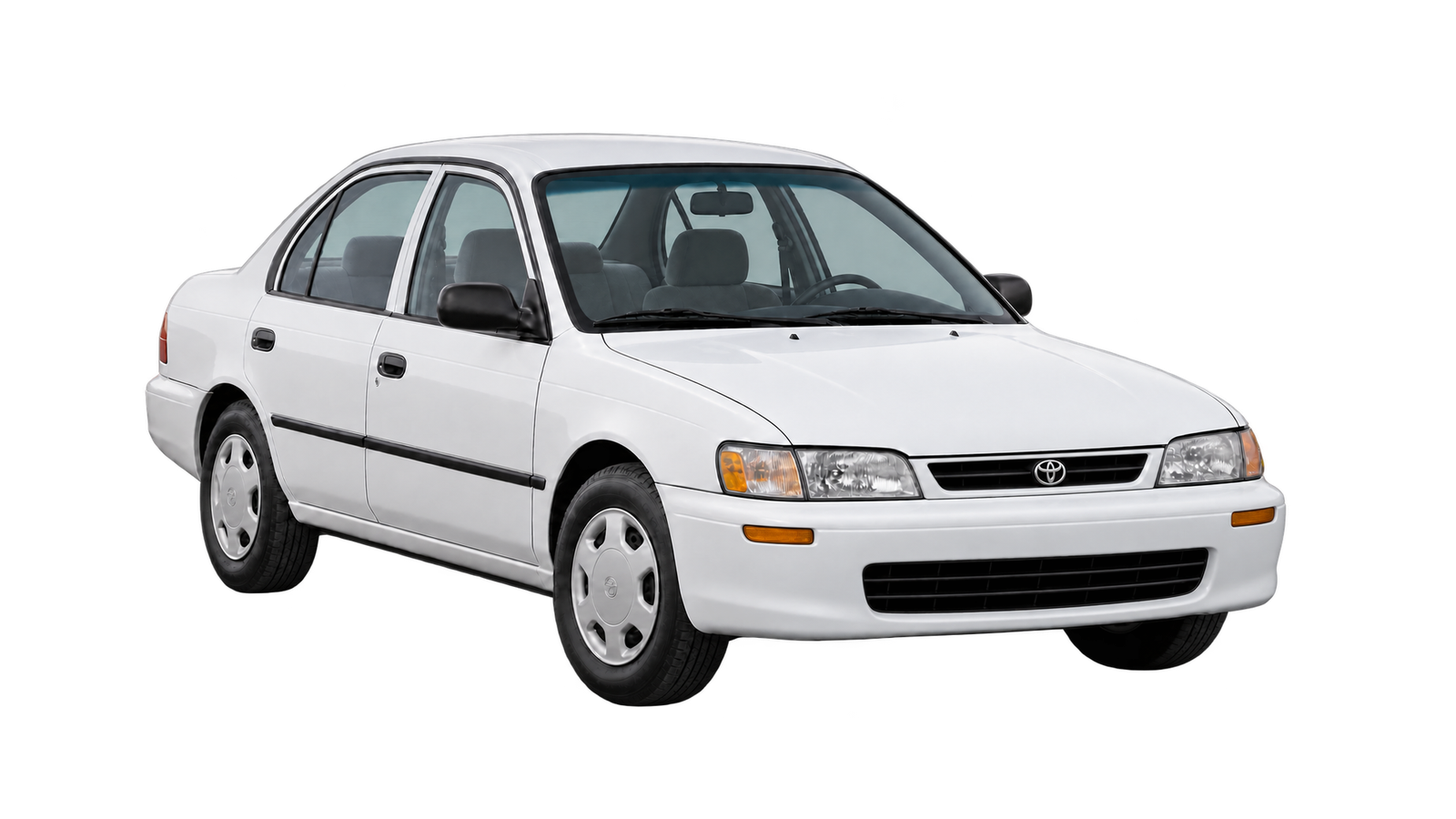
According to Au7o's analysis of 3,981+ owner reports, the 1990-2026 Toyota Corolla has 54 documented known issues, with 15 rated critical. The most serious are CVT Transmission Shudder and Failure ($150-$4,500 repair), Coolant Bypass Valve Failure ($700-$900 repair), Fuel Pump Impeller Deformation ($0-$0 repair), Auto Stop/Start System Malfunction ($0-$150 repair), Head gasket failure at high mileage causing coolant loss and oil contamination ($800-$2,500 repair), Low-Speed Unintended Surging Complaints (ETCS-i) ($0-$350 repair), Corolla Cross Hybrid Brake Actuator Software Defect Reducing Brake Performance in Corners (Recall 24TA11) ($0-$0 repair), Water Pump Bearing/Seal Failure Causing Coolant Leak and Overheating ($180-$500 repair), Steering Intermediate Shaft May Crack and Detach - Recall 24V878000 (Toyota 24TA13/24TB13). at .
Toyota Motor Engineering & Manufacturing (Toyota) is recalling certain 2026 Corolla vehicles. The front headlights may have missing headlight aim markings, which can result in improperly aimed headlights during service. As such, these vehicles fail to comply with the requirements of Federal Motor Vehicle Safety Standard number 108, "Lamps, Reflective Devices, and Associated Equipment."
Campaign #26V11000025/02/2026
STEERING:COLUMN
Toyota Motor Engineering & Manufacturing (Toyota) is recalling certain 2023 Corolla, Corolla Cross, Corolla Cross Hybrid, Highlander, Highlander Hybrid, Tacoma, 2023 Lexus RX350, RX350 Hybrid, RX500 Hybrid, 2023-2024 Lexus NX250, NX350, and NX350 Hybrid vehicles. An electrical connection inside the steering column's spiral cable assembly may be insufficiently welded, causing the connection to separate and deactivate the driver's air bag. As such, these vehicles fail to comply with the requirements of Federal Motor Vehicle Safety Standard number 208, "Occupant Crash Protection."
Campaign #23V48000012/07/2023
STEERING
Toyota Motor Engineering & Manufacturing (Toyota) is recalling certain 2023-2024 Corolla and Corolla Hybrid vehicles. Due to cracks developed during the manufacturing process, the steering intermediate shaft assembly may fracture and possibly result in the shaft detaching from the steering column.
🔧
A mechanic who knows YOUR exact car
Answers tuned to your year, make, model & trim — not generic advice. Save your garage so it always has the right context.
Get ahead of Toyota Corolla problems — free
Leave your email and we'll alert you the moment there's a new recall or known issue for your Toyota Corolla. Free, no account needed.
According to Au7o's analysis of 3,981+ owner reports, the 1990-2026 Toyota Corolla has 54 documented issues. The most frequently reported are: CVT Transmission Shudder and Failure, Coolant Bypass Valve Failure, Fuel Pump Impeller Deformation. Of these, 15 are rated critical and should be addressed promptly.
Is the Toyota Corolla reliable?
The 1990-2026 Toyota Corolla has 54 known issues documented across 3,981+ owner reports. 15 issues are rated critical: CVT Transmission Shudder and Failure and Coolant Bypass Valve Failure and Fuel Pump Impeller Deformation and Auto Stop/Start System Malfunction and Head gasket failure at high mileage causing coolant loss and oil contamination and Low-Speed Unintended Surging Complaints (ETCS-i) and Corolla Cross Hybrid Brake Actuator Software Defect Reducing Brake Performance in Corners (Recall 24TA11) and Water Pump Bearing/Seal Failure Causing Coolant Leak and Overheating and Steering Intermediate Shaft May Crack and Detach - Recall 24V878000 (Toyota 24TA13/24TB13) and Excessive Oil Consumption from 1ZZ-FE Piston Ring Wear and Rear Suspension Arm Thread Corrosion Leading to Arm Separation (Recall) and Rocker panel and rear subframe/suspension-mount rust in salt-belt cars and Takata Front Airbag Inflator Rupture Recall and ECM/PCM Failure Causing Harsh Shifting, No-Start, and MIL Illumination and Rocker Panel and Rear Wheel Arch Rust Perforation (Rust-Belt Corrosion). Prospective buyers should inspect for these issues and factor potential repair costs into their purchase decision. Regular maintenance following the manufacturer's schedule helps prevent many common problems.
How much does it cost to fix common Toyota Corolla problems?
Repair costs for known Toyota Corolla issues range from $0 to $4,500, depending on the specific problem and whether you choose DIY or professional repair. The most critical issue, CVT Transmission Shudder and Failure, typically costs $150-$4,500 to repair. Au7o provides step-by-step DIY maintenance guides that can help reduce repair costs.
What year Toyota Corolla is the most reliable?
Reliability varies across model years of the Toyota Corolla. Based on documented issues, problems are most commonly reported in earlier model years. Au7o recommends checking the specific known issues for your target year before purchasing, and having a pre-purchase inspection performed by a qualified mechanic. Our known issues database covers the 1990-2026 Toyota Corolla with 54 documented issues documented across 3,981+ owner reports.
Content on this page was compiled with AI assistance using NHTSA complaints, TSBs, owner reports, and public automotive data. While we strive for accuracy, this information may contain errors. Always verify repair procedures and specifications with your vehicle's service manual or a qualified mechanic.
Filter:
When Issues Typically Appear
Takata Front Airbag Inflator Rupture Recall
0K-250K
Coolant Bypass Valve Failure
30K-70K
Headlight Bulb and Low-Beam Circuit Overheating/Melting
30K-120K
Driver and Passenger Sun Visor Breakage and Drooping
30K-120K
CVT Transmission Shudder and Failure
48K-72K
Airbag Warning Light from Spiral Cable (Clock Spring) Failure
On high-mileage 4A-FE/7A-FE engines the head gasket is one of the most frequently reported major failures, usually precipitated by a prior overheat event (often from a neglected cooling system, failing radiator, or stuck thermostat) rather than a design defect. Failure lets coolant migrate into the cylinders or oil galleries. Owners report gradual unexplained coolant loss with no external puddle, white/gray exhaust steam, and milky oil on the dipstick and filler cap. Because the aluminum head warps when overheated, a proper repair includes checking the head for flatness.
Common Symptoms
Coolant level dropping with no visible external leak
White or gray steam from the exhaust
Milky/brown sludge on oil cap and dipstick
Overheating or temperature gauge climbing
Bubbles in the coolant reservoir
Rough running or misfire from a coolant-fouled cylinder
How to Fix
Confirm with a cooling-system pressure test, combustion-gas (block) test at the coolant, and compression check. Replace the head gasket; have the cylinder head checked for flatness and resurfaced if warped, and replace the timing belt, thermostat, and any degraded coolant hoses while access is open. Address the original overheating cause (radiator, water pump, thermostat, fan) to prevent recurrence.
What you need to fix it
Only diagnosis- and fitment-reviewed repair parts are linked here.
Toyota 11115-16082 genuine cylinder-head gasket
confirmed head-gasket failure on the early 4A-FE branch after teardown inspection Fitment/availability: 1988-1992 Toyota Corolla 1.6L catalog branch; use here for the issue's 1990-1992 4A-FE and confirm body/build and VIN Fitment/availab…
confirmed head-gasket failure on the later 4A-FE branch after teardown inspection Fitment/availability: 1993-1997 Toyota Corolla 4A-FE 1.6L catalog branch; confirm engine, production origin and VIN Fitment/availability: Ships in 1-3 busi…
confirmed head-gasket failure on the 7A-FE branch after teardown inspection Fitment/availability: 1993-1997 Toyota Corolla 7A-FE 1.8L catalog branch; confirm engine, production origin and VIN; replaces 11115-16120 Fitment/availability: S…
Owners of 2006-2010 Corollas equipped with the electronic throttle control system (ETCS-i) reported episodes of low-speed surging — the car lunging or accelerating slightly on its own at low speed (e.g., in parking lots or creeping traffic) such that braking sometimes felt insufficient to stop in time. NHTSA received a petition and opened scrutiny covering roughly 1.69 million 2006-2010 Corollas with electronic throttle control, separate from (and in addition to) the well-known floor-mat-entrapment and sticky-accelerator-pedal recalls of the same era. While Toyota and NHTSA's technical reviews did not confirm an electronic root cause, the surging complaints are numerous, well-documented, and a frequent owner search.
Common Symptoms
Vehicle lunges or surges forward at low speed
Brief unexpected acceleration in parking lots / stop-and-go traffic
Higher-than-expected idle or RPM creep
Brake pedal feels like it must be pressed harder to stop
Hesitation followed by surge on tip-in
How to Fix
First rule out the known mechanical recall causes: verify the floor-mat-entrapment and accelerator-pedal recalls are completed for your VIN at toyota.com/recall (floor-mat shimming/pedal replacement). Ensure only correct, properly secured Toyota all-weather mats are used. Have the throttle body cleaned and the accelerator pedal position sensor and ETCS checked; clear any stored throttle/idle codes. If surging persists, document it (dashcam/video), report it to NHTSA, and have a dealer inspect for throttle/idle-control faults.
The 1ZZ-FE engine used in many 2000-2008 Corollas is widely known for developing excessive oil consumption as piston oil-control rings stick or wear. Owners report needing to add oil between changes, blue smoke on startup or acceleration, fouled plugs, and eventual catalyst damage if the oil-burning is ignored. Toyota issued service information and owner complaints are abundant across NHTSA and enthusiast forums.
Common Symptoms
low oil level between oil changes
blue exhaust smoke
oil smell from exhaust
spark plug fouling
check engine light
rough idle
catalytic converter failure
How to Fix
Diagnosis involves documenting oil usage over a measured interval, checking for external leaks, and ruling out PCV issues before condemning the engine. Minor cases may improve with a fresh PCV valve and shorter oil-change intervals, but lasting repair usually requires piston/ring replacement or engine replacement. Spark plugs and the catalytic converter may also need inspection if the engine has been burning oil for a long time.
What you need to fix it
Only diagnosis- and fitment-reviewed repair parts are linked here.
Toyota 12204-22041 genuine PCV valve, mark 22041
confirmed sticking, leaking or restricted PCV branch Fitment/availability: 1999-2008 Toyota Corolla catalog branch; replaces 12204-22040; match old valve mark 22041/thread or VIN Fitment/availability: Ships in 1-3 business days and Add t…
confirmed sticking, leaking or restricted alternate PCV branch Fitment/availability: 1999-2008 Toyota Corolla catalog branch; replaces 12204-22050; match old valve mark 22051/thread or VIN Fitment/availability: Add to Cart live when revi…
As an Amazon Associate, we earn from qualifying purchases; other part links may also earn au7o a commission. Confirm fitment by VIN before buying.
Owner tips & cautions
TipCheck the dipstick every 500-1,000 miles on high-mileage 1ZZ-FE engines; many owners prevent engine damage simply by topping off before the level gets dangerously low.
TipReplace the PCV valve early in the diagnosis because a restricted valve can worsen oil consumption and crankcase pressure.
Chain-driven 1ZZ-FE (and early 2ZR-FE) Corollas commonly develop a brief rattle/chatter from the timing-chain area for the first few seconds after a cold start. The hydraulic chain tensioner relies on oil pressure to take up slack; with age, sludge/varnish buildup in the tensioner or a worn tensioner/guides lets the chain slap until oil pressure builds. It is a heavily discussed issue on owner forums (ToyotaNation, BobIsTheOilGuy, CorollaForum). Usually it's a benign-but-annoying noise, but a badly worn tensioner/guides can eventually let the chain wear the cover or, in severe cases, jump timing.
Common Symptoms
Rattle/chatter from front of engine for a few seconds at cold start
Light top-end ticking that quiets once oil pressure builds
Chain noise that worsens with low or old oil
Rattle on quick throttle blips at idle
How to Fix
Maintain strict oil-change intervals with correct-viscosity oil (low oil level/pressure worsens the rattle). The community-recommended fix is to replace the hydraulic timing-chain tensioner first (it unbolts from the side of the timing cover near the firewall and is a relatively easy job); if noise persists, replace the chain and guides as a kit. Use OEM-quality parts — some aftermarket tensioners fit poorly. Cleaning sludge from a gummed-up tensioner can also resolve mild cases.
What you need to fix it
Only diagnosis- and fitment-reviewed repair parts are linked here.
Toyota 13540-0D010 genuine 1ZZ-FE timing-chain tensioner assembly
confirmed leaking, sticking or mechanically failed 1ZZ tensioner after noise and chain diagnosis Fitment/availability: 1998-2008 Corolla 1ZZ-FE branch with catalog engine-number note 5001001-9XXXXXX or CXXXXXX; page supersedes 13540-2202…
Toyota 13540-0T020 genuine 2ZR timing-chain tensioner assembly
confirmed failed 2ZR chain tensioner on the matching production branch Fitment/availability: 2009-2012 Corolla 2ZR-FE production branch marked (L); select by VIN, production origin and installed number and do not substitute for the cam-g…
Toyota 13540-0H010 genuine chain-tensioner assembly
confirmed failed tensioner on the matching alternative production branch Fitment/availability: 2009-2012 Corolla catalog alternative branch within this issue; confirm 2ZR-FE, VIN, production origin and installed number because the listin…
Toyota 13050-0T050 genuine camshaft timing gear assembly
bulletin-matching professional repair for brief cold-start knock/rattle; obtain all bulletin-specified gaskets and sealant separately by VIN Fitment/availability: 2009-2010 Corolla 2ZR-FE vehicles matching Toyota T-SB-0087-09 Rev1 after …
2024 Corolla owners report the engine shutting off unexpectedly, accompanied by an "Engine Stopped, Steering Power Low" message on the multi-information display, with the loss of engine power also removing power steering assist. Reported cases occur both while stopped in traffic and while attempting to turn at an intersection - the latter being the dangerous version, since the driver loses assist mid-maneuver with cross traffic present. The vehicle typically restarts on a key cycle and drives normally afterward. Dealers consistently find no stored diagnostic trouble codes, so vehicles are returned unrepaired. Confirmed NHTSA records include ODI 11622706 (10/2024, "Engine Stopped, Steering Power Low" while attempting to turn at an intersection, dealership found no error codes) and ODI 11657628 (04/2025, message displayed while stopped in traffic, resolved by restarting). The complaint volume on the Corolla is lower than the parallel pattern documented on the 2024-2025 RAV4, so treat this as an emerging pattern rather than an established defect - but the identical message text and identical no-code outcome across two Toyota platforms is worth knowing before a dealer tells you it is a one-off.
Common Symptoms
Engine shuts off while stopped or while turning at low speed
"Engine Stopped, Steering Power Low" on the multi-information display
Steering suddenly becomes heavy during the event
Vehicle restarts normally on a key cycle
No diagnostic trouble codes found at the dealer
How to Fix
Because the fault leaves no codes, the diagnosis has to be built from evidence rather than a scan. Ask the dealer to check for pending and history codes plus freeze-frame data immediately after an event, before a key cycle clears volatile data, and to record whether the event coincided with auto stop-start engaging. Verify the 12V battery with a proper conductance test and check the battery terminals and the engine-to-body ground straps for corrosion or looseness - a marginal battery or high-resistance ground is the most common cause of a spurious system-wide shutdown with no codes, and it is cheap to rule out. Have the throttle body and mass air flow sensor inspected and cleaned if dirty. Confirm the ECM and EPS ECU are at the latest calibration. If the stall recurs while turning or in traffic, stop driving it and file at nhtsa.gov/report-a-safety-problem - stall-with-loss-of-assist events are exactly what NHTSA opens investigations on, and the complaint count on this model is currently too low to trigger one.
The crankshaft position sensor (near the bellhousing/starter, PN 90919-05030 on 2ZR-FE cars) degrades on high-mileage Corollas, sending an erratic or lost signal to the ECU. This causes intermittent stalling, hard or no-start conditions and sets P0335 'Crankshaft Position Sensor A Circuit Malfunction' (or P0336/P0339). Symptoms are often heat-related and intermittent, making it a frequently searched no-start cause.
Common Symptoms
Intermittent stalling
Hard start or no-start (often when hot)
Check engine light with P0335
Erratic tachometer during the fault
How to Fix
Diagnose the P0335 by checking the sensor wiring/connector and the sensor's signal (resistance and waveform) before replacing, as a chafed harness or corroded connector can mimic a bad sensor. Replace the crankshaft position sensor with an OEM/Denso unit (owners report aftermarket sensors re-throwing the code); PN 90919-05030 for 2ZR-FE (confirm exact PN for 1ZZ-FE by VIN). Clear codes and verify start/idle after repair.
What you need to fix it
Only diagnosis- and fitment-reviewed repair parts are linked here.
Toyota 90080-19013 genuine crankshaft-position sensor
confirmed failed early-generation crankshaft-position sensor Fitment/availability: 1998-2008 Toyota Corolla 1.8L catalog branch; replaces 90919-05030 and covers the issue's 2000-2008 1ZZ-FE span Fitment/availability: Ships in 1-3 busines…
confirmed failed later-generation crankshaft-position sensor Fitment/availability: 2009-2022 Toyota Corolla 1.8L catalog branch; use here only for the issue's 2009-2010 2ZR-FE cars Fitment/availability: 45 in stock and Add to Cart live w…
The 1.8L 7A-FE (and to a lesser degree the 1.6L 4A-FE) is widely documented in enthusiast communities to develop heavy oil consumption as it ages, commonly 1 quart every 600-1,000 miles. The primary root cause is the low-tension oil-control rings coking/sticking in their grooves so they stop scraping oil off the cylinder walls; hardened, brittle valve stem seals are a secondary contributor that lets oil weep down the guides. The same engine family and its GM-badged Geo/Chevy Prizm and Celica ST twins share the trait. It typically burns oil cleanly with no external leak, so owners discover it only when the level drops between changes.
Common Symptoms
Blue/gray smoke from exhaust on cold startup after sitting
Oil level dropping 1 quart per 600-1,000 miles with no visible leak
Fouled spark plugs
Carbon buildup on valves and cylinders
Low oil warning light between changes
How to Fix
Confirm with a compression and leak-down test to distinguish rings from seals. If seals are the main culprit, valve stem seals can be replaced with the head on the car (rope-in-cylinder or air-hold method). True ring-related consumption requires pulling the pistons to re-ring and re-hone, or fitting a remanufactured long block. Many owners simply monitor and top up the oil for years, which the engine tolerates well; a good-quality high-mileage 5W-30 and shorter change intervals slow carbon buildup.
The 4A-FE and 7A-FE are belt-driven and require timing belt replacement on a mileage/age interval (Toyota's ~60,000-mile figure, considered conservative by many owners). A benefit of this engine family is that it is a non-interference (free-running) design, so a snapped belt leaves you stranded but does not bend valves or destroy the engine. On decades-old cars the rubber belt and the front cam/crank seals are wear items regardless of mileage; a seized or leaking water pump or a failed tensioner/idler can lead to overheating and, in turn, the head-gasket failures noted above. Note the 4A-FE water pump is reachable without removing the timing belt, so it is replaced on condition (weeping weep-hole) rather than always as a set.
Common Symptoms
Coolant leak or weep from the water pump area
Whining or rattle from the front of the engine
Engine suddenly dies and cranks but won't start (snapped belt)
Overheating from a seized water pump
Squealing or chirping from the timing cover
How to Fix
Replace the timing belt on schedule and inspect/replace the tensioner, idler, and the front crank/cam seals while the cover is off since the labor overlaps. Replace the water pump if it shows any weep or bearing play, and refresh coolant and the thermostat. If a belt has already snapped, because the engine is non-interference you can simply re-belt and inspect rather than face valve damage.
What you need to fix it
Only diagnosis- and fitment-reviewed repair parts are linked here.
Toyota 13568-19135 genuine timing belt
scheduled or age/condition-based timing-belt replacement Fitment/availability: 1990-1992 Corolla 4A-FE 1.6L branch within this issue; the catalog also extends into certain 1993 prior-generation builds, so confirm VIN, production date and…
Toyota 13505-15041 genuine timing-belt idler/tensioner pulley
replace after inspection confirms roughness, noise, looseness or the applicable procedure requires renewal Fitment/availability: 1990-1992 Corolla 4A-FE catalog branch; confirm VIN, production date and installed number because the broade…
scheduled or age/condition-based timing-belt replacement for the matching build Fitment/availability: 1993-1997 Corolla 4A-FE/7A-FE catalog branch; alternative to 13568-19056, not an interchangeable second belt; confirm VIN, production o…
scheduled or age/condition-based timing-belt replacement for the matching build Fitment/availability: 1993-1997 Corolla 4A-FE/7A-FE alternative catalog branch; confirm VIN, production origin and installed number before choosing it instea…
The VVT-i camshaft timing oil control valve (OCV/spool valve, PN 15330-22030 on 1ZZ-FE) sticks or clogs with oil varnish on high-mileage Corollas, so the intake cam phaser can no longer be controlled. This sets P0011 'A Camshaft Position Timing Over-Advanced (Bank 1)' (or P0010/P0016) and can cause rough idle, hesitation and a rattle at start. Low or dirty engine oil, and the small OCV filter screen clogging, are the usual root causes.
Common Symptoms
Check engine light with P0011
Rough or unstable idle
Hesitation or reduced power
Start-up rattle from cam phaser
How to Fix
Check engine oil level/condition first (VVT faults often stem from low or degraded oil). Remove the camshaft timing oil control valve, clean the OCV and its filter screen; if the plunger is sticky or the solenoid fails a resistance/actuation test, replace it. OEM PN 15330-22030 (fits 2000-2008 Corolla 1ZZ-FE; also Celica/Matrix/MR2), roughly $50-90; Denso/Standard aftermarket cross-references available. Clear codes and verify cam timing response after replacement.
What you need to fix it
Only diagnosis- and fitment-reviewed repair parts are linked here.
Toyota 15330-22050 genuine 1ZZ-FE cam timing oil-control valve
failed or persistently sticking intake OCV after oil, circuit, command and mechanical-timing diagnosis Fitment/availability: 2000-2008 Corolla 1ZZ-FE branch within this issue; current supersession for 15330-22030/22010, with VIN and inst…
Toyota 15678-21010 genuine oil-control-valve filter screen
replace a damaged or contaminated screen after inspection and correction of the underlying oil/sludge condition Fitment/availability: 2000-2008 Corolla 1ZZ-FE catalog branch; do not apply to the 2009-2010 2ZR branch without its separate …
The individual coil-on-plug ignition coils fail from age and heat cycling on high-mileage Corollas, causing a cylinder misfire. This sets P0351-P0354 (coil circuit) and/or P0300-P0304 (misfire). OEM coil PN 90919-02239 is the common part for 2000-2008 1ZZ-FE cars. A failing coil produces rough idle, a flashing check engine light under load, and a raw-fuel smell; a chronic misfire can also foul the catalytic converter.
Common Symptoms
Rough idle and shaking
Flashing check engine light under acceleration
Loss of power / hesitation
Raw fuel smell from exhaust
How to Fix
Identify the misfiring cylinder from the codes and swap that coil to a neighboring cylinder to confirm the fault follows the coil. Replace the failed coil (and inspect/replace worn spark plugs as a set on high-mileage cars). OEM 1ZZ-FE coil PN 90919-02239 (~$40-70 each); Denso 673-1303 and other quality aftermarket units cross-reference. Use OEM/Denso-grade coils, as cheap coils commonly re-fail. Clear codes after repair.
What you need to fix it
Only diagnosis- and fitment-reviewed repair parts are linked here.
Toyota 90919-02262 genuine direct ignition coil
single confirmed failed 1ZZ-FE ignition coil Fitment/availability: 1999-2008 Toyota Corolla 1ZZ-FE/selected catalog branch; use here for the issue's 2000-2008 1ZZ-FE and confirm VIN; supersedes 90919-02239 Fitment/availability: Ships in …
condition- or schedule-based 1ZZ-FE plug set accompanying confirmed ignition diagnosis Fitment/availability: 1999-2008 Toyota Corolla catalog branch including 1ZZ-FE; quantity four when plugs are due, worn, fouled or damaged; confirm VIN…
single confirmed failed 2ZR-FE ignition coil Fitment/availability: 2009-2019 Toyota Corolla catalog branch including 2ZR-FE; use here for 2009-2010 2ZR-FE and confirm VIN; replaces 90919-02252 Fitment/availability: Ships in 1-3 business …
condition- or schedule-based 2ZR-FE plug set accompanying confirmed ignition diagnosis Fitment/availability: 2009-2016 Toyota Corolla catalog branch including 2ZR-FE; use here for 2009-2010 2ZR-FE, quantity four, and confirm VIN/under-ho…
2003-2008 Corollas with the 1ZZ-FE commonly develop a vacuum leak at the intake manifold gasket, especially in cold weather. The original gasket can shrink or harden, causing rough idle, stumbling after startup, and lean-condition fault codes until the engine warms up. This issue is well known in Toyota service literature and owner communities.
Common Symptoms
rough idle on cold start
stumble or hesitation
check engine light
high idle
lean codes
improves as engine warms up
How to Fix
Diagnosis is usually confirmed by fuel-trim readings, smoke testing, or observing idle changes when carb-cleaner or propane is directed near the intake manifold sealing area. The fix is replacement of the intake manifold gasket with the updated orange-design gasket and clearing any stored codes. Technicians should also inspect for cracked vacuum hoses and clean the throttle body if idle quality remains poor.
What you need to fix it
Only diagnosis- and fitment-reviewed repair parts are linked here.
Toyota 17171-22060 genuine updated intake-manifold gasket
confirmed cold-soak intake-manifold sealing leak Fitment/availability: Updated manifold-to-head gasket specified by Toyota EG045-07 for 2003-2008 Corolla 1ZZ-FE; quantity one per the bulletin and confirm VIN Fitment/availability: Ships i…
single-use sealing branch only when throttle-body removal is part of the confirmed repair Fitment/availability: 2004-2008 Corolla branch in this issue when the throttle body is removed; 2003 and production variations require VIN-specific…
CRC 05078 throttle-body and air-intake cleaner, 12 oz
conditional cleaning branch if deposits remain after the vacuum leak is repaired Fitment/availability: Universal cleaner for fuel-injected gasoline throttle bodies; only for confirmed deposits and used exactly per label, with paint/plast…
The automatic engine stop/start feature in 2022-2023 Corollas can malfunction, particularly in wet weather conditions when windshield wipers are in intermittent mode. The vehicle may fail to automatically restart when the brake is released, leaving drivers stranded at intersections or causing the vehicle to roll backward on hills. Check engine lights and multiple warning lights may illuminate.
Common Symptoms
Engine fails to restart after automatic stop at traffic lights
Vehicle rolls backward on hills when engine doesn't restart
Issues occur primarily in rainy conditions with wipers on intermittent
How to Fix
Software update from Toyota dealer. Temporarily disable auto stop/start feature until software fix is applied. Avoid using intermittent wipers with auto stop/start simultaneously.
Owner tips & cautions
TipToyota released a software fix - contact your dealer to ensure it has been applied
Medium Confidence234 owner reportsLast reported by owners Feb 2024Reviewed Feb 2026
Early-2000s Corolla models are well documented for engine control module failure caused by defective internal circuitry and capacitor/board degradation. Owners report harsh or erratic automatic transmission shifting, stalling, no-start conditions, and check-engine lights because the ECM also controls transmission logic on these cars. Toyota issued a warranty enhancement and service campaign for many affected vehicles, making this one of the best-documented Corolla problems of the period.
Common Symptoms
harsh 1-2 or 2-3 shifts
delayed shifting
check engine light
no-start
engine stalling
transmission stuck in gear
poor drivability
How to Fix
Diagnosis typically starts by confirming erratic shift behavior, communication issues, or stored transmission/engine codes, then verifying ECM part number applicability. The permanent fix is replacement of the ECM/PCM with the updated unit, followed by code clearing and confirmation of normal shift operation. Technicians should also inspect battery voltage and grounds so a weak electrical system is not mistaken for module failure.
Owner tips & cautions
TipVerify the ECM part number and campaign applicability before buying a used module; many owners solved repeated shift issues only after installing the updated superseded ECM.
TipCheck battery voltage, charging output, and grounds first, because low system voltage can mimic module and shift-solenoid faults.
The Entune 2.0 infotainment system, particularly premium versions with navigation and apps, experiences widespread failures including getting stuck in boot loops, unresponsive touchscreens, random rebooting, and complete radio failure. The touchscreen digitizer layer commonly fails, causing portions of the screen to become unresponsive. Issues often manifest just after the 36-month warranty expires.
Common Symptoms
Radio stuck in reboot loop with loading bar that never completes
Touchscreen unresponsive or only partially responsive
System randomly reboots while driving
Bluetooth connectivity failures
Complete radio/display blackout
How to Fix
Check and replace blown fuses. Perform hard reset by disconnecting battery for 30 minutes. Software update at Toyota dealer. Replace head unit with new or refurbished unit.
Owner tips & cautions
TipConsider aftermarket head units as a more reliable and cost-effective replacement
High Confidence456 owner reportsLast reported by owners Feb 2024Reviewed Feb 2026
Corolla Hybrid owners frequently report the small 12V auxiliary battery going dead after the car sits for as little as one to two weeks, leaving the car unable to enter Ready mode (a no-start/no-wake condition). Unlike a conventional car, the hybrid uses a small, low-capacity 12V battery (roughly 20-something Ah, often not AGM) whose only job is to wake the system; modest parasitic loads — Connected Services / DCM (Data Communication Module) not sleeping, items left in the OBD/12V/USB ports, or a door left ajar — can flatten it. Toyota addressed related DCM key-off drain on several models via TSB, and owners report repeated 12V replacements. Recommended mitigation is driving the car at least every ~2 weeks.
Common Symptoms
Dead 12V battery / no-start after sitting 1-2 weeks
Car won't enter READY mode
Repeated 12V battery replacements
Warning messages and accessories powering off when parked
Need to jump-start from under-hood terminals
How to Fix
Drive or fully power up the vehicle at least every two weeks to keep both batteries charged. Remove any always-on accessories from the 12V/USB/OBD ports. Check whether your VIN qualifies for a DCM/Connected-Services parasitic-drain TSB software update at the dealer. For cars that sit, use a low-current battery maintainer on the 12V battery or the under-hood jump terminals. If the 12V battery is weak/aged, replace it with the correct OEM-spec battery. A parasitic-draw test will confirm an abnormal key-off drain.
What you need to fix it
Only diagnosis- and fitment-reviewed repair parts are linked here.
Battery Tender Junior 021-0123 12 V 750 mA charger/maintainer
storage maintenance after normal parasitic draw and a serviceable 12 V battery are confirmed Fitment/availability: Fully automatic maintainer for 12 V flooded, AGM, gel and sealed lead-acid batteries; confirm the vehicle's battery chemis…
The 80A alternator on 1ZZ-FE Corollas is a typical high-mileage wear item; brushes, the voltage regulator or diode pack fail, or the bearings become noisy. Symptoms are a battery/charge warning light, dimming lights, and eventually a no-start when the battery discharges. A whining or grinding from the alternator bearing is common before outright failure.
Common Symptoms
Battery/charge warning light on
Dimming or flickering headlights
Whining/grinding from the alternator
Dead battery / no-start after driving
How to Fix
Confirm with a charging-system test (should be ~13.8-14.5V at idle; a good alternator holds voltage under load). Replace the alternator; OEM/Denso 1ZZ-FE units are PN 27060-0D110 (also cross-listed 27060-22160 / 27060-22210), roughly $150-350 for a quality reman/new unit. Inspect the serpentine belt and tensioner while access is open. Confirm the exact amperage/PN by VIN, as US-built vs Japan-built cars differ.
What you need to fix it
Only diagnosis- and fitment-reviewed repair parts are linked here.
DENSO 210-0395 remanufactured 80-amp alternator
confirmed alternator failure branch after complete charging-system diagnosis Fitment/availability: Cataloged 2002-2008 Toyota Corolla 1ZZ-FE 80-amp branches; confirm VIN/build and original unit, with 2002 Japan-built and 2007 non-Japan r…
These Corollas use a distributor that houses the ignition coil, igniter, and (on 1993-1995) the crank/NE pickup coil internally. Heat cycling kills the internal coil and igniter over time, and the crank-signal pickup can fail after the engine warms up. Separately, the distributor shaft O-ring hardens and lets engine oil seep out around the distributor base and, in worse cases, wick inside the cap. The classic symptom is a car that starts and runs fine cold but stalls once fully warmed up (roughly 30-45 minutes) and will not restart until it cools. Aftermarket replacement distributors are notoriously unreliable, so a good used OEM or a genuine Toyota unit is the community-preferred fix.
Common Symptoms
Engine stalls once warmed up and won't restart until cool
Intermittent no-start or hard start
Rough idle and misfire
Oil seeping around the distributor base
Oil found inside the distributor cap
How to Fix
Diagnose with a scan/code read (OBD-I code 14 or OBD-II P1300 point to the igniter circuit) and a warm-stall recreation. Replace the distributor O-ring for oil leaks; replace the internal ignition coil/igniter or the whole distributor for stall/no-start. Owners strongly favor a genuine Toyota or quality used OEM distributor over cheap aftermarket units, which frequently fail again quickly.
What you need to fix it
Only diagnosis- and fitment-reviewed repair parts are linked here.
Toyota 90099-14091 genuine distributor-housing O-ring
confirmed external distributor housing-to-head O-ring leak on the applicable early branch Fitment/availability: 1993-1995 Toyota Corolla California-spec catalog branch; confirm VIN, emissions/build and distributor before ordering Fitment…
Toyota 90099-14127 genuine distributor-housing O-ring
confirmed external distributor housing-to-head O-ring leak on the later branch Fitment/availability: 1994-1997 Toyota Corolla 4A-FE/7A-FE catalog branch; confirm VIN and distributor before ordering Fitment/availability: Ships in 1-3 busi…
Owners of 10th-generation Corollas frequently report repeated low-beam headlight bulb failure, overheated connectors, and in some cases melted headlamp sockets or wiring. The problem is often linked to heat buildup at the bulb connector, poor terminal tension, or use of higher-output replacement bulbs. Complaints and forum threads show this is more than isolated bulb burnout, especially when one side repeatedly fails.
Common Symptoms
repeated low-beam bulb burnout
one headlight out
melted bulb socket
burning smell near headlamp
intermittent headlight operation
How to Fix
Diagnosis should include checking charging voltage, inspecting the headlamp connector for discoloration or looseness, and verifying the correct bulb wattage is installed. Repair usually involves replacing the bulb and any heat-damaged socket or pigtail, then ensuring tight terminal contact. If the housing has been damaged by heat, the headlamp assembly may also need replacement.
What you need to fix it
Only diagnosis- and fitment-reviewed repair parts are linked here.
Sylvania Basic 9006 standard halogen headlight bulb
failed standard-output low-beam bulb after charging-voltage and connector inspection Fitment/availability: 9006/HB4 standard halogen, DOT-compliant bulb type for the 2009-2013 Corolla low-beam branch; confirm the installed lamp type befo…
melted, discolored or tension-damaged low-beam connector repair Fitment/availability: Two-wire high-temperature female socket for a 9006 bulb; splice-in repair only after confirming connector heat damage and matching terminals/polarity F…
Power door lock actuator failure is one of the most widely reported Corolla annoyances across nearly every generation (well-documented 1998-2014 and continuing through 2015-2024 cars). The actuator is a small electric motor inside each door that drives the lock rod when you press the fob or door-panel switch. Over time the internal motor or plastic gears wear/strip, so a single door stops locking or unlocking electronically (or locks but won't unlock, or vice-versa), often accompanied by buzzing/grinding/clicking from inside the door. The problem is so widespread across the Toyota line it has drawn a proposed class action. There is no NHTSA safety recall for it.
Common Symptoms
One door won't lock/unlock from fob or switch
Buzzing, grinding, or clicking from inside a door when locking
Lock works intermittently
Door locks but won't unlock (or reverse)
Lock motor runs but lock rod doesn't move
How to Fix
If only one door is affected, replace that door's lock actuator (a single-door electric motor assembly); the job requires removing the door panel and takes ~1-2 hours per door — a feasible DIY with basic tools. If all four doors fail together, suspect a shared electrical cause instead (door-lock relay, fuse, or wiring at the driver door boot). Confirm by operating each door individually from the fob and the master switch.
What you need to fix it
Only diagnosis- and fitment-reviewed repair parts are linked here.
Toyota 69040-02440 genuine left-front door lock assembly with motor
confirmed failed front-left latch/actuator assembly Fitment/availability: 2014-2024 Corolla catalog branch, front driver side; confirm VIN, body style, trim, production and connector because not every 2024 build uses the same right/left …
The plastic-and-cable power window regulators (particularly the front driver's door) fail on 2003-2008 Corollas: the glass slips off the carrier or the cable/pulley binds, dropping the window into the door or leaving it stuck. Early 2003-2004 cars used weak regulator bolts that let the window fall off track. Owners report grinding/chattering noises and a window that stops partway.
Common Symptoms
Window falls down into the door
Grinding/chattering noise when operating the switch
Window stuck or moves crooked/off track
Window moves slowly or intermittently
How to Fix
Replace the window regulator (often sold as a regulator-plus-motor assembly). OEM front-left regulator PN 69802-02170 / 69820-02180-type (confirm by door and year); quality aftermarket assemblies (Dorman, TYC) run $40-120 plus labor. Verify whether only the regulator failed or the motor as well; on early cars, upgrading the regulator bolts prevents recurrence. Typical one-door job is well-documented DIY.
What you need to fix it
Only diagnosis- and fitment-reviewed repair parts are linked here.
Toyota 69802-01030 genuine left-front window regulator subassembly
confirmed cable/carrier/regulator failure with a serviceable motor Fitment/availability: 2003-2008 Corolla front driver-side power-window catalog branch; confirm VIN, production origin, body configuration and installed number because alt…
Toyota 85720-AA050 genuine left-front power-window motor
failed motor only after power, ground, switch and direct motor testing Fitment/availability: 2003-2008 Corolla driver-front motor catalog branch; confirm VIN, connector and installed regulator configuration Fitment/availability: Ships in…
Toyota 69802-02180 genuine left-front window regulator subassembly
confirmed 2009-2010 regulator/cable/carrier failure with a serviceable motor Fitment/availability: 2009-2013 Corolla front driver-side regulator with driver one-touch-down; use here for 2009-2010 and confirm VIN/build and installed optio…
Toyota 85720-AE010 genuine left-front power-window motor
failed 2009-2010 motor only after electrical and direct motor testing Fitment/availability: 2009-2019 Corolla front driver-side motor catalog branch; use here for 2009-2010 and confirm VIN, connector and regulator option Fitment/availabi…
Many older Corollas develop an intermittent no-crank condition caused by worn starter solenoid contacts rather than a dead battery. Owners often describe a single click or repeated clicking with full dash power, followed by normal starting later. This is a well-known Denso starter issue across Toyota models of the era and is heavily documented in owner forums and repair guides.
Common Symptoms
single click when turning key
intermittent no-crank
starts normally after several tries
dash lights stay bright
battery tests good
How to Fix
Confirm battery condition and cable integrity first, then voltage-drop test the starter circuit. If the starter receives proper command voltage but only clicks, the usual fix is rebuilding the Denso starter with new copper contacts and plunger or replacing the starter assembly outright.
What you need to fix it
Only diagnosis- and fitment-reviewed repair parts are linked here.
Toyota 28100-0D020 genuine/remanufactured starter assembly
complete starter replacement after circuit and bench testing confirms starter failure Fitment/availability: 1998-2002 Corolla 1ZZ-FE 12 V 1.4 kW branch; use here for 2000-2002 and confirm VIN/production; superseded to reman 28100-0D020-8…
The coolant bypass valve in 2019-2023 Corollas can crack and fail prematurely, causing coolant leaks and triggering an 'Engine Maintenance Required - Visit Your Dealer' warning message on the dashboard. This defect is the subject of a class action lawsuit and affects both Corolla and RAV4 models. The valve typically fails between 30,000-70,000 miles.
Common Symptoms
Engine Maintenance Required warning message on dashboard
Coolant leak visible under vehicle
Low coolant warning light
Potential engine overheating if not addressed
How to Fix
Replace the coolant bypass valve with updated part. Check if vehicle qualifies for Customer Support Program coverage.
Owner tips & cautions
TipCheck if your vehicle qualifies for Toyota's Customer Support Program for free repairs
High Confidence678 owner reportsLast reported by owners Feb 2024Reviewed Feb 2026
The engine-driven water pump on 1.8L 2ZR-FE Corollas is a high-frequency failure item. The original early-production pressed-metal-body pump (later revised to an improved alloy-body design) develops a leaking shaft seal and/or a worn/noisy bearing, often beginning to fail surprisingly early (owners report from ~10,000-40,000 miles and again later in life). Coolant weeps from the bottom weep hole and gets flung across the underside of the hood, leaving pinkish Toyota Super Long Life coolant residue. Toyota issued TSB SB-0362-09R1 (12/04/2009) covering coolant leaks and abnormal noise from the water pump on some 2009-2010 Corolla/Matrix. If ignored, the pump can fail catastrophically and cause engine overheating and permanent head/head-gasket damage.
Common Symptoms
Pink or green coolant residue/spray on underside of hood and front of engine
Low coolant level / repeated topping up
Whining, grinding, or rattling noise from the front of the engine
Coolant dripping from the pump weep hole
Engine temperature gauge climbing / overheating
Sweet coolant smell after driving
How to Fix
Replace the water pump with the revised OEM design (Toyota assembly 16100-39466, which supersedes 16100-39465 and includes pulley and gasket) or a quality Aisin WPT-140 unit; verified aftermarket cross-refs include OAW T7480 and Aisin WPT-140. Replace the gasket and refill with Toyota SLLC (pink) coolant, then bleed the cooling system. Inspect the serpentine belt while access is open. Catch early signs (pink residue near the front-center/passenger side of the block or a faint whine) before overheating occurs. Typical mileage to first failure ranges widely; many owners do it preventively around 90,000-120,000 miles.
What you need to fix it
Only diagnosis- and fitment-reviewed repair parts are linked here.
Toyota 16100-39466 genuine engine water-pump assembly
confirmed leaking, noisy or mechanically failed water pump Fitment/availability: 2009-2019 Corolla catalog branch including 2ZR-FE/2ZR-FAE applications; use here only after confirming the exact engine, VIN, production origin/date and ins…
Toyota 00272-SLLC2 genuine Super Long Life Coolant, 50/50 prediluted, 1 gallon
coolant refill and bleed after repair, not a stop-leak product Fitment/availability: Toyota pink 50/50 prediluted SLLC specification; confirm the owner's/service manual requirement and calculate quantity from the exact drain/refill proce…
Ninth-generation Corollas commonly accumulate owner reports of A/C performance loss caused by evaporator leaks, compressor wear, or clutch-related failure. Drivers usually notice cooling that fades in hot weather, intermittent cold air, or a complete loss of A/C after refrigerant leakage. Repair shops and owner forums repeatedly identify evaporator core leaks as a costly failure because dashboard removal is required.
Common Symptoms
weak air conditioning
A/C blows warm at idle or all the time
intermittent cold air
refrigerant loss
compressor noise or no clutch engagement
How to Fix
Proper diagnosis requires manifold gauge readings, leak detection dye or nitrogen testing, and inspection of compressor engagement and system pressures. If the evaporator is leaking, the dash must be removed to replace the core and receiver/drier as needed; if the compressor has failed, the system should be flushed and contaminated components replaced before recharging.
What you need to fix it
Only diagnosis- and fitment-reviewed repair parts are linked here.
Four Seasons 54995 plate-fin A/C evaporator core
confirmed evaporator-core leak branch only Fitment/availability: 2005-2008 Toyota Corolla; Four Seasons 54995, interchange Toyota 88501-02180 Fitment/availability: 5 in stock and Add to Cart live when reviewed
In regions that salt the roads, these Corollas (and their Geo/Chevy Prizm twins) corrode from the inside out at the rocker panels (worst just under and behind the rear doors), the pinch welds/jack points, wheel-well seams, and the rear suspension mounting areas of the unibody. Because rust starts inside the box sections, it is often advanced before it shows through the paint, and can get bad enough that the factory rear jack point crumbles. Perforated rockers and corroded suspension/subframe mounting points are a structural and safety concern, not just cosmetic, and are a common reason these otherwise-reliable cars get retired.
Common Symptoms
Bubbling paint or flaking metal along rocker panels
Perforation/holes under the rear doors
Rusted pinch welds and jack points
Flaking or crumbling metal at rear suspension mounts
Water leaking into the trunk or floor pans
How to Fix
Inspect early: probe rockers, pinch welds, and rear suspension mounting points for soft metal and perforation. Surface rust can be cut back, treated, and sealed. Perforated rockers require cutting out the rot and welding in slip-on or patch panels; compromised suspension/subframe mounting areas require proper structural weld repair by a qualified shop and should not be driven hard until fixed. Preventively, keep drain holes clear and apply cavity wax/undercoating.
What you need to fix it
Only diagnosis- and fitment-reviewed repair parts are linked here.
Mill Supply 375-93-42-LH left rocker repair panel
replacement sheet metal for a professionally planned left-rocker repair Fitment/availability: 1993-1997 Toyota Corolla four-door, left/driver side; body-shop fit-up and structural inspection required before cutting Fitment/availability: …
Rust-Oleum 248658 Automotive Rust Reformer, 10.25 oz
early surface-rust treatment before the compatible refinishing system Fitment/availability: Universal coating only for prepared, firmly attached non-structural surface rust; never a substitute for removal of perforated or load-bearing co…
inside-out corrosion prevention after repair or on verified sound cavities Fitment/availability: Universal internal corrosion coating for dry bare/primed steel and repaired body cavities; apply per 3M instructions after sound metal and c…
application tool for the approved cavity-wax prevention branch Fitment/availability: Universal three-wand kit made for 3M 08852; required to reach enclosed rocker and structural cavities with 360-degree coverage Fitment/availability: 690…
In salt-belt regions the rocker panels ahead of the rear wheels and the rear wheel arches rust through from the inside out on 1994-2010 Corollas. Trapped moisture, road salt and the pinch-weld seam sealer hold water against bare metal in enclosed cavities, so bubbling paint progresses to perforation. Left unrepaired it becomes structural and a safety/inspection failure. Toyota's factory corrosion (perforation) warranty was only 5 years, so most affected cars are out of coverage.
Common Symptoms
Paint bubbling ahead of the rear wheels
Rust holes in rocker panels / wheel arches
Flaking metal and brown staining
Inspection failure in some states
How to Fix
Catch it early: at first paint bubbling, remove the affected area, treat/neutralize the rust and refinish. Perforated wheel arches and rocker panels require cutting out the rot and welding in replacement patch panels (Raybuck/Mill Supply sell direct-fit 2003-2008 rear wheel arch and rocker panels). Rust-proof the enclosed cavities (cavity wax) and keep drain holes clear to slow recurrence. Structural rust near suspension mounts must be professionally repaired.
What you need to fix it
Only diagnosis- and fitment-reviewed repair parts are linked here.
Mill Supply 375-03-42-LH 2003-2008 OE-style left rocker panel
Mill Supply 375-03-43-LH 2003-2008 left slip-on rocker panel
lower-cost outer-skin branch only after structural inspection Fitment/availability: 2003-2008 Corolla, left/driver side, 68-inch galvanized 22-gauge outer skin; not a structural substitute and requires sound underlying metal Fitment/avai…
Mill Supply 375-03-43-RH 2003-2008 right slip-on rocker panel
lower-cost outer-skin branch only after structural inspection Fitment/availability: 2003-2008 Corolla, right/passenger side, 68-inch galvanized 22-gauge outer skin; not a structural substitute and requires sound underlying metal Fitment/…
Mill Supply 375-03-54-RH 2003-2008 right rear wheel-arch panel
right rear-wheel-arch perforation repair panel Fitment/availability: 2003-2008 Corolla right/passenger rear wheel arch; confirm sedan/body profile and shop fit-up before cutting Fitment/availability: In Stock, Ready to Ship when reviewed
rocker and wheel-arch cavity protection after repair or on sound metal Fitment/availability: Universal internal corrosion coating for dry bare/primed steel and repaired body cavities; use only after sound metal and the refinishing system…
application tool needed for full internal cavity-wax coverage Fitment/availability: Universal three-wand kit made for 3M 08852 and enclosed rocker/quarter cavities Fitment/availability: 690 in stock and Add to Cart live when reviewed
re-sealing repaired body seams after proper metalwork and corrosion protection Fitment/availability: Universal automotive seam sealer for properly prepared bare, primed or painted seams; follow 3M material-stack and cure instructions and…
The Continuously Variable Transmission (CVT) in 2014-2019 Corollas may experience shuddering, jerking during acceleration, high RPM before shifting, and in severe cases complete transmission failure. Issues are particularly reported when accelerating from a stop or during downshifting. Some owners have experienced catastrophic failures at relatively low mileage.
Common Symptoms
Jerking or shuddering when accelerating from a stop
High RPM before the transmission engages
Hesitation or slipping during acceleration
Transmission not shifting into gear
Complete loss of power while driving
How to Fix
Perform CVT fluid change at recommended intervals (every 60,000 miles). Software update from Toyota dealer for transmission control module. Replace torque converter if diagnosed as failed. Complete CVT transmission replacement in severe cases.
Owner tips & cautions
WarningThis is a high-severity issue - ignoring it can lead to costly repairs or safety concerns. Address it promptly.
TipGet a proper diagnosis before replacing parts - similar symptoms can have different causes
TipSearch Toyota Corolla forums and owner groups for real-world experiences and DIY guides
TipGet multiple quotes from independent mechanics - dealer prices can be 2-3x higher for the same repair
Medium Confidence678 owner reportsLast reported by owners Feb 2024Reviewed Feb 2026
On the Toyota Corolla, P0741 is set when the PCM commands the torque converter clutch (TCC) to lock but detects the converter is slipping — the measured difference between engine RPM and transmission input/output speed exceeds the allowed threshold, so the code reports the TCC is 'stuck off.' The dominant real-world pattern is on the 9th-generation Corolla (2003-2008, 1.8L 1ZZ-FE) with the 4-speed automatic (U340E/U341E family), and it is almost always one of two things on this platform: (1) a failing/sticking TCC lockup solenoid inside the valve body, or (2) transmission fluid that has never been changed and has degraded enough to prevent clean converter lockup. Corolla owners very commonly hit this in the 120,000-160,000 mile range. Multiple forum threads document that the code appears with the classic converter-lockup shudder and that owners who had never serviced the ATF cleared the code with a fluid change. It is important not to jump straight to a converter or full transmission replacement — on the Corolla the cheap solenoid + fluid path resolves the majority of cases.
Common Symptoms
Check engine light with stored code P0741
Shudder or vibration like driving over rumble strips during light acceleration at highway speed
Torque converter not locking up / RPM hangs higher than normal on the highway
Reduced fuel economy
Occasional harsh or delayed feel when the converter tries to engage
Transmission running hotter than normal on long drives
How to Fix
Start with the least-invasive Corolla-specific fix: drain and refill (or full exchange) the ATF using Toyota Type T-IV (WS on later units) and replace the filter/screen; many owners report the code clearing after fresh fluid alone when the ATF was neglected. If the shudder/code persists, replace the torque converter clutch lockup solenoid on the valve body (accessible by dropping the transmission pan on the U340E/U341E transaxle). Inspect the TCC solenoid wiring/connector for corrosion or damaged pins, and rule out a faulty engine coolant temp sensor (lockup is temperature-gated). Only if slipping and internal damage are confirmed does the torque converter itself or a valve-body/transmission rebuild become necessary.
What you need to fix it
Only diagnosis- and fitment-reviewed repair parts are linked here.
Toyota 00279-000T4-01 genuine ATF Type T-IV, 1 quart
condition- and service-history-based drain-and-refill after diagnosis, not a guaranteed P0741 repair Fitment/availability: Toyota Type T-IV specification for the issue's verified U340E/U341E four-speed automatic branch; confirm the trans…
2024 Corolla owners report a driveability pattern in the Direct Shift-CVT consisting of a pronounced delay when accelerating from a complete stop, followed by a surge once the transmission engages, plus intermittent slipping or flare between roughly 20 and 40 mph. Owners describe the hesitation as occurring 80-90 percent of the time from a stop, and specifically flag the danger during unprotected left turns and pulls into cross traffic, where the car does not move when commanded and then lurches. Confirmed NHTSA records include ODI 11606663 (08/2024, "transmission slips from 20-40 mph randomly"), ODI 11617320 (09/2024, "delay in acceleration when accelerating from a complete stop" occurring 80-90 percent of the time) and ODI 11712392 (01/2026, "slipping, jerking, surging forward, hesitation to accelerate from a complete stop", with over $2,000 in rental and diagnostic costs incurred and Toyota characterizing the behavior as normal operation). The gasoline Corolla's Direct Shift-CVT uses a physical launch gear that hands off to the belt-and-pulley system, and hand-off calibration is a plausible contributor, but no bulletin or recall confirms a root cause as of August 2026.
Common Symptoms
Long delay before the car moves when accelerating from a stop
Surge or lurch once the transmission engages
Slipping or RPM flare between 20 and 40 mph
Jerking or shuddering under light acceleration
Dealer states the behavior is normal for a CVT
How to Fix
Get the behavior documented while the powertrain warranty (5 years/60,000 miles) is still open, because Toyota's default position in the complaint record is that this is normal. Have the dealer verify the transmission control calibration is at the latest level - a TCM/ECM reflash is the standard first remedy for CVT engagement complaints and is free under warranty. Ask for a road test with the technician in the car so the hesitation is witnessed and written on the repair order; a repair order that says "could not duplicate" is worse than useless for later escalation. Check CVT fluid level and condition per Toyota's procedure (this transmission requires the correct Toyota CVT fluid FE and a temperature-controlled level check - it is not a DIY dipstick job on most builds). Distinguish true slip from calibration lag: slip shows engine RPM rising without corresponding road speed and warrants a much harder look, including a scan for transmission DTCs and a check for a lockup clutch or pulley pressure fault. If the dealer closes the case, file at nhtsa.gov/report-a-safety-problem, since pull-out-into-traffic hesitation is a legitimate safety complaint.
The A245E 4-speed automatic used behind these engines develops shift-quality problems as it ages: harsh or delayed 1-2 and 2-3 shifts, flaring/slipping, missed shifts, and loss of reverse or overdrive engagement. Common culprits are worn or sticking valve-body components, degraded shift solenoids, low or burnt fluid, and worn internal seals/clutch packs. A throttle-position-sensor that is out of adjustment or a bad vehicle-speed sensor can also skew the shift schedule. The unit is otherwise durable, and many failures trace back to never-serviced, oxidized fluid.
Common Symptoms
Harsh or delayed upshifts
Slipping or RPM flare between gears
No reverse or no overdrive engagement
Missed or erratic shifts
Burnt-smelling or dark transmission fluid
How to Fix
Start with a fluid level and condition check, TPS adjustment, and a fresh drain-and-fill with Toyota Type T-IV/Dexron-compatible ATF plus a new filter; this alone resolves many mild cases. Persistent harsh or missed shifts point to shift solenoids or a valve body that needs cleaning/rebuild; complete loss of reverse or overdrive with worn clutch packs typically requires a transmission rebuild.
Toyota recalled certain 2009-2013 Corolla (and Matrix and other shared-platform) vehicles for a rear suspension arm (rear toe/tie-rod arm) defect. If the rear-wheel-alignment adjustment cam/lock nut was not tightened to the correct torque during alignment service, backlash develops at the threaded portion of the arm; road salt and water then corrode the exposed threads. Continued use can damage the threads to the point that the arm separates from the body, causing sudden loss of vehicle control. This is a documented safety recall with the remedy launched in phases (Sept 2013 - Feb 2014) due to parts constraints, not just a forum complaint.
Common Symptoms
Clunk or knock from the rear suspension over bumps
Rear-end vagueness or wandering at speed
Visible rust/corrosion on rear suspension arm threads/cam bolts
Uneven rear tire wear from shifted alignment
Open recall flag on VIN lookup
How to Fix
Have the dealer perform the recall remedy at no charge: inspect both rear suspension arms, replace any arm showing rust/corrosion on the alignment-adjustment threads, and encase all rear arms in epoxy to seal the threads from future moisture and salt intrusion. Verify open-recall status by VIN at toyota.com/recall or nhtsa.gov before buying or servicing one of these cars. Always torque rear alignment cam nuts to spec after any alignment.
A common issue affecting many 11th-generation Corollas is a squeaking or clunking noise from the front suspension when driving over speed bumps, uneven surfaces, or when turning. The noise originates from the front lower suspension arm rear bushing and can occur even at relatively low mileage. Toyota issued a Technical Service Bulletin addressing this issue.
Common Symptoms
Squeaky or creaky noise when going over speed bumps
Clunking noise when turning left or right
Noise more pronounced at slow speeds over uneven pavement
Creaking sound when entering driveways or going over railroad tracks
How to Fix
Replace front lower suspension arm assemblies with updated parts. Replace worn control arm bushings. Replace strut mounts if diagnosed as failed.
What you need to fix it
Only diagnosis- and fitment-reviewed repair parts are linked here.
Toyota 48069-02301 genuine left front lower control arm
confirmed squeaking left lower-arm rear bushing under T-SB-0068-20 diagnosis Fitment/availability: 2014-2019 Toyota Corolla left side; updated part replaces 48069-02300; confirm VIN Fitment/availability: Ships in 1-3 business days and Ad…
Toyota 48068-02301 genuine right front lower control arm
confirmed squeaking right lower-arm rear bushing under T-SB-0068-20 diagnosis Fitment/availability: 2014-2019 Toyota Corolla right side; updated part replaces 48068-02300; confirm VIN Fitment/availability: Ships in 1-3 business days and …
High Confidence567 owner reportsLast reported by owners Feb 2024Reviewed Feb 2026
Community reported
456 owners
The electric power steering (EPS) system in 2014-2019 Corollas is reported to be overly sensitive, causing the vehicle to wander or drift at highway speeds. Owners report needing constant steering corrections and the vehicle reacting to wind, passing trucks, and road imperfections. In more severe cases, owners have reported complete loss of power steering assist while driving.
Common Symptoms
Vehicle wanders or drifts at speeds over 50-60 mph
Excessive steering correction needed on highways
Steering wheel feels light and twitchy
Intermittent loss of power steering assist
Steering wheel difficult to turn when assist fails
How to Fix
Wheel alignment check and adjustment. Software update for EPS control module. EPS motor or rack replacement in severe cases. Check for worn suspension components affecting steering feel.
Owner tips & cautions
TipHave wheel alignment checked first - this resolves many drift complaints
Medium Confidence456 owner reportsLast reported by owners Feb 2024Reviewed Feb 2026
Community reported
345 owners
Front wheel bearings in 2014-2019 Corollas may fail prematurely, producing a characteristic growling or humming noise that increases with vehicle speed. The noise typically becomes louder when making turns. While generally reliable, some owners report wheel bearing issues occurring earlier than expected, particularly on vehicles driven in harsh conditions.
Common Symptoms
Growling or humming noise from front wheels
Noise increases with vehicle speed
Noise changes pitch when turning
Vibration felt through steering wheel
Play or looseness in wheel when checking by hand
How to Fix
Replace failed wheel bearing assembly. Inspect and replace related components if damaged (ball joint, tie rod end, ABS sensor).
What you need to fix it
Only diagnosis- and fitment-reviewed repair parts are linked here.
Toyota 90080-36136 genuine front wheel bearing
press-fit replacement for the diagnosed failed front bearing Fitment/availability: 2014-2019 Corolla front axle, either side according to the Toyota front-axle catalog; confirm VIN/body and exact service hardware before ordering Fitment/…
Toyota 43502-02080 genuine front axle hub subassembly
conditional companion only when inspection finds hub flange, studs, splines or bearing journal damaged Fitment/availability: 2014-2019 Corolla front hub branch and cataloged for either side; confirm VIN and installed configuration Fitmen…
Medium Confidence345 owner reportsLast reported by owners Feb 2024Reviewed Feb 2026
Community reported
567 owners
Certain 2018-2020 Corollas have a low-pressure fuel pump with an impeller that can deform due to excessive fuel absorption. This can cause reduced fuel delivery, engine hesitation, and in worst cases, engine stalling while driving - creating a significant crash risk. This is a safety recall affecting multiple Toyota models.
Common Symptoms
Engine hesitation or loss of power during acceleration
Engine stalling while driving
Difficulty starting the vehicle
Check engine light illumination
How to Fix
Replace fuel pump assembly with improved part (covered under recall).
Owner tips & cautions
WarningThis is a high-severity issue - ignoring it can lead to costly repairs or safety concerns. Address it promptly.
TipGet a proper diagnosis before replacing parts - similar symptoms can have different causes
TipSearch Toyota Corolla forums and owner groups for real-world experiences and DIY guides
TipGet multiple quotes from independent mechanics - dealer prices can be 2-3x higher for the same repair
High Confidence567 owner reportsLast reported by owners Feb 2024Reviewed Feb 2026
Corollas in the 9th-generation range commonly develop EVAP system faults from a failing charcoal canister, stuck vent valve, or related vacuum switching valve problems. Owners typically report a persistent check engine light with no major drivability issue, but the vehicle fails emissions inspection and may be difficult to refuel if the vent path is restricted. Toyota service literature and repair databases frequently reference canister-related EVAP diagnosis on these years.
Common Symptoms
check engine light on
emissions test failure
difficulty filling fuel tank
fuel nozzle clicks off repeatedly
stored EVAP leak or vent codes
How to Fix
Diagnosis involves smoke-testing the EVAP system, checking vent valve operation, inspecting hoses for cracks, and verifying purge and canister switching valves. Depending on the exact failure, repair may involve replacing the charcoal canister assembly, vent valve, or damaged hoses, then clearing codes and confirming the EVAP monitor completes normally.
What you need to fix it
Only diagnosis- and fitment-reviewed repair parts are linked here.
Toyota 77740-02102 genuine charcoal canister assembly
confirmed leaking or functionally failed early-generation canister Fitment/availability: 2000-2002 Toyota Corolla catalog branch; replaces 77740-02100 and 77740-02101; confirm VIN and emissions equipment Fitment/availability: Ships in 1-…
Toyota 77740-02121 genuine charcoal canister assembly
confirmed failed early ninth-generation canister Fitment/availability: 2003-2005 Toyota Corolla catalog branch, generally the early production split through approximately May 2004; exact build date and VIN required Fitment/availability: …
Toyota 77740-02130 genuine charcoal canister assembly
confirmed failed later ninth-generation canister Fitment/availability: 2004-2013 Toyota Corolla catalog branch; use here only for the issue's later 2004-2008 production and confirm build date and VIN Fitment/availability: Add to Cart liv…
The hot-wire mass air flow (MAF) sensor (PN 22204-22010, used across 2003-2008+ Toyotas) becomes contaminated with dust/oil film and under-reports airflow, so the ECM trims fuel lean and sets P0171 'System Too Lean (Bank 1)' and sometimes P0101/P0102. The result is rough or low idle, hesitation and a check engine light. A vacuum leak downstream of the MAF (PCV/intake) can produce the same lean code.
Common Symptoms
Check engine light with P0171
Rough or low idle, near-stalling
Hesitation on light acceleration
Slightly reduced fuel economy
How to Fix
Clean the MAF hot-wire element with dedicated MAF cleaner (do not touch the wire) as the first step, which resolves many cases. Also inspect the intake boot, PCV hose and vacuum lines for leaks that cause a false lean reading, and check for a dirty air filter. If cleaning does not restore correct airflow, replace the sensor: OEM Denso MAF PN 22204-22010 (~$120-200); avoid low-quality aftermarket MAFs, which frequently re-set the code.
What you need to fix it
Only diagnosis- and fitment-reviewed repair parts are linked here.
CRC 05110 mass-air-flow sensor cleaner, 11 oz
cleaning branch before sensor replacement Fitment/availability: Dedicated non-residue MAF cleaner; not vehicle-specific and only for a confirmed contaminated sensor Fitment/availability: Add to Cart live when reviewed
confirmed failed early-generation MAF after leak, fuel and contamination checks Fitment/availability: 2003-2008 Toyota Corolla CE, LE, S and XRS 1.8L; exact 1ZZ-FE-era branch in this issue Fitment/availability: Add to Cart live when revi…
confirmed failed later-generation MAF after leak, fuel and contamination checks Fitment/availability: 2009-2019 Toyota Corolla 1.8L/2.4L catalog branch; use here for the issue's 2009-2010 2ZR-FE cars and confirm VIN/engine, replaces 2220…
Multiple Corolla model years were included in the Takata airbag inflator recalls because the front airbag inflator can rupture during deployment. When this happens, metal fragments can be propelled into the cabin, creating a severe injury or fatality risk. This is a major documented safety defect with broad recall coverage and extensive owner notification history.
Common Symptoms
often no warning before deployment
airbag recall notice
SRS warning light may be on in some vehicles for unrelated faults
How to Fix
Owners should confirm VIN recall status and have the inflator replaced by a Toyota dealer immediately if the recall remains open. Diagnosis is generally not symptom-based because the defect may not show warning signs before deployment. If the airbag light is on, the SRS system should be scanned and repaired separately, but recall completion remains essential.
Owner tips & cautions
TipRun the VIN through Toyota and NHTSA recall lookup tools instead of assuming the recall was already completed by a prior owner.
TipDo not ignore an open airbag recall even if the car seems fine; this defect usually gives no advance warning.
A common problem on 10th-generation Corolla models is failure of the steering wheel spiral cable, also called the clock spring. When the ribbon circuit inside the cable breaks, the SRS warning light illuminates and steering-wheel-mounted functions such as the horn or audio switches may stop working. Toyota issued a warranty enhancement and many owners also documented the issue through NHTSA complaints and forum reports.
Common Symptoms
airbag warning light on
horn inoperative
steering wheel audio/cruise buttons stop working
intermittent SRS light
airbag system fault stored
How to Fix
Diagnosis usually starts by scanning the airbag system for driver-side squib or spiral cable communication faults, then checking whether the horn and steering wheel buttons also fail intermittently. Repair is replacement of the spiral cable assembly and clearing SRS codes; care is required because the airbag module must be removed and the replacement part must be centered correctly before installation.
Some 2024 Toyota Corolla sedans distributed by Gulf States Toyota and equipped with GST accessories carry a load carrying capacity modification label whose added weight values may be inaccurate. Federal Motor Vehicle Safety Standard No. 110, "Tire Selection and Rims," requires that label to correctly reflect the weight added by installed equipment; when it does not, the car is non-compliant. NHTSA states the practical consequence plainly: with a wrong maximum capacity weight in front of them, an owner may overload the vehicle, and an overloaded vehicle carries increased crash risk. Nothing is mechanically wrong with the Corolla itself — the defect is in the information supplied on the label. The 33,848 vehicles NHTSA lists is the total for the entire campaign across all the Toyota models it names.
Common Symptoms
How to Fix
The remedy costs nothing: GST mailed corrected load carrying capacity modification labels to owners, with owner notification letters sent September 16, 2024. Install the replacement label over the old one and use the corrected capacity when loading passengers and cargo. To confirm your Corolla is affected, enter the VIN at nhtsa.gov/recalls, or contact GST customer service at 1-800-444-1074 and reference GST recall number 24R2.
Toyota recalled 42,199 Corolla Cross Hybrid vehicles (2023-2024) under campaign 24TA11 for faulty software in the skid-control ECU within the brake actuator assembly. The defect can prevent proper control of brake-fluid pressure, reducing braking performance when braking while turning a corner: a driver may temporarily experience a hard/unresponsive brake pedal, increasing stopping distance beyond what is expected. This is a confirmed safety recall (owner notification letters mailed Nov 5-19, 2024), not a forum rumor, and is high-demand among Corolla Cross Hybrid owners researching their brake feel.
Common Symptoms
Hard or unresponsive brake pedal when braking while turning
Longer-than-expected stopping distance in corners
Reduced brake assist feel
Recall notice received / open recall on VIN lookup
How to Fix
Dealers reprogram the skid-control ECU / brake actuator software free of charge under recall 24TA11. Owners should verify open-recall status by VIN at toyota.com/recall or call Toyota at 1-800-331-4331. No hardware replacement is required for the standard remedy. Until the update is applied, allow extra following distance and be mindful that a firmer-than-expected pedal can occur when braking mid-corner.
The relatively thin front brake rotors on the Corolla are prone to thickness variation and uneven pad-material transfer ('warping'), producing a steering-wheel shimmy and brake-pedal pulsation when braking, most noticeable coming down from highway speed. A seizing caliper slide pin that drags the pad and overheats the rotor is a frequently found contributing cause on high-mileage cars.
Common Symptoms
Steering wheel shimmy when braking
Brake pedal pulsation
Vibration that changes with vehicle speed
Uneven pad wear / dragging
How to Fix
Replace the front rotors and pads (rotors are usually too thin to machine safely). Critically, service the caliper hardware at the same time: clean and re-grease the caliper slide pins with high-temp brake grease, replace torn pin boots, and clean/replace the pad retaining clips, since a sticking pin will quickly warp new rotors. Bed in new pads properly. Standard front rotors/pads are inexpensive and a common DIY.
What you need to fix it
Only diagnosis- and fitment-reviewed repair parts are linked here.
Toyota 43512-12550 genuine front brake rotor
front rotor below specification or with confirmed uncorrectable runout/DTV Fitment/availability: 1993-2002 Toyota Corolla catalog branch; use here for 1994-2002 after measurement and confirm VIN; quantity two for the front axle Fitment/a…
Toyota 04465-33021 genuine front disc-brake pad kit
axle-matched pad replacement on the early rotor branch Fitment/availability: 1993-1997 Toyota Corolla catalog branch; use here for 1994-1997 and confirm VIN/brake equipment Fitment/availability: Ships in 1-3 business days and Add to Cart…
Toyota 04465-02010 genuine front disc-brake pad kit
axle-matched pad replacement on the late eighth-generation ABS branch Fitment/availability: 1998-2002 Toyota Corolla with ABS according to the catalog note; non-ABS cars require a different VIN-selected branch Fitment/availability: Ships…
front rotor below specification or with confirmed uncorrectable runout/DTV on the ninth generation Fitment/availability: 2003-2008 Toyota Corolla catalog branch; confirm VIN; quantity two for the front axle Fitment/availability: Ships in…
Toyota 04465-02070 genuine front disc-brake pad kit
axle-matched pad replacement on the 2003-2008 branch Fitment/availability: 2003-2008 Toyota Corolla catalog branch; confirm VIN and brake equipment Fitment/availability: Ships in 1-3 business days and Add to Cart live when reviewed
front rotor below specification or with confirmed uncorrectable runout/DTV on the later branch Fitment/availability: 2009-2010 Toyota Corolla branch in this issue; confirm VIN/build; quantity two for the front axle Fitment/availability: …
Toyota 04465-02220 genuine front disc-brake pad kit
axle-matched pad replacement on the narrowly confirmed later branch Fitment/availability: Use here only for 2009-2010 Toyota Corolla 1.8L LE/STD catalog applications; other trims and builds require a VIN-selected pad kit Fitment/availabi…
Toyota 08887-01206 genuine Rubber-G lithium-soap glycol grease, 100 g
lubrication of applicable slide pins/boots during inspected caliper service Fitment/availability: Toyota rubber-compatible brake slide-pin grease; not a vehicle-specific repair part and only for the specified caliper service points Fitme…
Toyota recalled 8,057 2023-2024 Corolla and Corolla Hybrid vehicles because the steering intermediate shaft assembly may contain cracks introduced during manufacturing. NHTSA campaign 24V878000 states the cracked shaft may fracture and detach from the steering column. A detached intermediate shaft severs the mechanical link between the steering wheel and the rack: the wheel spins freely and the driver has no directional control at all. This is the most consequential defect documented on the 2024 Corolla - unlike an assist failure, where heavy manual steering remains available, a shaft separation is a total loss of steering. Owner notification letters were mailed January 17, 2025. The 2024 Corolla Hybrid is included alongside the gasoline sedan and hatchback.
Common Symptoms
Clunk, pop or knock from the steering column when turning
New free play or lash in the steering wheel
Notchy or catching feel through the steering shaft
Complete loss of steering control if the shaft separates
How to Fix
Check your VIN at nhtsa.gov/recalls or toyota.com/recall against campaign 24V878000. If included, the dealer replaces the intermediate steering shaft assembly at no charge regardless of mileage or ownership history. Treat any precursor symptom as urgent: a clunk, pop, or knock from the steering column when turning the wheel side to side at rest, new play or lash at the wheel, or a notchy or catching feel through the shaft can indicate a cracked shaft. If you feel any of these, do not drive the vehicle to the dealer - have it towed. There is no inspection an owner can perform from the driver's seat that reliably rules out an internal manufacturing crack, so a VIN check is the only meaningful screen.
2024 Corolla owners report that after completing a turn the steering wheel does not self-center, coming to rest anywhere from about half an inch to 15 degrees off-center, usually to the right, and requiring continuous manual correction to hold a lane. The onset is progressive rather than sudden, with owners noting it appearing around 8,000-9,000 miles, and it produces measurable driver fatigue at highway speeds. This is distinct from a simple alignment complaint: the wheel does not merely sit off-center at rest, it fails to return, which points to binding or excessive friction in the steering path or an EPS on-center calibration issue rather than a toe setting. Confirmed NHTSA records include ODI 11668361 (06/2025, "steering wheel consistently fails to return to center, remaining 5-15 degrees off-center to the right", began at 8,000-9,000 miles), 11720550 (02/2026, "fails to fully return to center after turns, consistently stopping 1/2-1 inch off-center") and 11702498 (12/2025, wheel pulling right on the highway). Dealer inspections routinely find nothing, and owners report being told the behavior is normal. Toyota has acknowledged a mechanically similar reduced-return-to-center condition on other models caused by intermediate shaft binding, which makes the shaft a reasonable place to look on a Corolla exhibiting this.
Common Symptoms
Steering wheel stays 0.5 to 15 degrees off-center after a turn
Constant manual correction needed to hold a straight line
Vehicle pulls or drifts to the right at highway speed
Driver fatigue on longer highway drives
Dealer finds no fault and calls it normal
How to Fix
Insist on a diagnosis in this order rather than accepting a re-alignment. First, verify a four-wheel alignment with printed before/after specs, paying attention to front caster - low or unequal caster reduces self-centering and is a genuine cause. Second, with the vehicle safely raised and the wheels free, have the technician turn the steering lock to lock by hand and feel for binding, notchiness or a dead spot; a binding steering intermediate shaft is a known cause of reduced return-to-center on Toyota platforms and is the highest-yield check. Third, have the dealer confirm the EPS ECU is at the latest calibration and perform the steering angle sensor zero-point reset, which is commonly skipped and by itself can leave the wheel resting off-center. Fourth, inspect the strut top mounts and lower ball joints for stiction. If the vehicle is still inside the 3-year/36,000-mile basic warranty, push for repair while it is free, and file a complaint at nhtsa.gov/report-a-safety-problem - the small number of filings is the main reason this has not drawn a bulletin.
A consistent 2024 Corolla complaint pattern describes the low beam pattern producing a pronounced dark band or shadow, most often on the driver's side, that blanks out a section of roadway roughly 50 to 100 meters ahead. Owners report the effect is worst on curves and during left turns on two-lane roads, precisely where oncoming hazards appear, and that the opposing lane can be entirely unlit. Confirmed NHTSA records include ODI 11552508 (10/2023, "low beam headlights have shadows on the driver's side that obstruct the roadway especially on curves"), ODI 11553192 (11/2023, "left lane was blocked out by the headlights") and ODI 11571124 (02/2024, "headlights create blind spot in front of the car at night at 50 meters to 100 meters"). In multiple of these records the manufacturer's response was that the beam pattern is intentional by design. That matters for expectation setting: this is a beam-pattern design characteristic of the projector low beam, not a broken part, so a repair order is unlikely to change it. It is included here because owners consistently misdiagnose it as a burned-out or misaimed lamp and spend money chasing it.
Common Symptoms
Dark band or shadow in the low beam pattern 50-100 m ahead
Driver's side of the road or the opposing lane goes unlit
Worst on curves and during left turns at night
Beams appear adequate on straight, level roads
Dealer states the pattern is by design
How to Fix
Before accepting it as design, rule out the two things that are fixable. First, have the low beam aim checked and set on an aiming machine to Toyota specification - beams aimed even slightly low dramatically exaggerate the apparent shadow band, and aim is frequently off from the factory or after any front bumper or hood work. Second, verify both low beam assemblies are the same type and that neither lens is hazed or internally fogged; a single degraded lens makes the pattern look asymmetric. If aim and condition check out, the shadow is inherent to the beam cutoff and the practical mitigation is to use high beams where legal (the Corolla's automatic high beam system will do this if enabled under Settings) and to slow on unlit curves. Do not install aftermarket LED bulbs in a housing designed for the original source - it scatters light, worsens glare for oncoming drivers, and is not street legal in the US. File at nhtsa.gov/report-a-safety-problem if you consider the pattern unsafe; FMVSS 108 compliance complaints are how beam-pattern issues get reviewed.
NHTSA campaign 26V110000 recalls 86 model year 2026 Toyota Corolla vehicles whose front headlight assemblies were built without the required headlight aim markings. Those markings are the physical reference a technician uses to set vertical and horizontal beam aim on an aiming screen or machine. Without them the assembly cannot be aimed to specification, so any collision repair, bulb or assembly service, or routine aim check can leave the beams pointed too high or too low. The vehicle does not comply with Federal Motor Vehicle Safety Standard 108. Beams aimed too low shorten the driver's night sight distance; beams aimed too high glare oncoming traffic. Owner notification letters were mailed April 20, 2026. This is a narrow VIN-specific campaign covering a small early-production batch, not the 2026 Corolla line generally.
Common Symptoms
No aim reference markings visible on the headlight housing
Headlight beams cannot be correctly aimed during service
Possible short low-beam reach or glare complaints from oncoming drivers after any front-end service
How to Fix
Check your VIN at nhtsa.gov/recalls or toyota.com/recall for campaign 26V110000. The remedy is free replacement of both front headlight assemblies with correctly marked units. Note that the replacement is preventive rather than corrective - the beams on your car may currently be aimed fine from the factory, and the recall exists so that future aiming is possible. Do the replacement anyway; if the assemblies are ever disturbed by a front-end repair, an unmarked housing cannot be aimed correctly and no shop will be able to certify the aim. If you are already seeing a low cutoff or getting flashed by oncoming drivers, mention it at the recall visit so the technician sets aim on the new assemblies rather than just installing them.
Corollas of this era suffer clear-coat delamination: the clear coat begins peeling on horizontal, sun-exposed panels (roof, hood, trunk) and spreads, exposing dull primer/base coat. It is attributed to the transition-era low-VOC factory paint/clear systems that adhered poorly. It is cosmetic rather than mechanical, but it is a very common owner complaint and led to Toyota paint class-action attention on adjacent model years.
Common Symptoms
Clear coat flaking/peeling on roof, hood, trunk
Dull chalky patches where clear coat is gone
Peeling spreading over time
Rough/edged paint boundaries
How to Fix
There is no cheap durable fix short of refinishing: the failing clear coat/base must be sanded off the affected panels and the panels repainted (spot blends rarely hold once delamination starts). Costs range from a single-panel respray to a full repaint ($500-3000+). Waxing/ceramic coating intact areas slows spread but does not stop active peeling. Check whether the specific paint code fell under any Toyota goodwill/warranty extension.
The Corolla ranks among the most common Toyota models for P0420 'Catalyst System Efficiency Below Threshold (Bank 1)'. Over high mileage the front (bank 1) catalytic converter substrate degrades and the downstream oxygen sensor no longer sees the expected switching pattern, lighting the check engine light. On oil-burning 1ZZ-FE engines the excessive oil consumption accelerates catalyst contamination. A contaminated/aged rear O2 sensor or a small exhaust leak upstream can mimic the same code.
Common Symptoms
Check engine light with P0420
Reduced fuel economy
Occasional rotten-egg/sulfur smell
No drivability change in many cases
How to Fix
Confirm the fault is the converter and not the downstream oxygen sensor or an exhaust leak: inspect for exhaust leaks at the manifold/flex pipe, and check rear O2 sensor switching before condemning the cat. If the converter is genuinely degraded, replace it; on 1ZZ-FE cars also address any oil consumption first so the new converter is not re-poisoned. OEM Toyota bank-1 converters are pricey ($500-1200); CARB-compliant aftermarket direct-fit units (Walker/Magnaflow/Eastern) run $150-400. Replace the downstream O2 sensor if aged.
On EGR-equipped 1994-2002 Corollas the exhaust gas recirculation passages, EGR valve and the vacuum switching valve (VSV) that controls it accumulate carbon over high mileage. The restricted EGR flow trips a P0401 'Exhaust Gas Recirculation Flow Insufficient' code and illuminates the check engine light, and is a frequent smog-check failure. Owners commonly find the EGR tube/port under the intake caked with carbon, or a stuck/faulty VSV solenoid, rather than a failed valve itself.
Common Symptoms
Check engine light with P0401
Failed emissions/smog test
Occasional rough idle or light hesitation
Pinging under load in some cases
How to Fix
Remove the EGR valve and modulator/tube and clean the carbon from the valve, ports and the small EGR passage in the intake manifold (a stuck pintle can be freed). Test the EGR VSV (vacuum switching valve) for correct operation and replace if it does not hold/switch vacuum. Reset the ECM after cleaning. OEM parts: EGR valve 25620-15070/25620-74240-type depending on engine, EGR VSV 25860-xxxxx (confirm exact PN by VIN); aftermarket Standard/Beck-Arnley cross-references are available. Verify the exact PN against the vehicle since 1.6L 4A-FE, 7A-FE and early 1ZZ-FE use different valves.
What you need to fix it
Only diagnosis- and fitment-reviewed repair parts are linked here.
Toyota 25620-16270 genuine EGR valve assembly
confirmed failed EGR valve after passage, vacuum, modulator and control testing Fitment/availability: 1995-1997 Toyota Corolla North-American-production automatic-transmission catalog branch; confirm VIN, engine, transmission and build F…
On 2003-2008 Corollas the upstream sensor (Bank 1 Sensor 1) is a heated wide-band air/fuel-ratio sensor mounted in the exhaust manifold ahead of the catalytic converter. Its internal heater element is a known wear-out item; when it fails, the ECM sets P0135 (O2/AF sensor heater circuit malfunction) and illuminates the check-engine light. Because the 1ZZ-FE is a single-bank engine, this always refers to the upstream manifold sensor. Symptoms are often minimal (longer time to reach closed-loop, occasional cold-start hesitation), but the MIL will fail emissions/state inspection. It is one of the most commonly reported CEL causes on this generation.
Common Symptoms
Check-engine light with code P0135
Slightly reduced fuel economy
Longer time to enter closed-loop after cold start
Occasional cold-start hesitation
Failed emissions/inspection test
How to Fix
Replace the upstream air/fuel ratio sensor with a Denso or NGK unit (Toyota OEM sensors are strongly preferred for this engine — owners report many non-Denso/non-NGK brands, including Bosch, won't function correctly). Confirm with a scan tool that heater current/voltage is out of range before replacing, and check the connector and harness for damage. Confirm the exact OEM part number for your VIN at the dealer before ordering, since application varies by build.
What you need to fix it
Only diagnosis- and fitment-reviewed repair parts are linked here.
failed heater element or sensor only after circuit testing rules out power, control, connector and harness faults Fitment/availability: 2005-2008 Corolla 1.8L, upstream/Bank 1 Sensor 1, Denso OE-style direct-fit; cross-reference Toyota 8…
Corollas of this era share Toyota's defective dashboard top-pad material that degrades under sustained heat and UV (especially in hot/sunny climates like Arizona, Florida, Texas, California). The dash surface becomes soft, sticky/tacky, shiny, and develops cracks, and can emit a chemical odor. The shiny surface reflects strong glare onto the windshield, a genuine driving-safety hazard, and owners worried about softening over the passenger airbag. Toyota did NOT issue a safety recall; instead it offered a Customer Support Program / 'enhanced warranty' (part of a 3.4-million-vehicle program) that replaced affected dashboards, but that coverage expired (primary coverage ended May 31, 2017), leaving later sufferers to pay out of pocket. The issue was the subject of class-action litigation.
Common Symptoms
Sticky or tacky dashboard surface
Shiny dashboard causing windshield glare
Dashboard cracking or bubbling
Chemical or unpleasant odor from the dash
Soft/deformed area over the passenger airbag
How to Fix
If still under any extended/regional warranty coverage, request a free dashboard top-pad replacement at a Toyota dealer (most programs have now expired). Out-of-warranty fixes: full dashboard replacement (expensive), a molded dash cap/overlay bonded over the original, or a fitted dash cover/mat as a low-cost mitigation. Always check VIN-specific coverage at toyota.com/recall first. Park in shade or use a windshield sunshade to slow progression.
A widespread nuisance issue on 2009-2013 Corollas is failure of the sun visor internal pivot, causing the visor to droop, swing down unexpectedly, or no longer stay in position. Owners frequently report the problem on both driver and passenger sides, and Toyota issued a warranty enhancement for certain vehicles. While not usually expensive, it can obstruct visibility and become a driver distraction.
Common Symptoms
sun visor falls down while driving
visor will not stay up
loose visor pivot
visor blocks forward visibility
repeated visor failure on both sides
How to Fix
Inspection is straightforward: the visor will not hold tension or the pivot housing will feel loose or cracked. The fix is replacement of the affected visor assembly with the updated part; repair is simple and usually does not require more than basic hand tools.
What you need to fix it
Only diagnosis- and fitment-reviewed repair parts are linked here.
Toyota 74320-12L50-B0 genuine left sun visor assembly, light gray
failed driver-side visor that will not remain stowed Fitment/availability: 2009-2013 Toyota Corolla left/driver-side light-gray catalog branch; confirm color, sunroof equipment, build and VIN; supersedes listed earlier numbers Fitment/av…
Toyota 74310-02G00-B0 genuine right sun visor assembly, light gray
failed passenger-side visor that will not remain stowed Fitment/availability: 2009-2013 Toyota Corolla right/passenger-side light-gray catalog branch; confirm color, sunroof equipment, build and VIN; page identifies 74310-12L80-B0 as rep…
On high-mileage Corollas the outer CV joint boot cracks or tears, letting grease sling out and dirt/moisture destroy the joint. The classic symptom is a rhythmic clicking or popping during sharp low-speed turns (e.g., parking-lot maneuvers). Left unrepaired the worn outer joint can eventually seize or fail. Owners often spot dark grease flung onto the inner wheel/suspension as an early warning of a split boot.
Common Symptoms
Clicking/popping when turning at low speed
Grease splattered on inside of wheel/wheel well
Torn or cracked rubber CV boot
Vibration at speed in advanced cases
How to Fix
Inspect both front axle boots for cracks/grease slinging. If caught before the joint is noisy, replacing just the boot and repacking with fresh CV grease saves the OEM axle. Once the joint clicks, replace the half-shaft (complete remanufactured/new CV axle assemblies are the common fix, ~$60-150 part plus labor). Torque the axle nut to spec and confirm the clicking is gone on test drive.
A very common and well-documented HVAC complaint: the heater/AC blower motor resistor (which controls the lower fan speeds) burns out, so the blower works only on the highest speed (often only speed 4) or stops working at certain settings. In some cases the resistor fails completely and the fan won't run at all. The resistor is mounted near the blower motor under the passenger side of the dash and overheats over time, frequently because a worn/dragging blower motor draws excessive current and cooks the resistor. Toyota's own diagnostics and multiple repair references list a failed resistor among the top causes of Corolla heater/AC fan problems.
Common Symptoms
Blower only works on highest fan speed
No air on low/medium fan settings
Blower completely dead (no fan at any speed)
Intermittent fan operation
Burning-electrical smell from under the dash
How to Fix
Replace the blower motor resistor (a cheap, plug-in part located near the blower motor under the dash). Because a worn blower motor commonly causes the resistor to overheat and fail again, technicians recommend inspecting (and often replacing) the blower motor at the same time. Confirm the diagnosis by checking for ~12V at the blower connector across all speed settings; voltage only at high speed points to the resistor. Most owners can DIY in under an hour with basic tools.
What you need to fix it
Only diagnosis- and fitment-reviewed repair parts are linked here.
Toyota 87138-02080 genuine blower-motor resistor
confirmed lower-speed resistor failure on the early manual-A/C branch Fitment/availability: 2003-2008 Toyota Corolla CE, LE, S and XRS 1.8L with manual air conditioning; replaces 87138-02030 Fitment/availability: Ships in 1-2 business da…
confirmed lower-speed resistor failure on the later manual-A/C branch Fitment/availability: 2009-2019 Toyota Corolla 1.8L/2.4L manual-A/C branch; exact trim and HVAC equipment must be confirmed Fitment/availability: Add to Cart live when…
Toyota Motor Engineering & Manufacturing (Toyota) is recalling certain 2023 Toyota Corolla, Corolla Cross, Corolla Cross Hybrid, Highlander, Highlander Hybrid, Tacoma, Lexus RX350, 2023-2024 NX250, and NX350 vehicles that may have been incorrectly repaired under previous NHTSA recall number 23V-480. An electrical connection inside the steering column's spiral cable assembly may be insufficiently welded, causing the connection to separate and deactivate the driver's air bag. As such, these vehicles fail to comply with the requirements of Federal Motor Vehicle Safety Standard number 208, "Occupant Crash Protection."
Campaign #25V04000029/01/2025
EQUIPMENT:OTHER:LABELS
Gulf States Toyota, Inc. (GST) is recalling certain Toyota 2023 GR Supra, 2024 4 Runner, Corolla, Grand Highlander, Grand Highlander Hybrid, Land Cruiser Hybrid, Tacoma, Tacoma Hybrid, 2023-2024 BZ4X, Corolla Cross Hybrid, GR Corolla, GR86, Highlander, Highlander Hybrid, Prius, Prius Prime, Sequoia Hybrid, Tundra, Tundra Hybrid, Venza Hybrid, 2023-2025 Crown, and 2025 Camry Hybrid vehicles equipped with GST accessories. The load carrying capacity modification label may display inaccurate added weight values. As such, these vehicles fail to comply with the requirements of Federal Motor Vehicle Safety Standard number 110, "Tire Selection and Rims."
Campaign #24V54800023/07/2024
Enter your VIN at NHTSA.gov to check recalls specific to your vehicle.
What is the 2014-2019 Toyota Corolla CVT Transmission Shudder and Failure?
The Continuously Variable Transmission (CVT) in 2014-2019 Corollas may experience shuddering, jerking during acceleration, high RPM before shifting, and in severe cases complete transmission failure. Issues are particularly reported when accelerating from a stop or during downshi… Repairs typically run $150-$4,500. Severity: high.
What is the 2019-2023 Toyota Corolla Coolant Bypass Valve Failure?
The coolant bypass valve in 2019-2023 Corollas can crack and fail prematurely, causing coolant leaks and triggering an 'Engine Maintenance Required - Visit Your Dealer' warning message on the dashboard. This defect is the subject of a class action lawsuit and affects both Corolla… Repairs typically run $700-$900. Severity: high.
What is the 2018-2020 Toyota Corolla Fuel Pump Impeller Deformation?
Certain 2018-2020 Corollas have a low-pressure fuel pump with an impeller that can deform due to excessive fuel absorption. This can cause reduced fuel delivery, engine hesitation, and in worst cases, engine stalling while driving - creating a significant crash risk. This is a sa… Repairs typically run $0-$0. Severity: high.
What is the 2022-2023 Toyota Corolla Auto Stop/Start System Malfunction?
The automatic engine stop/start feature in 2022-2023 Corollas can malfunction, particularly in wet weather conditions when windshield wipers are in intermittent mode. The vehicle may fail to automatically restart when the brake is released, leaving drivers stranded at intersectio… Repairs typically run $0-$150. Severity: high.
What is the 1990-1997 Toyota Corolla Head gasket failure at high mileage causing coolant loss and oil contamination?
On high-mileage 4A-FE/7A-FE engines the head gasket is one of the most frequently reported major failures, usually precipitated by a prior overheat event (often from a neglected cooling system, failing radiator, or stuck thermostat) rather than a design defect. Failure lets coola… Repairs typically run $800-$2,500. Severity: high.
What is the 2006-2010 Toyota Corolla Low-Speed Unintended Surging Complaints (ETCS-i)?
Owners of 2006-2010 Corollas equipped with the electronic throttle control system (ETCS-i) reported episodes of low-speed surging — the car lunging or accelerating slightly on its own at low speed (e.g., in parking lots or creeping traffic) such that braking sometimes felt insuff… Repairs typically run $0-$350. Severity: high.
What is the 2023-2024 Toyota Corolla Corolla Cross Hybrid Brake Actuator Software Defect Reducing Brake Performance in Corners (Recall 24TA11)?
Toyota recalled 42,199 Corolla Cross Hybrid vehicles (2023-2024) under campaign 24TA11 for faulty software in the skid-control ECU within the brake actuator assembly. The defect can prevent proper control of brake-fluid pressure, reducing braking performance when braking while tu… Repairs typically run $0-$0. Severity: high.
What is the 2009-2020 Toyota Corolla Water Pump Bearing/Seal Failure Causing Coolant Leak and Overheating?
The engine-driven water pump on 1.8L 2ZR-FE Corollas is a high-frequency failure item. The original early-production pressed-metal-body pump (later revised to an improved alloy-body design) develops a leaking shaft seal and/or a worn/noisy bearing, often beginning to fail surpris… Repairs typically run $180-$500. Severity: high.
What is the 2024 Toyota Corolla Steering Intermediate Shaft May Crack and Detach - Recall 24V878000 (Toyota 24TA13/24TB13)?
Toyota recalled 8,057 2023-2024 Corolla and Corolla Hybrid vehicles because the steering intermediate shaft assembly may contain cracks introduced during manufacturing. NHTSA campaign 24V878000 states the cracked shaft may fracture and detach from the steering column. A detached… Repairs typically run $0-$0. Severity: high.
What is the 2000-2008 Toyota Corolla Excessive Oil Consumption from 1ZZ-FE Piston Ring Wear?
The 1ZZ-FE engine used in many 2000-2008 Corollas is widely known for developing excessive oil consumption as piston oil-control rings stick or wear. Owners report needing to add oil between changes, blue smoke on startup or acceleration, fouled plugs, and eventual catalyst damag… Repairs typically run $100-$4,500. Severity: high.
What is the 2009-2013 Toyota Corolla Rear Suspension Arm Thread Corrosion Leading to Arm Separation (Recall)?
Toyota recalled certain 2009-2013 Corolla (and Matrix and other shared-platform) vehicles for a rear suspension arm (rear toe/tie-rod arm) defect. If the rear-wheel-alignment adjustment cam/lock nut was not tightened to the correct torque during alignment service, backlash develo… Repairs typically run $0-$400. Severity: high.
What is the 1993-1997 Toyota Corolla Rocker panel and rear subframe/suspension-mount rust in salt-belt cars?
In regions that salt the roads, these Corollas (and their Geo/Chevy Prizm twins) corrode from the inside out at the rocker panels (worst just under and behind the rear doors), the pinch welds/jack points, wheel-well seams, and the rear suspension mounting areas of the unibody. Be… Repairs typically run $300-$2,000. Severity: high.
What is the 2003-2008 Toyota Corolla Takata Front Airbag Inflator Rupture Recall?
Multiple Corolla model years were included in the Takata airbag inflator recalls because the front airbag inflator can rupture during deployment. When this happens, metal fragments can be propelled into the cabin, creating a severe injury or fatality risk. This is a major documen… Repairs typically run $0-$0. Severity: high.
What is the 2000-2004 Toyota Corolla ECM/PCM Failure Causing Harsh Shifting, No-Start, and MIL Illumination?
Early-2000s Corolla models are well documented for engine control module failure caused by defective internal circuitry and capacitor/board degradation. Owners report harsh or erratic automatic transmission shifting, stalling, no-start conditions, and check-engine lights because… Repairs typically run $600-$1,400. Severity: high.
What is the 1994-2010 Toyota Corolla Rocker Panel and Rear Wheel Arch Rust Perforation (Rust-Belt Corrosion)?
In salt-belt regions the rocker panels ahead of the rear wheels and the rear wheel arches rust through from the inside out on 1994-2010 Corollas. Trapped moisture, road salt and the pinch-weld seam sealer hold water against bare metal in enclosed cavities, so bubbling paint progr… Repairs typically run $300-$2,500. Severity: high.
What is the 2014-2019 Toyota Corolla Front Lower Suspension Arm Bushing Squeak/Clunk?
A common issue affecting many 11th-generation Corollas is a squeaking or clunking noise from the front suspension when driving over speed bumps, uneven surfaces, or when turning. The noise originates from the front lower suspension arm rear bushing and can occur even at relativel… Repairs typically run $300-$800. Severity: medium.
What is the 2014-2019 Toyota Corolla Entune Infotainment System Failure?
The Entune 2.0 infotainment system, particularly premium versions with navigation and apps, experiences widespread failures including getting stuck in boot loops, unresponsive touchscreens, random rebooting, and complete radio failure. The touchscreen digitizer layer commonly fai… Repairs typically run $100-$1,625. Severity: medium.
What is the 2014-2019 Toyota Corolla Electric Power Steering Sensitivity and Drift Issues?
The electric power steering (EPS) system in 2014-2019 Corollas is reported to be overly sensitive, causing the vehicle to wander or drift at highway speeds. Owners report needing constant steering corrections and the vehicle reacting to wind, passing trucks, and road imperfection… Repairs typically run $100-$1,500. Severity: medium.
What is the 2014-2019 Toyota Corolla Front Wheel Bearing Premature Failure?
Front wheel bearings in 2014-2019 Corollas may fail prematurely, producing a characteristic growling or humming noise that increases with vehicle speed. The noise typically becomes louder when making turns. While generally reliable, some owners report wheel bearing issues occurri… Repairs typically run $250-$530. Severity: medium.
What is the 2003-2008 Toyota Corolla P0741 — Torque Converter Clutch Not Locking Up (TCC Lockup Solenoid / Degraded ATF)?
On the Toyota Corolla, P0741 is set when the PCM commands the torque converter clutch (TCC) to lock but detects the converter is slipping — the measured difference between engine RPM and transmission input/output speed exceeds the allowed threshold, so the code reports the TCC is… Repairs typically run $120-$600. Severity: medium.